
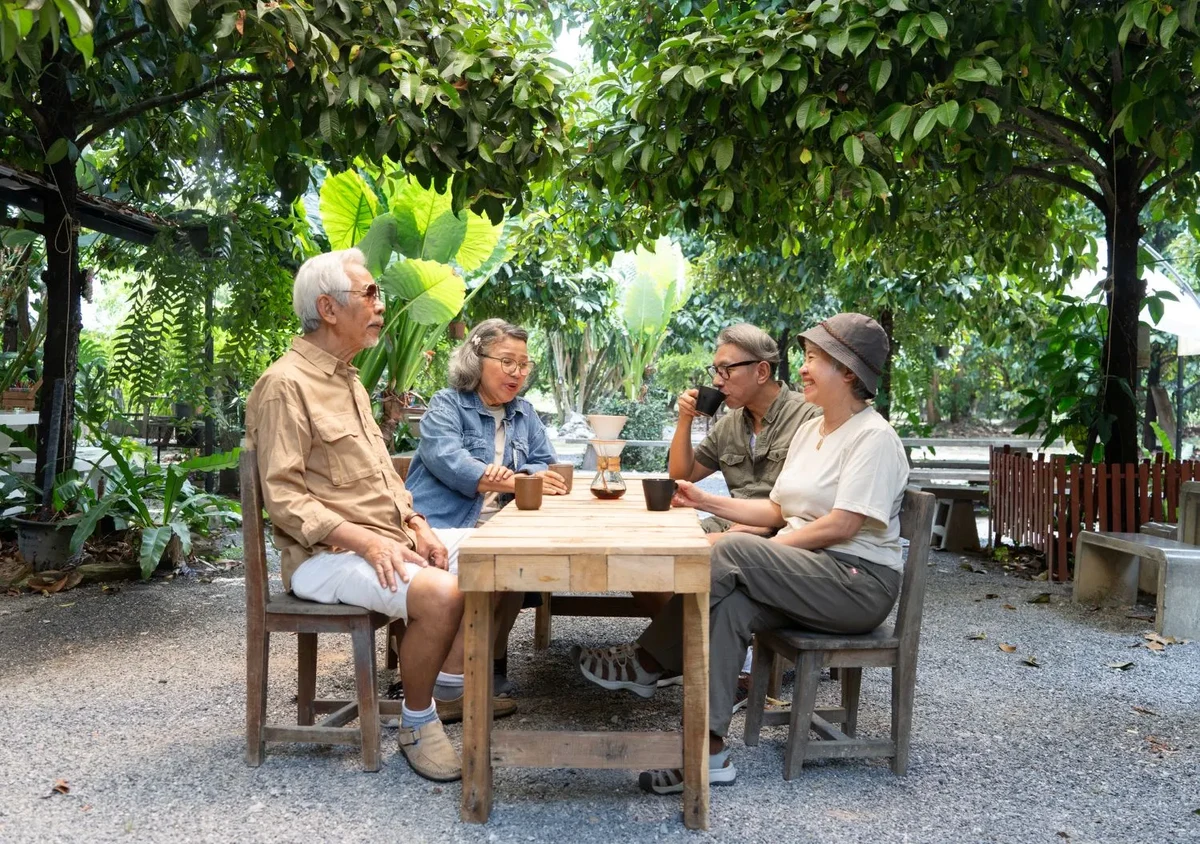
Baby Boomers remain one of the travel sector’s most commercially important audiences in the U.S. — not simply because of their size, but because of how they travel. Compared with non-Boomers, they are slightly more likely to take multiple leisure trips per year, with 37% saying they do so versus 33% of non-Boomers.
They are also more likely to spend more on those trips: 27% say they spent at least $1,000 per person on their last leisure trip, compared with 21% of non-Boomers. That combination of frequency and spend makes them a valuable segment for brands looking to drive both volume and yield.
What types of leisure trips do Boomers enjoy taking?
Beach vacations top the list, with 50% of Boomers expressing interest, putting them almost level with non-Boomers at 50%. Scenic breaks in lakes, mountains, or the countryside also rank highly at 44%, ahead of the 41% recorded among non-Boomers. Sightseeing and tourist trips are similarly popular, drawing 43% of Boomers.
Boomers are notably more likely than non-Boomers to prefer cruises, with 24% choosing them versus 17% among others. They are also more drawn to escorted group and coach tours, where the gap is even more pronounced: 12% versus 8%. These preferences suggest a stronger appetite for more structured travel formats, where planning is outsourced to third parties.
On the other end, trips that might require more extensive planning or increased physical exertion under-index. City breaks, for example, attract just 24% of Boomers compared with 35% of non-Boomers, while theme park trips appeal to 18% versus 28%. Activity or sports-led trips also under-index among Boomers at 15%, compared with 22% for non-Boomers.
The destinations leading the positive Impression charts among Boomers
Looking at destinations with the strongest positive Impression among Boomers, the list is led by a mix of domestic favorites and familiar international markets. Hawaii posts the highest score at 52%, followed closely by Canada at 50%. Ireland ranks next at 46%, just ahead of Florida at 46% and Italy at 46%. Scotland and Australia both reach 42%, while California, Arizona, and the United Kingdom also make the top tier.
There is a clear pattern here. The strongest-performing destinations tend to combine cultural and geographical familiarity with relatively well-established tourism infrastructure. Many also offer the kind of ease, comfort, and recognizable value proposition that resonates with older travelers.
While absolute popularity tells an important story, relative preference can be an important instrument in understanding what sets an audience apart. Using Z-score to identify where Boomers are disproportionately more positive than non-Boomers, Florida stands out as the strongest relative overperformer. Arizona and Las Vegas also rank highly on this measure, alongside Hawaii and Canada. In other words, these are places Boomers like significantly more than other age groups do.
The destinations with less resonance among Boomers
The lowest relative positive Impression scores among Boomers are concentrated in parts of Asia. South Korea, China, the Maldives, Malaysia, and Thailand all appear among the weakest relative performers. In these cases, Boomers are materially less likely than non-Boomers to hold a positive Impression of the destination. South Korea, for instance, scores 15% among Boomers versus 25% among non-Boomers, while Thailand records 16% versus 23%.
That does not necessarily mean these destinations lack potential with older travelers, but it does suggest they may require more deliberate positioning. Closing that gap may require messaging that emphasizes ease, safety and comfort.
Methodology: YouGov Profiles is based on continuously collected data through rolling surveys, rather than a single limited questionnaire. The figures used in this analysis are drawn from responses collected between March 2025 and March 2026. Data is nationally representative of adults (18+) in the U.S. and weighted by age, gender, education, region, and race.