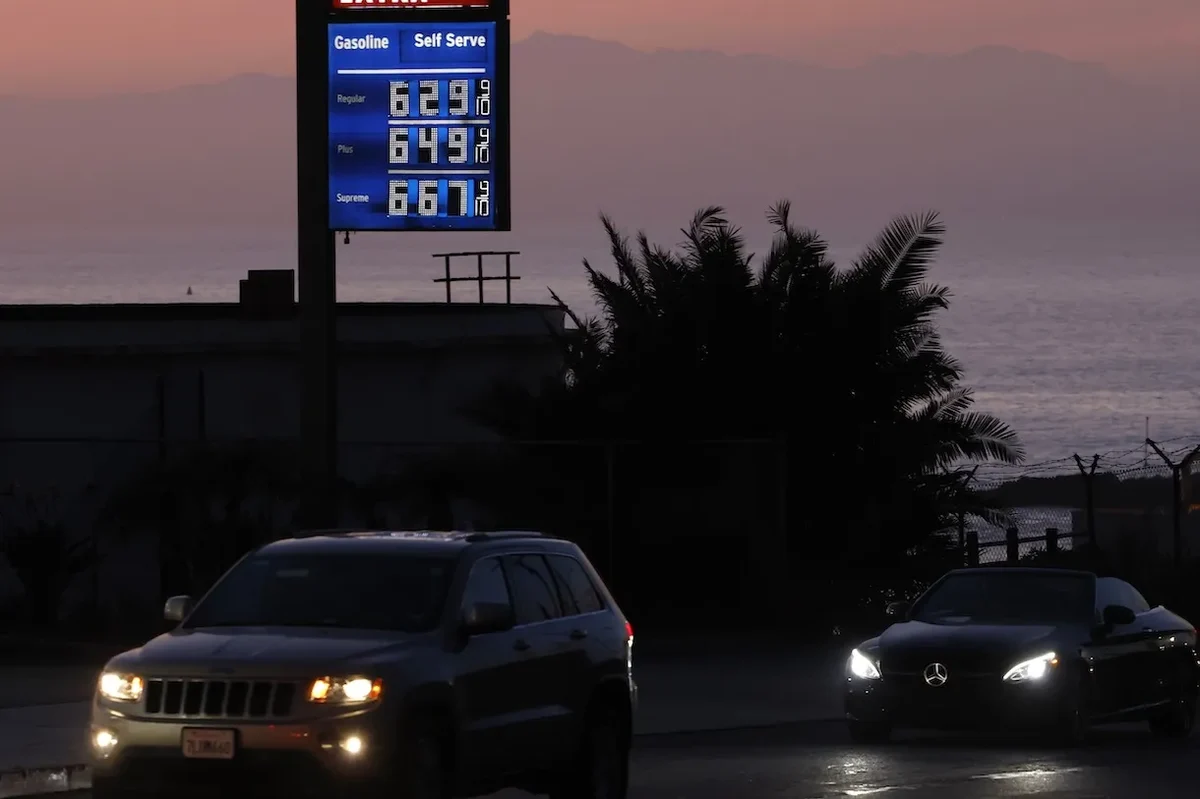
Americans who say that prices are going up a lot are much less likely to support the war with Iran than are those who say gas prices are going up a little or going down, according to the latest YouGov / Economist poll. But our analysis suggests that the story is not as simple as rising gas prices turning opinion against the war. Instead, we find that Republicans and supporters of the Iran war are more likely to say that gas prices are not going up a lot in their area regardless of the average change in gas prices in their state. This suggests that Americans' political views may drive how they answer questions about gas prices at least as much as objective economic conditions.
A majority (55%) of Americans say that gas prices are going up a lot where they live. Nearly one-third (30%) say they are going up a little and only 8% say they are going down. There's a lot of variation by political party identification in evaluations of gas prices' direction. Majorities of Democrats (68%) and Independents (56%) but only 43% of Republicans say that prices are going up a lot. Republicans who identify as MAGA supporters are even less likely to say this: Only 36% of MAGA Republicans say that prices are going up a lot while 54% of non-MAGA Republicans say they are. 15% of Republicans say that prices are going down a little or a lot — including 17% of MAGA Republicans and 11% of non-MAGA Republicans — while 6% of Independents and 4% of Democrats say the same.
There is even more variation in views of gas prices' direction by support for the war with Iran. Three-quarters (75%) of Americans who strongly oppose the war with Iran say that gas prices where they live are going up a lot. In contrast, only about one-third (31%) of those who strongly support the war say that prices are going up a lot.
The overwhelming majority of Americans who strongly oppose the war say they live in areas that have seen large increases in gas prices, while many of the war's supporters say they live in areas that have seen more modest increases or even decreases. This may seem to show that Americans' views about the war are heavily shaped by gas prices. For that to be the case, though, Americans' views about the direction of their local gas prices would have to accurately reflect reality. We have evidence that this is not the case.
Using historical data from AAA's State Gas Price Averages accessed through the Internet Archive, we calculated the change in average gas prices in each state between February 26 — two days before the start of the war with Iran — and April 10 — just before the start of this poll. During this period, average gas prices increased by between $0.89 and $1.48 per gallon in each state. With percentage increases in the double digits everywhere, there are no reference points of states with price decreases or negligible increases, but the differences in levels of increase still allow us to tease apart factors tied to perceptions of how much prices have increased.
There isn't much correlation between the average increase in gas prices in a respondent's state and their evaluation of the change in gas prices where they live. Americans in states that saw the smallest price increases, of less than $0.90, are about as likely to say that prices are going up a lot as are those who live in states that saw the largest increases of $1.30 or more (53% vs. 57%). While there will always be some variation of change in gas prices within a state, we wouldn't expect to see such similar evaluations between states that have seen the smallest and largest average price increases if responses reflected only price changes.
There is some connection between what Americans say about the change in their local gas prices and what they say they paid per gallon the last time they bought gas. 59% of those who say local gas prices are going up a lot and who share their most recent fill-up price said they paid at least $4 per gallon, compared to 42% of those who say prices are going up a little and 33% of those who say local gas prices are decreasing. But that's a measure of absolute price, not change.
If price changes aren't the only driver of Americans' evaluations of gas prices, what else explains the difference in responses? We find evidence that political considerations can explain these differences. Republicans are much less likely than Democrats to say that gas prices are going up a lot regardless of what's happening to gas prices where they live. Republicans who live in states that have seen below average gas-price increases — increases of less than $1.18 — are 23 percentage points less likely than Democrats in those states to say that gas prices are going up a lot (44% vs. 67%). The difference is slightly more pronounced in states that have seen average price increases of $1.18 or more (42% vs. 69%).
We can see an even larger effect if we divide Americans by whether they support or oppose the war with Iran. Iran war supporters in states with average gas price increases of less than $1.18 are 34 points less likely to say that gas prices are going up a lot than are Americans in those states who oppose the war with Iran (35% vs. 69%). The gap is nearly the same in states that have seen above-average gas price increases (34% vs. 70%).
All this suggests that Americans' evaluations of gas prices are shaped by their perceptions of the war with Iran, or that both are shaped by common factors, such as their opinion of President Trump. We find that views of the war with Iran are much more closely tied to Americans' evaluations of gas prices than are actual changes in gas prices in their states. When we control for respondents' support for the Iran war, average gas price changes in their state play almost no role in determining whether they say that gas prices are going up a lot.
Image: Getty (Mario Tama / Staff)
What do you really think about President Trump, American politics in general, and everything else? Share your reality, join the YouGov panel, and get paid to share your thoughts. Sign up here.