Both Democrats and Republicans in Congress are unpopular, according to the latest Economist / YouGov poll, with far more Americans having unfavorable views of each party than have favorable views. 31% of Americans have a very or somewhat favorable view of Republicans in Congress, while 59% have an unfavorable view — a net favorability of -28. 34% have a favorable view of Democrats in Congress and 55% have an unfavorable view, a net favorability of -21.
Each congressional party has had negative net favorability almost every single time the weekly Economist / YouGov poll has asked about it over the past five years. For most of that time, the party of the sitting president has been more popular than the opposition party. Last month saw an exception to this trend, with congressional Democrats less unpopular than congressional Republicans. That finding was driven by increased favorability for congressional Democrats among very liberal Americans. This week's poll also finds that congressional Democrats are less unpopular than congressional Republicans.
The poll asked respondents to classify themselves and each party by ideology: very liberal, liberal, moderate, conservative, or very conservative. Most Americans say they would describe the Democratic Party as either liberal (27%) or very liberal (36%), and two-thirds would describe the Republican Party as either conservative (28%) or very conservative (39%). But views of the two parties differ between liberal and conservative Americans.
In general, conservatives are much more likely than liberals to say the Democratic Party is very liberal, and liberals are more likely than conservatives to say the Republican Party is very conservative.
For example, the Democratic Party is described as very liberal by 87% of very conservative Americans, and 70% of those who say they're conservative but not very conservative — but only 12% of very liberal Americans and 10% of liberal but not very liberal Americans. 14% of very liberal Americans say the Democratic Party is conservative or very conservative.
Likewise, 85% of very liberal Americans say the Republican Party is very conservative, as do 65% of liberals but only 15% of those who are conservative but not very conservative. Americans who say they're very conservative are an exception to the trend: 38% of them say the Republican Party is also very conservative, similar to the shares of moderates and Americans overall who say this.
Americans are more likely to trust the Democratic Party more than the Republican Party to handle health care (47% say they trust the Democratic Party more and 26% say the Republican Party), the economy (40% vs. 34%), and taxes (37% vs. 33%). They're more likely to trust the Republican Party more than the Democratic Party on national defense (39% say the Republican Party and 34% say the Democratic Party) and crime (39% vs. 31%). Americans are evenly divided about which party they trust more to handle immigration (38% say the Democratic Party and 39% say the Republican Party).
When the Economist and YouGov asked a similar question in November 2025, Republicans had a 16-point advantage on which party is better at handling immigration. That Republican advantage fell to 6 points by the start of February 2026 — weeks after the killings of Renee Good and Alex Pretti by immigration agents in Minneapolis — and is now just 1 point.
Americans as a whole favor Republicans by 8 points to handle crime, and Democrats by 21 points to handle health care. That gap reflects differences among moderates — who favor Democrats by 7 points on crime but by 43 points on health care — but also differences in intensity among liberals and conservatives. While the vast majority (87%) of conservatives trust the Republican Party more on handling crime, only 66% of conservatives give the edge to the GOP on health care. Likewise, 90% of liberals favor the Democratic Party on handling health care, but only 70% give the edge to Democrats on crime.
Few Democrats outright favor the Republican Party on handling crime, and few Republicans favor the Democratic Party on health care. Instead, liberals who don't trust Democrats more on particular issues are more likely to say they're not sure or that they trust both parties about the same. The same holds true for conservatives who don't trust the Republican Party on certain issues.
This week's poll finds 46% of registered voters would vote for the Democratic candidate for Congress if the election were held today, and 41% would vote for the Republican candidate. Democrats have consistently led on this question since the Economist and YouGov began asking this question a year ago.
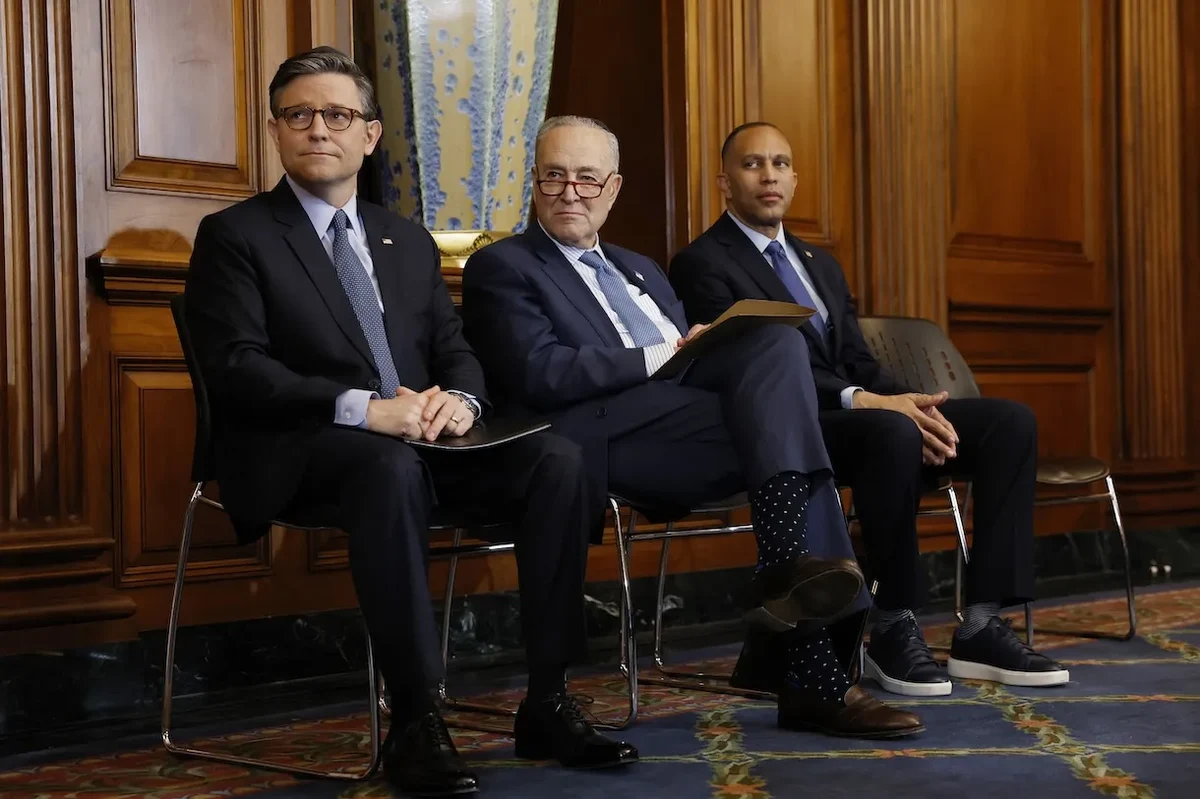
Image: Getty (Anna Moneymaker / Staff)
What do you really think about President Trump, American politics in general, and everything else? Share your reality, join the YouGov panel, and get paid to share your thoughts. Sign up here.