New YouGov polling finds that many Americans view relations between the U.S. and China as competitive and antagonistic. American opinions are divided on which of the two countries is more scientifically advanced and economically powerful, but many agree that the U.S. is richer, better governed, and has a stronger military than China does.
Most Americans believe that what happens in China affects the U.S. either a lot (52%) or a little (38%). Only 22% of Americans view China as an ally or friendly to the U.S.; far more — 54% — believe it is unfriendly or an enemy. Younger American adults are far less likely than older Americans to view China as unfriendly or an enemy. Age divides other opinions on China as well: Younger adults are more likely to view China in a positive light and to oppose taking a strong stand against it.
Even though many Americans view relations between the U.S. and China as adversarial, a larger share think the U.S. should seek a closer relationship with China than want a more distant one (35% vs. 15%). Desire for a more distant relationship has waned in recent years:Three years ago, 33% supported the U.S. seeking a more distant relationship with China.
Government
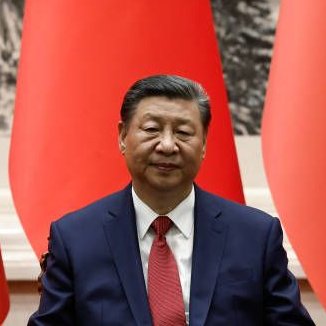
More than twice as many Americans have a very or somewhat unfavorable opinion of Chinese President Xi Jinping than a favorable opinion of him (44% vs. 16%). A YouGov poll conducted in January found that American opinion of Xi was even worse then, and significantly worse than that of many other world leaders. He ranked 22 out of 25 leaders in net favorability (the percentage of Americans who view each leader favorably minus the percentage who view them unfavorably). Xi's net favorability at the time was -44, compared to -28 now. The only leaders viewed more negatively than Xi were Nicolás Maduro, Vladimir Putin, and Kim Jong Un.
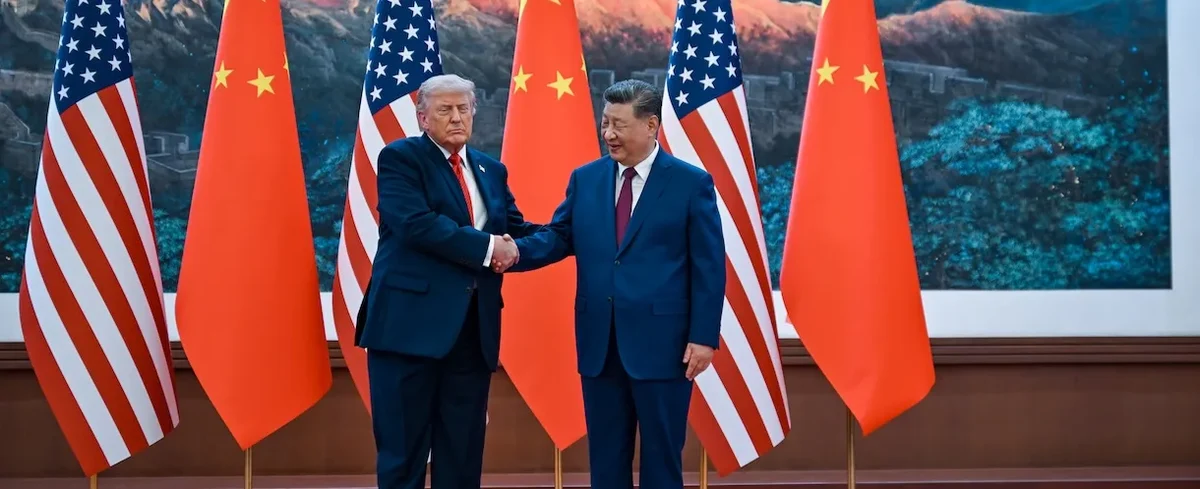
Many Americans believe that U.S. President Donald Trump is viewed negatively in China: A majority (56%) say that Chinese opinions of Trump are generally unfavorable, while only 20% believe Chinese opinion of Trump is favorable. Republicans are more likely than Democrats to believe opinion of Trump in China is favorable, but not overwhelmingly: 38% of Republicans think Trump is viewed favorably in China and the same share (38%) think he is viewed unfavorably.
A majority (57%) of Americans describe the Chinese government as authoritarian; 3% say it is democratic and 15% say it is a mix of both.
The U.S. system of government is preferred by many over the Chinese one. More Americans think the U.S. is better governed than China than say the reverse (43% vs. 16%); 17% say the two countries have about equal governance quality.
Economy and trade
Slightly more Americans believe that the U.S. rather than China is more economically powerful (36% vs. 27%); 21% say they have a similar amount of economic power. By a larger margin, Americans believe the U.S. is richer than China (41% vs. 21%); 15% say the two countries are about the same.
One-third (34%) of Americans say that "communist" best describes China's economic system; 10% say it is best described as socialist, 6% as capitalist, and 23% as a mix. Adults under 30 are less likely than older age groups to most associate China's economy with communism: Only 15% say it has a communist economic system.
Trade with China is viewed by many Americans as important to the U.S. economy: 47% of Americans say it is very important and 36% say it is somewhat important. And many view trade between the two countries as beneficial. By a margin of 48% to 14%, Americans are more likely to say that trade with China makes the U.S. better off than to say it makes the U.S. worse off; 21% say it makes the U.S. neither better off nor worse off. By 55% to 5%, Americans say trade with the U.S. is making China better off rather than worse off; 20% say it makes China neither better off nor worse off.
One-quarter (26%) of Americans believe the trade relationship between the U.S. and China is unfair to the U.S.; 4% believe it is unfair to China and 23% say it is mostly fair. Republicans are far more likely than Democrats to describe trade with China as unfair to the U.S. (39% vs. 17%). Older Americans are far more likely than younger adults to view the trade relationship as unfair to the U.S.
Technology
Americans are divided on which country is more scientifically advanced: 33% believe China is and 29% say the U.S. is. Similar shares say China vs. the U.S. are better positioned for the future (31% vs. 32%).
48% of Americans believe that China is above average when it comes to its artificial intelligence research relative to the rest of the world. The same share (48%) says AI research in the U.S. is above average.
Roughly half (53%) of Americans say that U.S. companies should not share artificial intelligence research with Chinese companies; only 10% think that they should. Support for sharing medical research is more prevalent: 39% are in favor of U.S. companies sharing medical research with Chinese companies and 31% are opposed.
Military
By a margin of 54% to 13%, Americans are more likely to say that the U.S. has a more powerful military than China, rather than the reverse; 16% say the military power of the two countries is about the same.
About half (53%) of Americans are unsure whether China might invade Taiwan in the next year; 28% believe it might do so and 19% think it might not. More — 47% — believe a Chinese invasion of Taiwan is likely in the next 20 years.
Americans are divided in their views on what role the U.S. should play in China's relation to Taiwan: 34% believe it's more important for the U.S. to take a strong stand so that China does not take over Taiwan by force and 36% believe it's more important for the U.S. to maintain good relations with China. Democrats and Republicans have similar views on this issue, but opinions are divided by age: Half (51%) of Americans 65 and older but only 21% of adults under 30 think the U.S. should take a strong stand to protect Taiwan.
When we last posed this question on an Economist/YouGov survey three years ago, twice as many Americans prioritized taking a strong stand against China as the share who prioritized maintaining good relations (51% vs. 24%).
If an armed conflict were to arise between China and Taiwan, 30% of Americans believe the U.S. should help protect Taiwan with military force; half as many (16%) say the U.S. military should not intervene.
63% of Americans are aware that China currently possesses nuclear weapons. Far fewer — 11% — believe China should be allowed to possess them.
Methodology: The May 18 - 22, 2026 poll was conducted among 1,068 U.S. adult citizens. Respondents were selected from YouGov’s opt-in panel to be representative of U.S. adult citizens. A random sample (stratified by gender, age, race, education, geographic region, and voter registration) was selected from the 2019 American Community Survey. The sample was weighted according to gender, age, race, education, U.S. region, 2024 presidential vote, 2020 election turnout and presidential vote, baseline party identification, and current voter registration status. 2024 presidential vote, at time of weighting, was estimated to be 48% Harris and 50% Trump. Demographic weighting targets come from the 2019 American Community Survey. Baseline party identification is the respondent’s most recent answer given around November 8, 2024, and is weighted to the estimated distribution at that time (31% Democratic, 33% Republican). The margin of error for the overall sample is approximately 4%.
Image: Getty (China Pool / Pool)
What do you think about the election, American politics in general, and everything else? Have your say, join the YouGov panel, and get paid to share your thoughts. Sign up here.