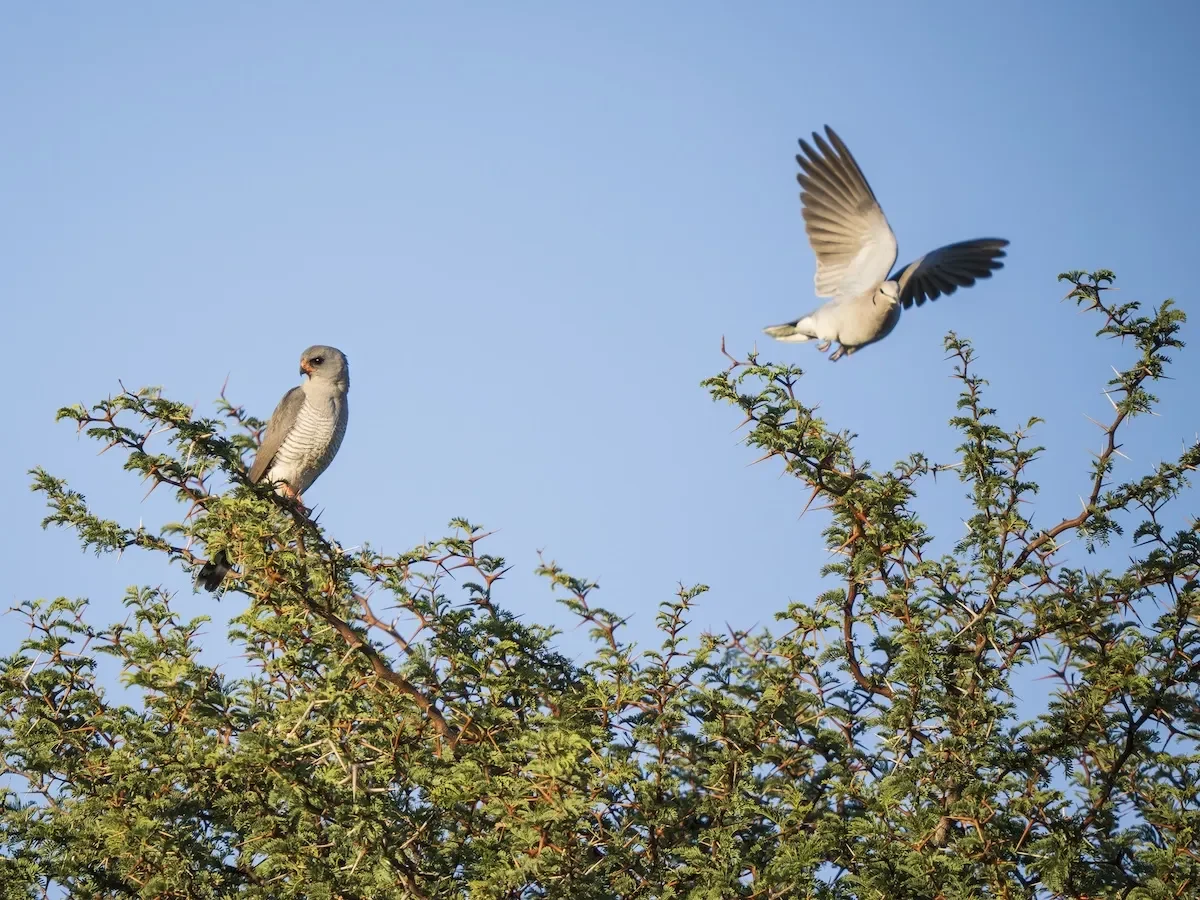
In discussions of foreign policy, hawks and doves often come up. YouGov has asked Americans if they think of themselves as hawks or doves in past surveys, and this phrasing has been used in other surveys of Americans dating back to the 1960s. Hawks are a nickname for those who believe the military should be used frequently to promote policy goals. Doves are a nickname for those who believe the country should rarely or never use military force. These definitions have been presented to Americans since 2003 on CNN polls, which generally have found that Americans are closely divided between hawks and doves. But as Shakespeare's Juliet once asked, "What's in a name?" Does asking Americans to describe themselves as one of these two types of metaphorical birds lead them to answer differently than if we ask them about their policy preferences in the same way, but without the birds?
According to the results of an experiment in a new YouGov survey, using bird labels makes a difference in how some people answer. Half of respondents were asked, "Would you describe yourself more as a hawk — someone who believes that military force should be used frequently to promote U.S. policy? Or would you describe yourself as more of a dove — someone who believes the U.S. should rarely or never use military force?" And the other half were asked a shorter form of the question, omitting "a hawk —" and "a dove —". Response options to the first version of the question used the labels hawk and dove, while response options to the second version included the full descriptions. Americans are more likely to describe themselves as hawks than they are to say they believe military force should be used frequently without the hawk label, and they're less likely to describe themselves as doves than they are to say they believe the military should be used rarely without the dove label. This effect is particularly pronounced among men and Republicans. It seems that many Americans embrace thinking of themselves as hawks and avoid thinking of themselves as doves, even when their self-descriptions don't match the way the terms are used in foreign policy circles — and in the survey questions. By using these labels, we may be overstating Americans' support for a militaristic approach to international relations.
Nearly half (45%) of Americans say they would describe themselves more or completely as someone who believes military force should be used rarely. Only 14% say they are more or completely someone who believes military force should be used frequently. But when questions include bird labels, those results look different. Only 38% of Americans describe themselves more or completely as a dove, 8 percentage points less than the share who believe the military should be used rarely when this position is not labeled as dovish. And 20% of Americans describe themselves more or completely as a hawk, 6 points higher than the share who say they believe the military should be used frequently when the position isn't labeled as hawkish.
There are more substantial effects among men. Men are 12 points more likely to describe themselves as hawks than to say they believe the military should be used frequently without the hawk label (25% vs. 13%). They're also 10 points less likely to describe themselves as doves than to say they believe the military should be used rarely without the dove label (36% vs. 46%). Including bird labels has a much smaller effect on women's responses. Women are about equally likely to describe themselves as hawks as they are to say they believe the military should be used frequently without the hawk label (15% vs. 16%) and 6 points less likely to describe themselves as doves than to say they believe the military should be used rarely without the dove label (39% vs. 44%).
There are also substantial effects of including bird labels on Republicans. When bird labels are not used, Republicans are about equally likely to say they believe the military should be used frequently and rarely (21% vs. 19%). But with bird labels, Republicans are much more likely to identify as hawks than doves (44% vs. 9%). Using bird labels makes the share of Republicans who identify as hawkish double and the share who identify as dovish halve.
Effects on Independents and Democrats are much smaller. When bird labels are used, Independents are a bit less likely to identify as both hawkish (11% vs. 15%) and dovish (37% vs. 47%), suggesting that "Democrat" and "Republican" aren't the only labels that many Independents don't want to associate with. Using bird labels hardly makes any difference for Democrats: The share who identify as hawkish increases by only 1 point (6% vs. 5%) and the share who identify as dovish falls by just 2 points (67% vs. 69%). Both of these differences are within the margin of error for this survey.
Are hawks macho and doves feminine?
Why do men and Republicans experience a greater effect when the terms hawk and dove are included in a question? One possibility is that the terms may be tied to ideas of masculinity and femininity. We asked respondents if they see themselves as masculine or feminine, and found that men who see themselves as completely masculine experience the greatest effect from including hawk and dove labels. Completely masculine men are about twice as likely to identify as hawks when the hawk label is used (35% vs. 14%) and about half as likely to identify as doves with the dove label (19% vs. 38%). Men who see themselves as mostly masculine experience a similar but smaller effect. The share who identify as hawks is 8 points higher (22% vs. 14%) and the share who identify as doves is 11 points lower (45% vs. 56%). Women who see themselves as completely feminine also experience a modest effect (the share who identify as doves is 8 points lower when the terms hawk and dove are used, though the share who identify as hawks is only 3 points higher).
Americans who perceive their masculinity and femininity as more mixed do not seem to exhibit the same effect. Men who see themselves as slightly masculine, equally masculine and feminine, or more feminine than masculine are no more likely to identify as doves when bird labels are used, but not significantly more likely to identify as hawks. Women who see themselves as anything other than completely feminine also do not seem to exhibit the same effect.
Views about masculinity and femininity are also intertwined with partisan identification. Roughly even shares of Americans who see themselves as "completely masculine," "mostly masculine," "slightly masculine, slightly feminine, or both equally," "mostly feminine," and "completely feminine" (about one-fifth of Americans fall into each group). But these groups are not represented evenly across parties. Republican men are much more likely to see themselves as completely masculine than Democratic or Independent men: 62% of Republican men see themselves as completely masculine while only 36% of Democratic and Independent men say the same. Similarly, seeing oneself as completely feminine is more common among Republican women (60%) than Democratic (48%) or Independent (32%) women.
The link between gender expression and hawkishness, especially among men, fits with psychology research that suggests that military hawks may be motivated by a macho self-image. But previous research focused on the policy positions associated with hawks and doves, not the terms themselves. The results of this experiment suggest that many macho men do not support a militaristic foreign policy, but that labeling themselves as doves is still a bridge too far for a considerable share of them, and the hawk label holds substantial appeal.
— Carl Bialik contributed to this article
Related articles:
- Hawks and doves: Changes in how Americans classify themselves and recent presidents
- Many Americans support Iranian protesters but few want U.S. military involvement in Iran
- Most Americans remain opposed to seizing Greenland with military force
- Most Americans oppose military involvement in Venezuela
- A majority of Americans approve of Kristi Noem's firing, but how many approve depends on how they're asked
- Many Americans like the concept of TrumpRx, but the name turns off some of them
Methodology: This YouGov poll was conducted online on March 6 - 9, 2026, among 1,107 U.S. adult citizens. Respondents were selected from YouGov’s opt-in panel to be representative of adult U.S. citizens. The sample was weighted according to gender, age, race, education, region, 2024 presidential vote, 2020 election turnout and presidential vote, baseline party identification, and current voter registration status. Demographic weighting targets come from the 2019 American Community Survey. 2024 presidential vote, at time of weighting, was estimated to be 48% Harris and 50% Trump. Baseline party identification is the respondent’s most recent answer given around November 8, 2024, and is weighted to the estimated distribution at that time (31% Democratic, 33% Republican). The margin of error for the overall sample is approximately 4 points.
Image: Getty (morgan stephenson)
What do you really think about President Trump, American politics in general, and everything else? Share your reality, join the YouGov panel, and get paid to share your thoughts. Sign up here.