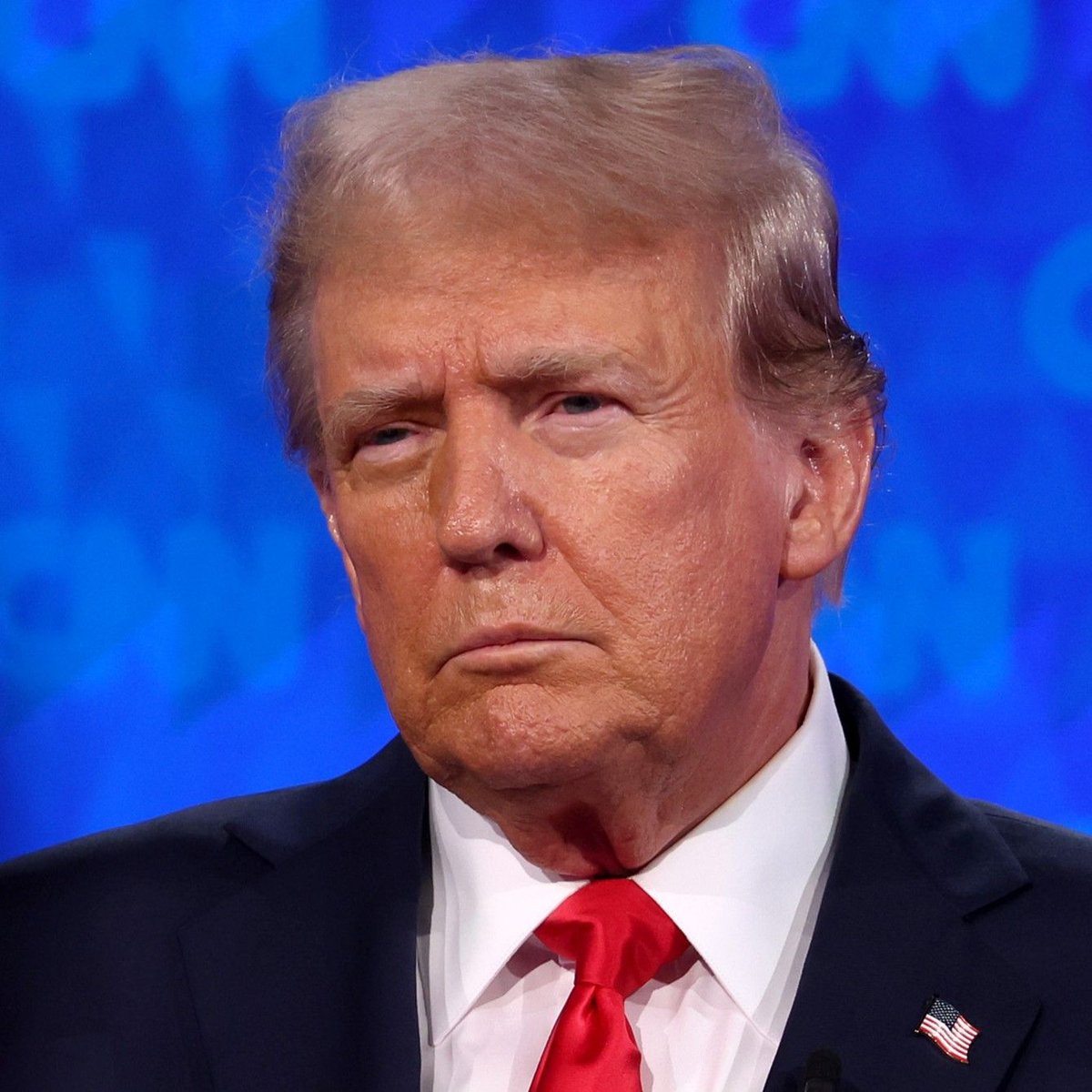
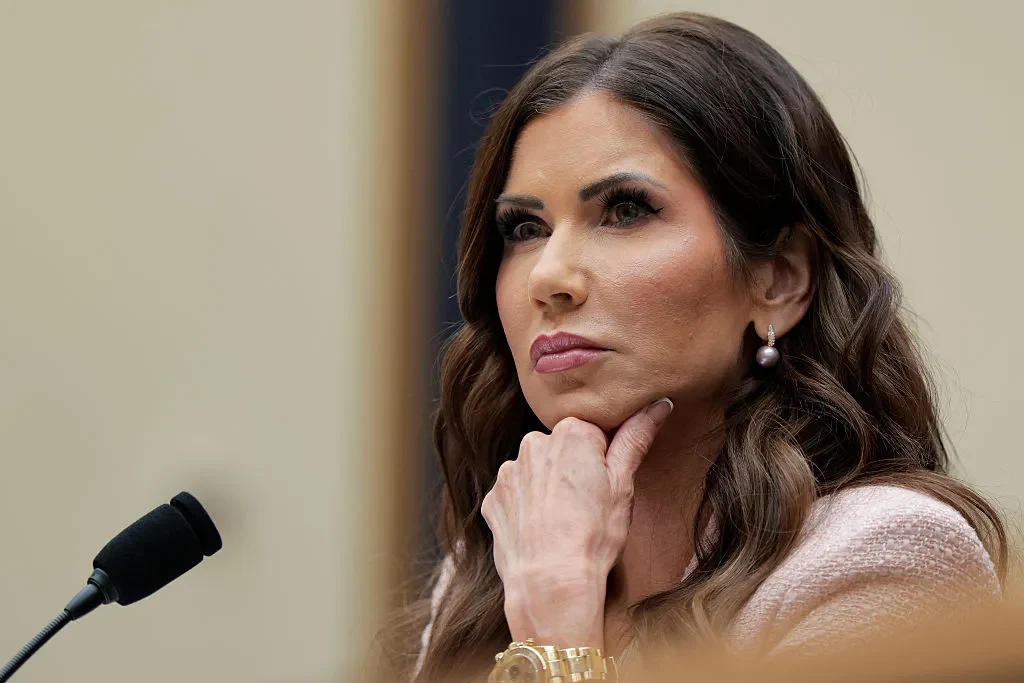
Recent polling from YouGov has consistently shown that a majority of Americans approve of the recent decision to fire Kristi Noem from her position as Secretary of the Department of Homeland Security (DHS). A Daily Questions survey found that 52% of Americans strongly or somewhat approve of the decision to fire Noem while only 18% disapprove. An Economist / YouGov survey with different question wording found that 55% approve of President Trump firing Noem while only 15% disapprove. The widespread approval of Noem's firing appears to be consistent with many Americans saying DHS is making the country less safe and half wanting to abolish U.S. Immigration and Customs Enforcement, a DHS agency that Noem oversaw.
The two surveys asked about Noem's firing in different ways. While the Economist / YouGov survey described the firing as Donald Trump's action, the Daily Questions survey asked about "the decision" without attributing it to anyone. Both found that majorities of Americans approve of the firing, but approval was slightly higher when the question mentioned Trump. Could that have made a difference? Are Americans more likely to approve of the firing when they are reminded that it was Trump's decision?
To answer this question, we ran an experiment in a new YouGov survey. We randomly assigned half of respondents to answer the question, "Do you approve or disapprove of the decision to fire Kristi Noem as Secretary of the Department of Homeland Security?" The other half were asked a similar question that differed by mentioning that the firing was Trump's decision: "Do you approve or disapprove of President Trump's decision to fire Kristi Noem as Secretary of the Department of Homeland Security?" Both questions were asked during the same time period, meaning respondents would have had the same amount of time to internalize Noem's firing. The questions were also randomly assigned to groups with balanced political party identifications, meaning each group had the same proportions of Democrats and Republicans. By controlling for all other factors, we ensure that any significant difference in responses can only be explained by the mention of Trump in one version of the question and his absence from the other.
The results of this experiment suggest that question wording does affect approval of Noem's firing. 53% of Americans say they somewhat or strongly approve of "the decision" to fire Noem, but 60% say they approve of "President Trump's decision" to fire her. The share who disapprove of the decision is the same for both versions: 11%.
This effect is mostly driven by Republicans. Half (50%) of Republicans approve of the decision to fire Noem when Trump is not mentioned, but nearly two-thirds (64%) approve of "President Trump's decision" to fire her. The share who disapprove of the decision is 13% when Trump is not mentioned and only 9% when Trump is mentioned. Independents also are more likely to approve of the decision when it's labeled as Trump's than when it's not (51% vs. 44%.) In contrast, most Democrats approve of the firing regardless of whether Trump is mentioned: 68% approve of "the decision" to fire Noem while 67% approve of "Trump's decision." Democrats are slightly more likely to disapprove when Trump is mentioned than when he is not (14% vs. 10%).
This effect is slightly stronger among the 24% of Americans who say they are MAGA supporters — most but not all of whom are Republicans. Nearly half (46%) of MAGA supporters approve of the decision to fire Noem when Trump is not mentioned, but two-thirds (66%) approve when it is described as Trump's decision. Disapproval is 15% when Trump is not mentioned and 9% when Trump is mentioned. On the other hand, the 64% of Americans who say they are not MAGA supporters are mostly unaffected by references to Trump. Among non-MAGA supporters, approval and disapproval of "the decision" (60% vs. 9%) and "Trump's decision" (61% vs. 11%) are nearly identical. (Differences of 1 or 2 percentage points are within this survey's margin of error.)
Most MAGA supporters are Republicans (77%), though small shares of the group are Independents (19%) and Democrats (4%). Non-MAGA supporters are about evenly split between Democrats (42%) and Independents (44%), and 14% are Republicans.
This experiment shows that seemingly subtle differences in question wording can significantly affect results. This is especially true when the wording changes may reframe the way people think about an issue, such as by making them think about the individual responsible for an action. It is likely that many respondents knew that Noem was fired by Trump, but reminding people that he was the one to fire her seems to make his core supporters respond in a way that is more closely tied to their general attitudes about Trump.
Past YouGov polling has found similar effects of including Trump's name in questions. One survey found that Republicans were more likely to support keeping Jerome Powell as Federal Reserve Chair when told that he was appointed by Trump. Another experiment found that Democrats say they're less likely to use the federal health care website TrumpRx.gov when the site's name is mentioned.
— Carl Bialik contributed to this article
Related articles:
- Many Americans like the concept of TrumpRx, but the name turns off some of them
- Support for abolishing ICE reaches 50%
- By a two-to-one margin, Americans approve of ending the immigration enforcement surge in Minnesota
- Support for immigration is rising and a majority of Americans say the Alex Pretti shooting was not justified
- How Americans feel about 10 recent Department of Homeland Security social media posts
- Which political figures Americans think have above- and below-average IQs
- Is there a war in American cities?
- How Americans rate Trump's top appointees
Methodology: This YouGov poll was conducted online on March 6 - 9, 2026, among 1,107 U.S. adult citizens. Respondents were selected from YouGov’s opt-in panel to be representative of adult U.S. citizens. The sample was weighted according to gender, age, race, education, region, 2024 presidential vote, 2020 election turnout and presidential vote, baseline party identification, and current voter registration status. Demographic weighting targets come from the 2019 American Community Survey. 2024 presidential vote, at time of weighting, was estimated to be 48% Harris and 50% Trump. Baseline party identification is the respondent’s most recent answer given around November 8, 2024, and is weighted to the estimated distribution at that time (31% Democratic, 33% Republican). The margin of error for the overall sample is approximately 4 points.
Image: Getty (Heather Diehl / Staff)
What do you really think about President Trump, American politics in general, and everything else? Share your reality, join the YouGov panel, and get paid to share your thoughts. Sign up here.