Among Britons taking GLP-1 weight loss drugs, there is a notable influence on how they approach food, drink and grocery shopping — from the amount they spend to the products they buy. Brands across affected sectors are already responding: Marks & Spencer, Morrisons and Ocado have introduced product ranges aimed at shoppers using weight loss drugs, while quick service restaurants such as Itsu offer “little” options to cater to reduced appetites.
YouGov’s new Health and Wellbeing Tracker examines how the use of these medications correlates with changes in grocery spending and eating habits, highlighting shifts in both consumption patterns and overall food-related expenditure.
How many Britons are using or considering weight loss medication?
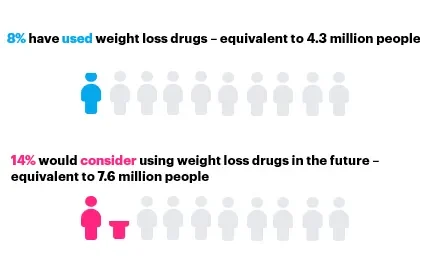
Approximately 8% of Britons say they have used weight loss drugs, and 14% would consider using them in the future.
Attitudes to weight loss drugs reflect both confidence and concern. More than four in five (84%) agree that exercise and dieting are still necessary to lose weight while taking these drugs. Nearly three-quarters of users (72%) believe weight loss drugs are more effective than traditional dieting, and 67% say they are less interested in junk food since starting treatment. However, 80% worry that they will regain weight if they stop taking the medication.
How weight loss drugs are changing eating habits
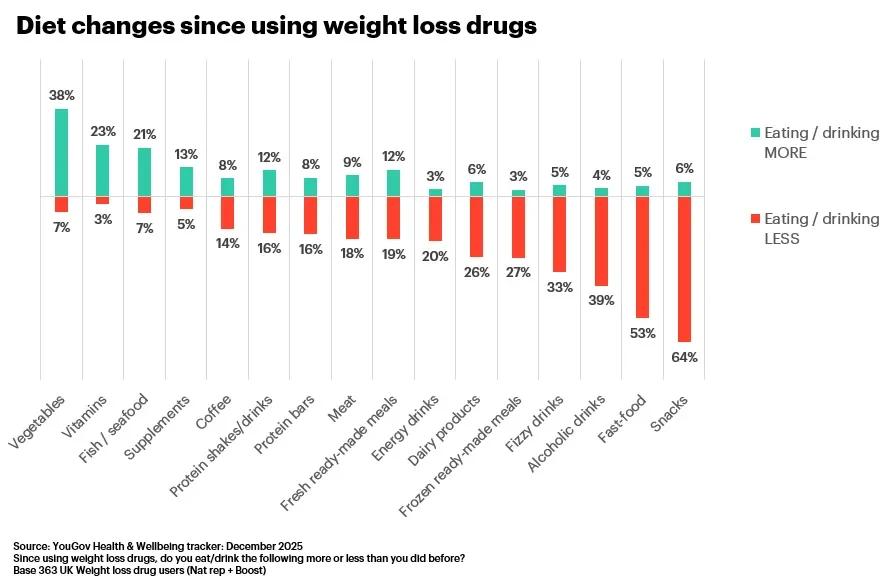
Consumers using weight loss drugs report notable changes in their diets. Many increase their intake of vegetables (38%), vitamins (23%) and fish or seafood (21%), suggesting a shift towards more nutrient-dense foods. Some also report consuming more supplements, protein-based products and fresh ready-made meals.
Reductions are most pronounced in snack and convenience food categories. Nearly two-thirds (64%) say they eat fewer snacks, and over half (53%) reduce fast food consumption. Many also report drinking less alcohol (39%) and fewer fizzy drinks (33%). Overall, the pattern indicates that users are scaling back on high-calorie convenience items while increasing consumption of healthier options.
The impact of weight-loss drugs on weekly grocery spending in the UK
Changes in consumption are reflected in spending. Those currently using weight loss drugs spend an average of £91 per week on household groceries, compared with £102 before starting treatment — an 11% reduction.
Monthly takeaway spending declines more sharply, falling from £49 to £30, a 19% decrease.
The impact continues after treatment ends, though at a more moderate level. Former users spend an average of £100 per week on groceries, compared with £107 before using weight loss drugs, representing a 7% decline. They spend £40 per month on takeaways, down from £49 previously.
These figures suggest that the behavioural changes associated with weight loss drug use may persist beyond active treatment, influencing both grocery and food service expenditure over time.
Could weight loss drugs reshape UK consumer spending patterns?
For brands across sectors, this in spend shift presents both challenges and opportunities as consumer priorities and spending patterns evolve.
Ag Hoffmann, YouGov’s Lead Healthcare Director said
"The rise of GLPs is having a huge impact on the grocery and takeaway market. Whilst the number of users is relatively low at the moment, this is only going to increase in the future, creating both opportunities and threats to the wider market from QSRs to grocers, we also expect to see impact across other sectors like leisure and retail. YouGov will continue to monitor these trends."
Methodology: Health & Wellness Tracker is conducted quarterly among a nationally representative sample of 2,000 GB adults aged 18+. The results reflect findings from Waves 1 and 2. The figures have been weighted and are representative of all GB adults (aged 18+)
An additional boost sample of 500 cosmetic treatment users is also included in the Health & Wellness Tracker each wave. The figures for the boost have been weighted to reflect the natural incidence of cosmetic treatment users within the nationally representative sample.
The GLP1 Users Spend Recontact was conducted online in February 2026 from a nationally representative sample of 303 adults from the Health and Wellbeing tracker who have used/are using a weight loss drug. The figures have been weighted and are representative of all GB adults (aged 18+) within this subgroup.
Image: Getty Images