
Key findings:
- Nearly half (48%) of GB adults watched at least some of the 2026 Winter Olympics.
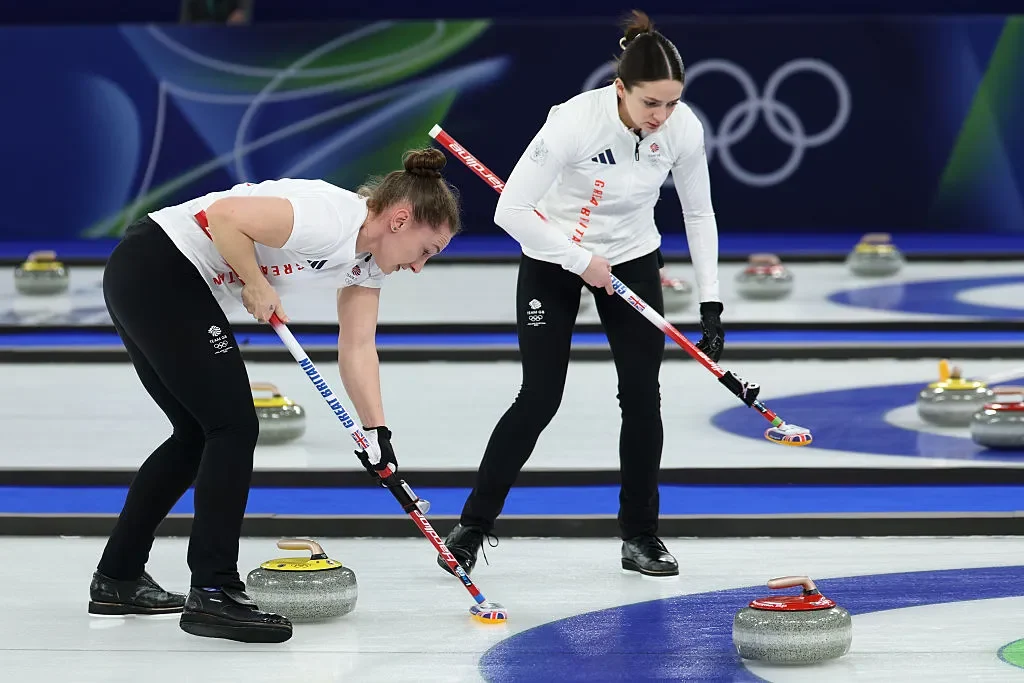
- Curling was the standout event among British viewers, attracting 64% interest, followed by Skeleton (52%) and Bobsleigh (44%).
- Traditional live TV dominated viewing habits, with 76% of viewers watching primarily via broadcast compared to 9% who relied on streaming platforms.
- 18% of GB adults say a brand’s association with the Winter Olympics makes them feel more positive about the brand.
The 2026 Winter Olympic Games in Milan-Cortina concluded after two weeks of competition, national pride and global brand exposure. A recent YouGov survey explores how many Britons tuned in, which events captured their attention, which sponsors achieved to cut through, and whether that visibility translated into consumer action.
According to YouGov data, 48% of GB adults say they watched at least some of the 2026 Winter Olympic Games, while 50% did not tune in.
Most popular events among British viewers
Among those who watched, curling stands out with nearly two-thirds (64%) of viewers saying they were interested in watching it. Interest in skeleton (52%) and bobsleigh (44%) also reflects Britain’s established enthusiasm for sliding sports.
Figure skating and snowboarding each attracted 42% of viewers, while ski jumping (36%), freestyle skiing (34%) and speed skating (33%) follow closely behind. Ice hockey appealed to a quarter (25%), and around one in five expressed interest in Alpine skiing (21%) and cross-country skiing (20%). Biathlon (15%), ski mountaineering (12%) and Nordic combined (11%) drew smaller but still notable audiences.
How Britons watched the Winter Olympics: Live TV vs. streaming platforms
Traditional broadcasting continues to underpin Olympic viewing habits. More than three-quarters (76%) of Winter Olympics viewers say live TV broadcast was their primary way of watching the Games.
Streaming platforms were the main source for just 9%, while YouTube (5%) and social media highlights (4%) played a secondary role. Sports apps and public screenings each accounted for 2%.
Official Olympic sponsor recall in the UK
While the Olympic stage offers global exposure, sponsor recall among British viewers remains modest. Over two-thirds (68%) of those who watched say they do not know which official sponsor brands they remember seeing.
Around one in nine (11%) say they recall Allianz, followed by Coca-Cola (10%), Samsung and Visa (9% each), and Airbnb and Omega (8% each).
Toyota was remembered by 6% of viewers, despite not being an official sponsor of the 2026 Winter Olympic Games. This level of recall suggests the strength of its legacy association with the event.
Team GB Olympic sponsors: Which brands achieved cut-through?
Recall is somewhat stronger for a handful of official Team GB sponsors. Adidas stands out, cited by 18% of viewers. The National Lottery follows at 12%, while Aldi (7%), Sky (6%) and British Gas (6%) sit in the mid-tier.
However, nearly half (46%) say they do not recall seeing any official Team GB sponsor brands, and 17% are unsure. Even with a national focus, breaking through remains challenging. The data indicates that high-profile placement does not automatically translate into strong brand memorability.
Did Winter Olympic sponsorship drive consumer action in 2026?
While immediate conversion was limited, a small but meaningful share of viewers did engage with brands after the Games. Around 5% visited a sponsor’s website, 4% searched for the brand online, 4% followed it on social media and another 4% discussed it with others. Roughly 3% considered making a purchase, and 1% ultimately bought a product or service. App downloads and newsletter sign-ups each reached 2%.
Does Winter Olympic sponsorship influence purchase intent or brand sentiment?
Nearly one in five (18%) GB adults say a brand’s association with the Winter Olympics makes them feel more positive overall, compared with just 4% who feel more negative.
Purchase intent shows a similar, if more modest, uplift. Around 5% say they would be more likely to buy from a sponsoring brand, versus 9% who say they would be less likely.
Methodology: YouGov Surveys: Serviced provides quick survey results from nationally representative or targeted audiences in multiple markets. This study was conducted online between 23-24 February 2026, with a nationally representative sample of 2,137 adults (aged 16+ years) in Great Britain, using a questionnaire designed by YouGov. Data figures have been weighted by age, gender, education, region and social grade to be representative of all adults in Great Britain (16 years or older) and reflect the latest ONS population estimates.
Image: Getty Images