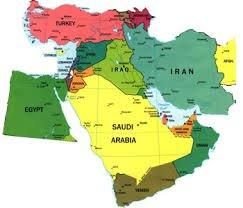

More than half (54%) of Americans say they were not surprised that Trump ordered military strikes on Iran, the latest Economist / YouGov poll finds. Only 12% say they were very surprised. This matches Economist polling from two weeks ago that found a majority (58%) of Americans thought that it was somewhat or very likely that the U.S. would take military action against Iran within the next month. Democrats (18%) were slightly more likely to be very surprised by the strikes than Independents (13%) or Republicans (6%), but half or more of all three groups say the strikes were not surprising.
More Americans expected imminent attacks on Iran than thought Iran posed an immediate threat to the U.S.: Only one-quarter (25%) of Americans say that Iran posed an immediate threat. A larger share (38%) say that Iran posed a threat but not an immediate threat. About one-quarter (23%) say that Iran did not pose a threat. Republicans (53%) are much more likely than Independents (17%) and Democrats (7%) to say Iran posed an immediate threat.
A majority of Americans say that Trump should have sought congressional authorization before ordering strikes on Iran (56%). Only about one-quarter (28%) say he should not have sought authorization. These views are highly polarized by party. Almost all Democrats (93%) say Trump should have sought congressional authorization. A majority (56%) of Independents say the same, while only 22% say he should not have sought authorization. In contrast, a majority (63%) of Republicans say Trump should not have sought congressional authorization and only 20% say he should have.
Despite statements from Trump that fighting in Iran could end quickly, most Americans (80%) say the war in Iran will last for more than a month: 47% think it will last for between one month and one year, while 32% think it will last for more than a year. Democrats (45%) and Independents (37%) are much more likely than Republicans (13%) to predict the war will last more than a year. But majorities of all three groups expect the war to last for more than a month.
One factor that could shape the length of the war is the U.S.'s demands. Trump has said that he will demand an unconditional surrender. That means he would not stop fighting until Iran agrees to all U.S. conditions without any negotiations. Americans are split over whether the U.S. should demand unconditional surrender. One-third (33%) say the U.S. should demand this, a slightly smaller share (27%) say the U.S. should not, and 40% are not sure. Democrats and Independents both are more likely to say the U.S. shouldn't demand an unconditional surrender than to say it should. But most Republicans (63%) say the U.S. should demand an unconditional surrender while only 10% say it shouldn't.
An unconditional surrender would mean that the U.S. could shape Iran's next government, but most Americans say that the country's leader should be decided by the Iranian people, not by the U.S. government (76% vs. 6%). Republicans (69%) are less likely to take this stance than Democrats (85%) or Independents (75%). Despite this, only 10% of Republicans think the U.S. government should select Iran's next leader. (After the death of Ayatollah Ali Khamenei, Iran's current government selected Mojtaba Khamenei, the former ayatollah's son, as its next leader. This decision was not made by the Iranian people or the U.S. government.)
While most Americans support the self-determination of the Iranian people, slightly more Americans think the U.S. military intervention in Iran will worsen the situation for the Iranian people than think it will improve the situation (37% vs. 31%). 16% of Americans think it will neither improve nor worsen the situation. Most Democrats (64%) think that the intervention will worsen the situation and only 4% say it will improve things. Independents are also more likely to say it will worsen the situation than to say it will improve it (40% vs. 24%). In contrast, most Republicans (64%) think the intervention will improve the situation and only 8% say it will worsen things.
Closer to home, Americans may be concerned about the effects the conflict in Iran will have on the U.S. economy
- Global oil shipments have slowed because of the fighting, which may exacerbate gas prices. Most Americans (70%) say that gas prices have gone up in the last year, including 35% who say they have gone up a lot
- A majority (57%) of Americans expect that prices in general will be higher 12 months from now than they are today. Only 12% expect them to be lower
- Most Americans (70%) say that the economy is currently fair or poor. Only 27% say it is good or excellent
- A majority (53%) of Americans say the economy is getting worse. Only 20% say it is getting better
- One third (33%) of Americans say the U.S. economy is currently in a recession. A further one-quarter (25%) say a recession is somewhat or very likely in the next year
Americans' concerns about the situation in Iran and the economy at home may help to explain why more Americans disapprove than approve of Trump's handling of the situation in Iran. About half (52%) of Americans disapprove of Trump's handling of Iran, while 39% approve. Both approval and disapproval of Trump's handling of Iran have increased since February, when 31% of Americans approved and 48% disapproved. As it was in February, approval today is highly polarized by party. Almost all Democrats (92%) disapprove of Trump's handling, while most Republicans (83%) approve. Independents are more likely to disapprove than to approve (53% vs. 30%).
Image: Getty (Majid Saeedi / Stringer)
What do you really think about President Trump, American politics in general, and everything else? Share your reality, join the YouGov panel, and get paid to share your thoughts. Sign up here.