
Key findings
- Heavy users make up 28% of U.S. social media users and skew younger. Within heavy users, Gen Z account for the biggest share at 29%.
- Heavy users engage more across content, discovery, and ads, with 47% discovering products via social media or website ads (vs. 40% of light users).
- They show higher purchase intent across key categories, including toys/games, mobile phones, and furniture.
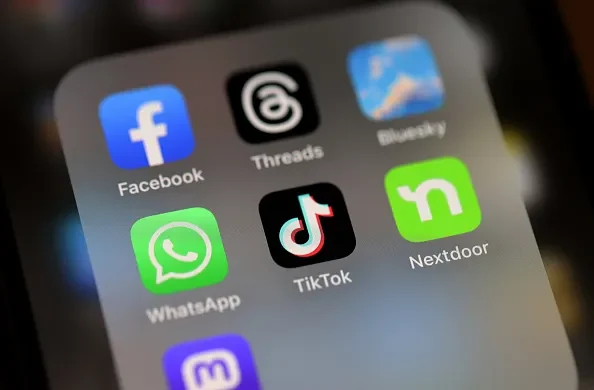
Social media is part of everyday life for most Americans with 88% of American adults saying they’ve accessed a social network in the last 24 hours. But the amount of time people spend on these platforms varies widely. Some check their feeds occasionally, while others spend hours a day scrolling, watching videos, and interacting with content.
YouGov Profiles data shows that 96% of Americans use at least one social network, though amount of use varies.
Over a quarter (28%) social media users are “heavy” users (HSU) who spend at least two hours on social platforms. More than seven in ten (72%), are “light” social media users (LSU) who spend less than or up to two hours daily on them.
Looking at these groups side by side highlights the differences in who they are, what they follow, how they discover products, what they plan to buy and where advertising is most likely to catch their attention.
Who heavy social media users are
HSUs skew younger than LSUs.
Gen Z accounts for 29% of HSUs, compared with 15% of LSUs, while Baby Boomers make up 20% of heavy users and 30% of light users. Gen X is represented more among LSUs (27% vs. 23%) while similar proportions of Millennials are HSUs (28%) and LSUs (27%).
Women account for 54% of heavy social media users (46% are men) and 51% of light social media users (49% are men).
What heavy social media users follow
While the genres of content both HSUs and LSUs follow on social media are the same, heavier users show higher engagement. Comedy comes out on top (55% of heavy users and 47% of light users), followed by music (49% vs. 41%), animals and pets (44% vs. 40%) and TV and movies (44% vs. 35%).
Some of the largest gaps in favour of heavy users are in more interest-led categories such as gaming and hobbies (38% vs. 27%) and arts and crafts (30% vs. 23%).
How social media users discover products
Our data also shows that HSUs are more likely than LSUs to discover products through digital and social channels (47% vs. 40%) and social media influencers or bloggers (37% vs. 26%). However, they are both still more likely to get recommendations from friends and family (53% vs. 51%).
AI chat services (the newest channel on the list) aids 7% of HSUs and 5% of LSUs in product discovery.
Aside from peer recommendations, the data shows how closely product discovery is tied to content consumption for HSUs, with products often encountered in the same spaces where users engage with content.
How social media users feel about brands, products and advertising
HSUs consistently show higher engagement with both social media and advertising.
HSUs are more likely to say they value relevance in advertising, with 64% saying they like products that reflect their lifestyle, versus 61% of LSUs.
HSUs are more engaged with both social media and advertising overall. Over six in ten (63%) say they often scroll aimlessly through social media, compared with 54% of LSUs, and 60% say they often notice advertisements online, versus 56% of LSUs.
Over a third (35%) of HSUs say advertising helps them choose what to buy, compared with 31% of LSUs, while 59% say they are more likely to buy from brands that express views they agree with in ads, versus 57% of LSUs.
Expectations of advertising remain clear: 45% of HSUs say they expect ads to entertain them, compared with 41% of LSUs. Over six in ten (65%) HSUs say it’s “creepy” how well online ads know them.
What both groups plan to buy
Across all areas – except one (baby products) - HSUs have a higher purchase intent in the categories of products they wish to purchase over the next 12 months.
Almost four in ten (39%) of HSUs say they plan to buy toys or video games, compared with 34% of LSUs. HSUs are also more likely to go for mobile phones or accessories (29% vs. 26%), furniture (24% vs. 22%), and computers or related accessories (23% vs. 21%).
Home-related categories also feature on the shopping list and include bed and bath products (35% vs. 32%), homeware or soft furnishings (27% vs. 26%), as well as kitchen appliances (20% vs. 18%).
Where ads get attention
With these purchase plans in mind, the question becomes where advertising is most likely to reach and engage them. Across social networks, online videos, streaming or on-demand TV services, apps and music streaming services, heavy users are more likely than light users to pay attention to advertising.
Ad formats, such as side banner ads, promotional content and more, on social networks are the most common place where ads are noticed (52% HSUs vs. 46% LSUs).
The gap is also notable for online video platforms, where 39% of HSUs say ads catch their attention, compared with 32% of LSUs. Other online spaces include streaming or on-demand TV (37% vs. 35%), apps (25% vs. 21%), and music streaming services (22% vs. 19%).
Overall, while light users make up the majority, HSUs represent a more active segment moving through the full journey, from discovery to consideration to intent. For advertisers, that makes understanding how this group key to reaching audiences already primed to notice and act.
Methodology:
YouGov Profiles is based on continuously collected data through rolling surveys, rather than a single limited questionnaire. Figures are drawn from responses collected between March 2025and March 2026, using a 52-week dataset updated weekly. Data is nationally representative of adults (18+) in the US and weighted by age, gender, education, region, and race.
Picture credit: Getty Images