29% have a very strong attachment to their county, with identity strongest in Cornwall
Key takeaways
- 29% of English people say they have a “very” strong attachment to the county in which they live
- Cornwall is the only county which a majority of residents have a very strong attachment to
- At least four in ten of those in Cumbria (44%), Northumberland (42%), Devon (42%), North Yorkshire (41%) and Tyne and Wear (41%) have very strong attachments to their county
- County identity is generally weaker in the Midlands and the South East
Counties have been part of the administrative geography of England for centuries, but for some they are much more than mere units of local government, including being a core part of some people’s identities.
Indeed, 29% of adults in England say they have a "very” strong attachment to the ceremonial county in which they live, putting it on a similar level to regional identity (our 2024 study finding 27% of English people have such an attachment to their region). A further 42% hold a “fairly” strong attachment to their county, while just 27% say they feel little to no connection.
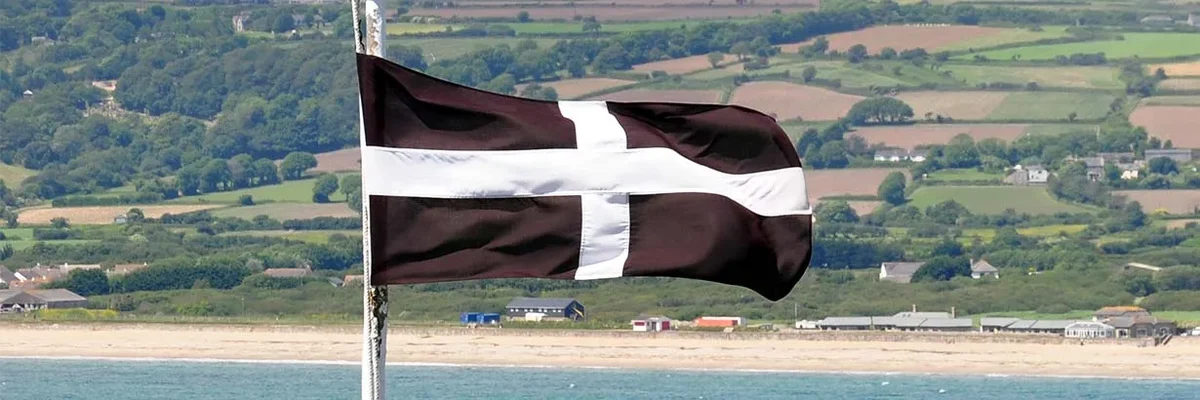
Nowhere is feeling stronger than in Cornwall, which is the only county within England that a majority of residents (53%) hold a “very” strong attachment to. The unique status of Cornwall, which today (5 March) celebrates St Piran’s Day, is perhaps not entirely surprising, given Cornwall Council last year called on the government to recognise it as the UK’s fifth nation.
Which counties have the strongest identities?
But while county identity might be strongest in Cornwall, it is not alone in inspiring attachment. Around four in ten of those in neighbouring Devon (42%) and nearby Dorset (38%) have a high level of attachment to their county, as do 42-44% of those in the northernmost English counties of Northumberland and Cumbria.
Perhaps unsurprisingly, county identity is also relatively high in Yorkshire, with 36-41% of people in North, South and West Yorkshire saying they are very strongly attached to their respective ceremonial shire, though this falls to 28% in the East Riding. This is in line with our 2024 finding that 40% of those in the region hold such an attachment to a wider ‘Yorkshire’, suggesting little difference is drawn between the traditional county as a whole and its contemporary divisions.
Across the Pennines, just over a third of those in Lancashire (35%) hold a very strong attachment to their county, while below the Wash East Anglia is an island of relative strength of county identity, with 36% of those in Norfolk and 31% of those in Suffolk having similarly intense feelings about their shires.
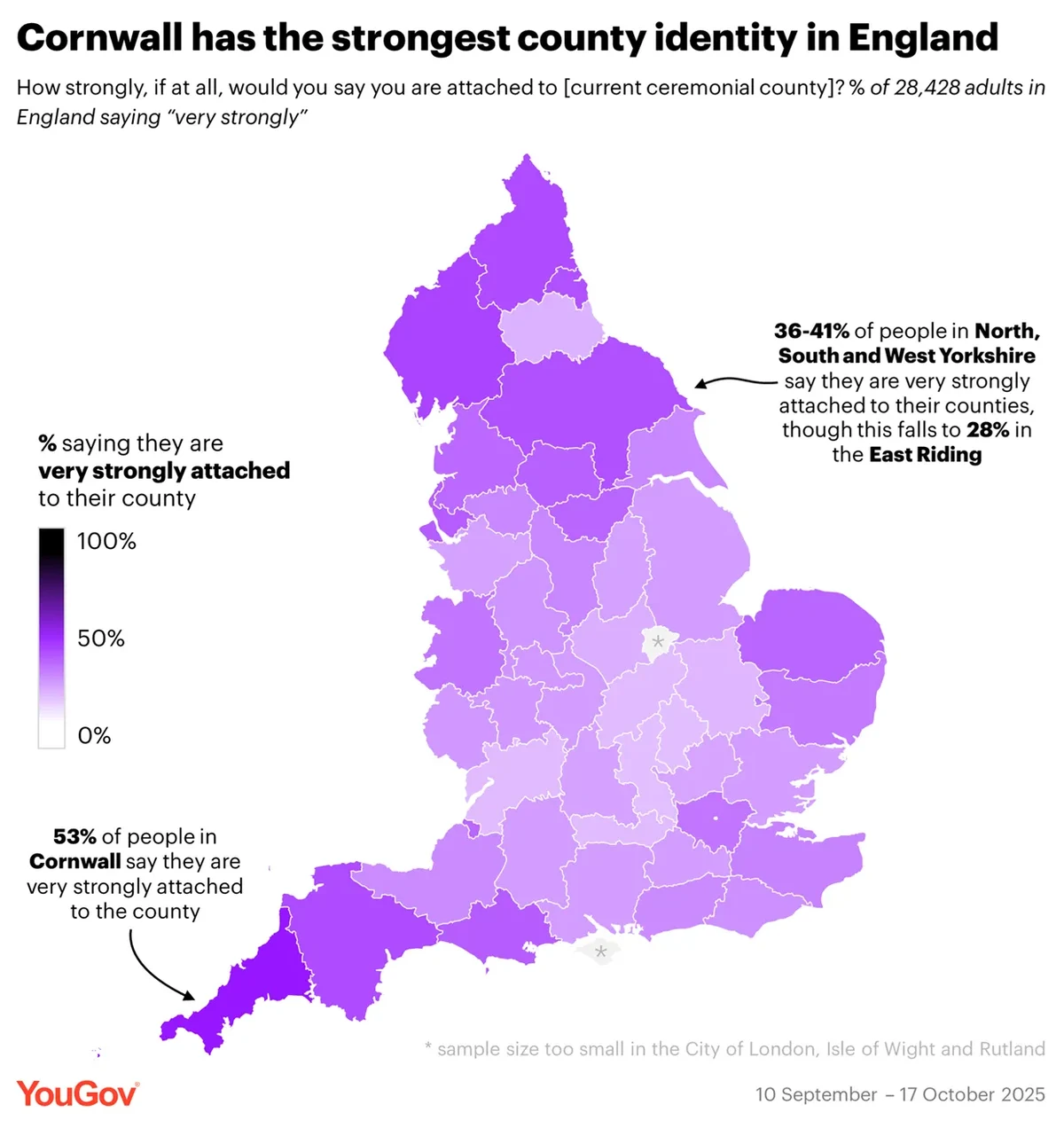
Despite sometimes being viewed as ‘artificial’ creations, there is nothing unusually low in the strength of identity in the metropolitan counties created in the 1960s and 70s, with attachment to Tyne and Wear (41%) and Merseyside (38%) in fact towards the higher end of the scale.
This is alongside a third of Greater London residents (32%) having a very strong attachment to their county, though this is higher in the ‘inner’ boroughs that were already part of the county of London when Greater London was created than in the outer ones that were not (36% vs 30%).
Such attachment to their county is held by 28% of adults in Greater Manchester, relative to 22% in the neighbouring and more historic Cheshire.
Which counties have the weakest identities?
Mirroring regional identity, attachment to your county is weaker across much of the Midlands, the South East and East of England, with an area of particularly weak feeling stretching across Bedfordshire, Berkshire, Buckinghamshire, Cambridgeshire and Northamptonshire, where only 15-17% of residents hold a very strong attachment to their county.
Shropshire (32%) and Derbyshire (28%) are the only Midlands counties which more than a quarter of residents have a very strong connection to, with the rate consistently at 23-25% in the other West Midlands counties and at 19-23% in Leicestershire, Lincolnshire and Nottinghamshire.
In the South East, 29% of those in Kent and 26-27% in both East and West Sussex hold a similarly intensive feeling about their county, with this true of 22-24% of those in Hampshire, Oxfordshire and Surrey, a level also found in Essex, Hertfordshire and Wiltshire.
Pockets of weak identity in the rest of the country include Gloucestershire (16%) and Durham (18%), though in both cases this is likely to be a consequence of competing identities.
Part of Gloucestershire was previously contained in the abolished county of Avon, where it remains for police purposes; in the rest of the county, very strong attachment to Gloucestershire is a higher 22%. Likewise, excluding the parts of Somerset that were previously in Avon increases attachment to Somerset from 27% to 33%.
A similar situation is present in County Durham, as the ceremonial county overlaps with the largely abolished county of Cleveland and the Tees Valley region. Outside of these districts, very strong attachment to Durham is a notably higher 28%.
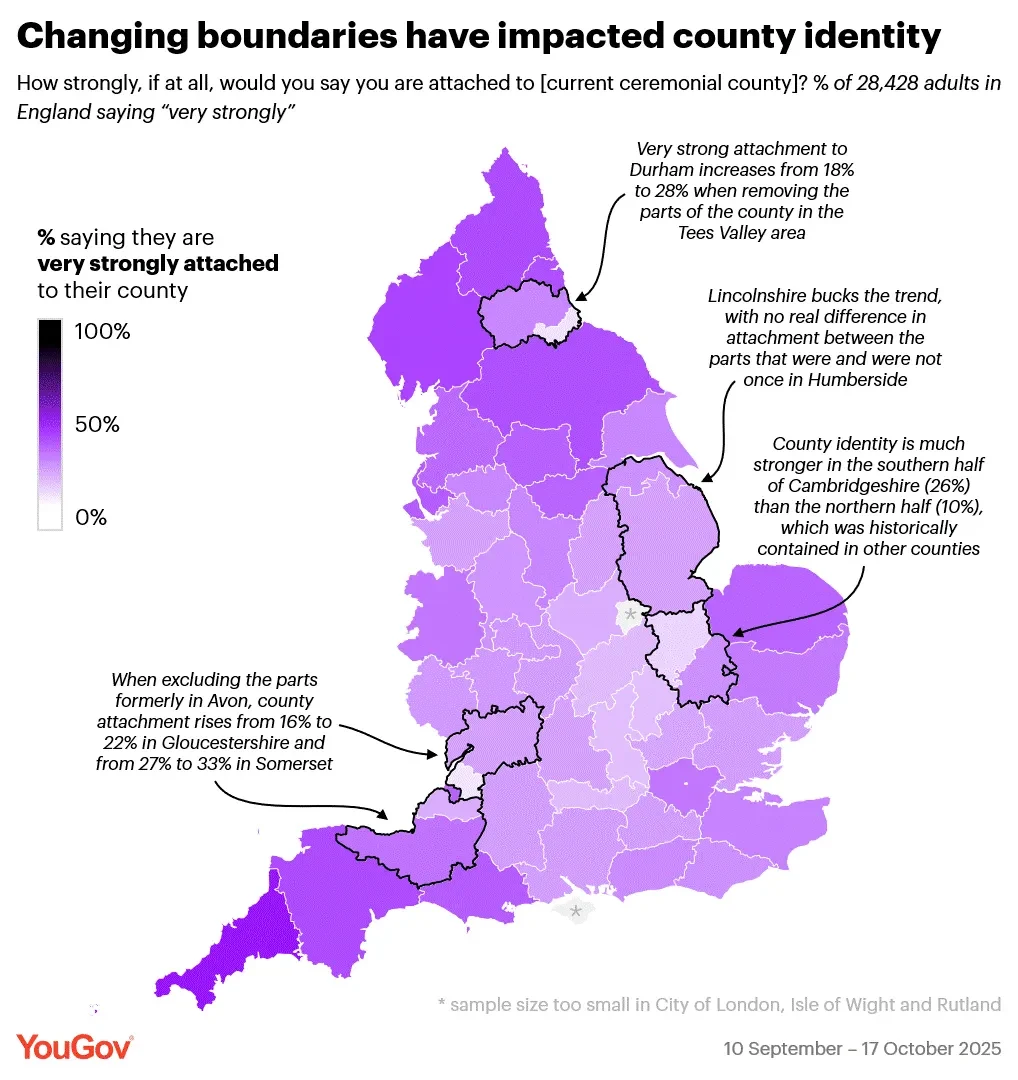
Cambridgeshire was expanded in the 60s and 70s to include Huntingdonshire, the Isle of Ely and Peterborough. In the southern half of the county, which mostly consists of ‘historic’ Cambridgeshire, a quarter of residents (26%) have a very strong attachment to the county, compared to 10% elsewhere.
Interested in taking YouGov surveys? Do you have a strong attachment to your county? What do you think about identity in general, and everything else? Have your say, join the YouGov panel, and get paid to share your thoughts. Sign up here.
Interested in commissioning YouGov research? We connect in real-time with real people around the world to gather their thoughts, behaviours, and opinions, to ensure that our research data is powered by reality. Explore our survey services here.
Photo: Getty