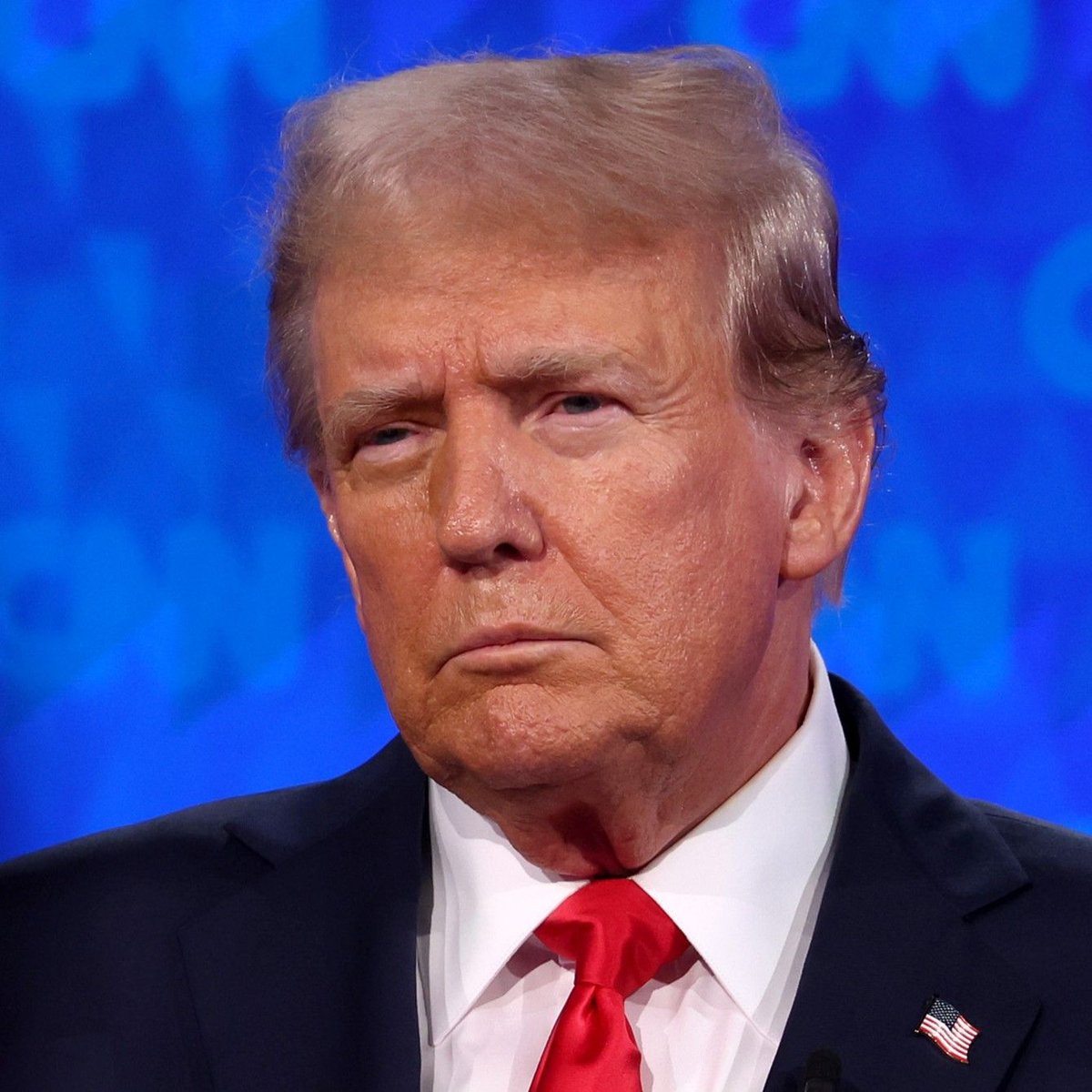


Donald Trump's handling of the Iran conflict remains unpopular according to this week's Economist / YouGov Poll: 36% of Americans strongly or somewhat approve and 55% disapprove. That's close to the findings last week, when 36% approved and 56% disapproved.
Nearly all Americans say the conflict with Iran is raising gas prices, including 69% who say it's raising gas prices a lot and 20% that it's raising gas prices a little. 2% say it's not raising gas prices and almost no one — 0% after rounding — says it's decreasing gas prices.
Americans are also more likely than not to expect Trump to continue the Iran conflict until the U.S. achieves its objectives: 49% say Trump won't back out early, and only 21% say he will. Most Republicans say Trump won't back out (71%, while only 10% say he will), while Democrats are closely divided (36% say Trump won't back out and 31% say he will).
Many Americans believe the U.S. should not go it alone in Iran. A majority of Americans say the U.S. needs help from allies, and many say that other countries have a responsibility to help keep the Strait of Hormuz open. But the share of Americans who say that other countries should agree to help the U.S. is lower. Most Americans say that countries should not help an ally if it means contradicting their values.
A majority (56%) of Americans say the U.S. needs help from allies, while only 20% say it does not. These shares are similar among Democrats (60%), Independents (51%), and Republicans (57%). Majorities of both those Republicans who say they are MAGA supporters (59%) and non-MAGA supporters (55%) say the U.S. needs help from allies. (65% of Republicans say they are MAGA supporters while 26% say they are not; 9% are not sure.)
Americans think help should come on one major challenge arising from the Iran conflict. They are far more likely to say that other countries have a responsibility to help the U.S. military stop Iran from closing the Strait of Hormuz to oil-tanker traffic (40%) than they are to say that only the U.S. has a responsibility to stop Iran from closing the strait (15%). 19% say that neither the U.S. nor other countries have such a responsibility.
But while more than half (56%) of Americans say the U.S. needs help from allies, not quite as many (47%) say that U.S. allies should agree to help the U.S. if asked. A quarter (26%) say that allies should not help the U.S. Vast majorities of those who say allies should not help the U.S. disapprove of Trump's handling of foreign policy and say the war in Iran is not justified (94% and 92%), suggesting that this group is largely made up of Americans who do not want other countries to become involved in what they view as flawed policies and an unjust war.
Views on whether allies should help the U.S. are highly polarized. While the vast majority (80%) of Republicans say that allies should help the U.S., only 25% of Democrats and 37% of Independents say the same. Nearly half (44%) of Democrats say allies should not help, as do 30% of Independents but only 5% of Republicans. There is also a split among Republicans: An overwhelming majority (90%) of Republican MAGA supporters say that U.S. allies should help the U.S. if asked, while only 62% of non-MAGA Republicans say the same.
There is more support among Americans for the U.S. coming to its allies' aid than the other way around. A majority (61%) of Americans say that the U.S. should agree to help its allies if they ask for help. Only 9% of Americans say it should not. Republicans (76%) are more likely to say the U.S. should help when asked than are Democrats (57%) or Independents (51%). And MAGA Republicans are more likely than non-MAGA Republicans to say the U.S. should help allies (81% vs. 66%). Yet in some specific contexts, Republicans and especially those who are MAGA supporters have been less likely to support U.S. aid for allies. For example, both groups are more likely to favor reducing military aid to Ukraine. This difference could stem from Republicans and especially MAGA supporters being more likely to say allies should agree to help the U.S. — which was asked about in the question immediately preceding this one — and therefore, in the spirit of reciprocity, more likely to say the U.S. should help its allies. 86% of Republicans who say allies should help the U.S. say the U.S. should help allies who ask for aid. It also could be because the context of the war in Iran makes Americans think about allies that Republicans are more inclined than Democrats to support — such as Israel and the Gulf states — while that isn't the case with the war in Ukraine.
If majorities of Americans say that the U.S. needs help from allies, why do many — particularly among Democrats and Independents — say that allies shouldn't help? One figure that may help shed light on this is that most Americans (71%) say their view is closest to the position that countries should stick to their values when deciding foreign policy, even if it means they have to refuse an ally's request for aid. Less than one-third (29%) of Americans say that instead their view is closest to the opinion that countries should always aid an ally, even if it means engaging in foreign policy that contradicts their values. Since vast majorities of those Americans who say allies should not help the U.S. say the war in Iran is not justified and say their view is closest to the opinion that "countries should stick to their values when deciding foreign policy, even if it means they have to refuse an ally's request for aid" (92% and 88%), much of this group may view an ally assisting the U.S. as compromising its values.
Though most Americans believe countries should not help allies when it contradicts their values, Republicans (57%) are much less likely to see this as closest to their views than are Democrats (81%) and Independents (76%). This difference is mostly driven by MAGA supporters. About half (51%) of MAGA Republicans say countries should always aid an ally, even if it means contradicting their values. In contrast, only one-quarter (26%) of non-MAGA Republicans say this, similar to the small shares of Democrats (19%) and Independents (24%) who say countries should compromise their values if needed to help allies.
Only 35% of Americans strongly or somewhat support Trump's handling of relations with foreign allies, while 53% disapprove.
Who do Americans think stands to benefit from the war? A majority (55%) of Americans say that Israel will benefit from the war, compared to 33% who say it will suffer. Similarly, Americans are more likely to say that Donald Trump will benefit than suffer (48% vs. 29%). But majorities of Americans say that the U.S. (59%) will suffer from the war. Majorities also think the Iranian people (66%) and Iran (80%) will suffer. Past YouGov polling has found that most Americans have negative opinions about the Iranian government but many have positive views about the Iranian people and this week's poll found that 81% of Americans say the Iranian people should decide who leads the country.
Views on whether the U.S. will benefit or suffer from the war are polarized by party identification and MAGA support. Most Democrats (83%) and Independents (64%) say the U.S. will suffer from the war in Iran, but few Republicans (29%) say the same. About half (52%) of Republicans say the U.S. will benefit, including 65% of MAGA Republicans but only 27% of non-MAGA Republicans.
Image: Getty (Michael M. Santiago / Staff)
What do you really think about President Trump, American politics in general, and everything else? Share your reality, join the YouGov panel, and get paid to share your thoughts. Sign up here.