
A new YouGov poll finds that Americans view space exploration favorably, though few have any interest in traveling to space or living on the moon themselves. The poll also finds that men are more likely than women to be interested in traveling to space and to say it’s important for the U.S. to be a global leader in space exploration.
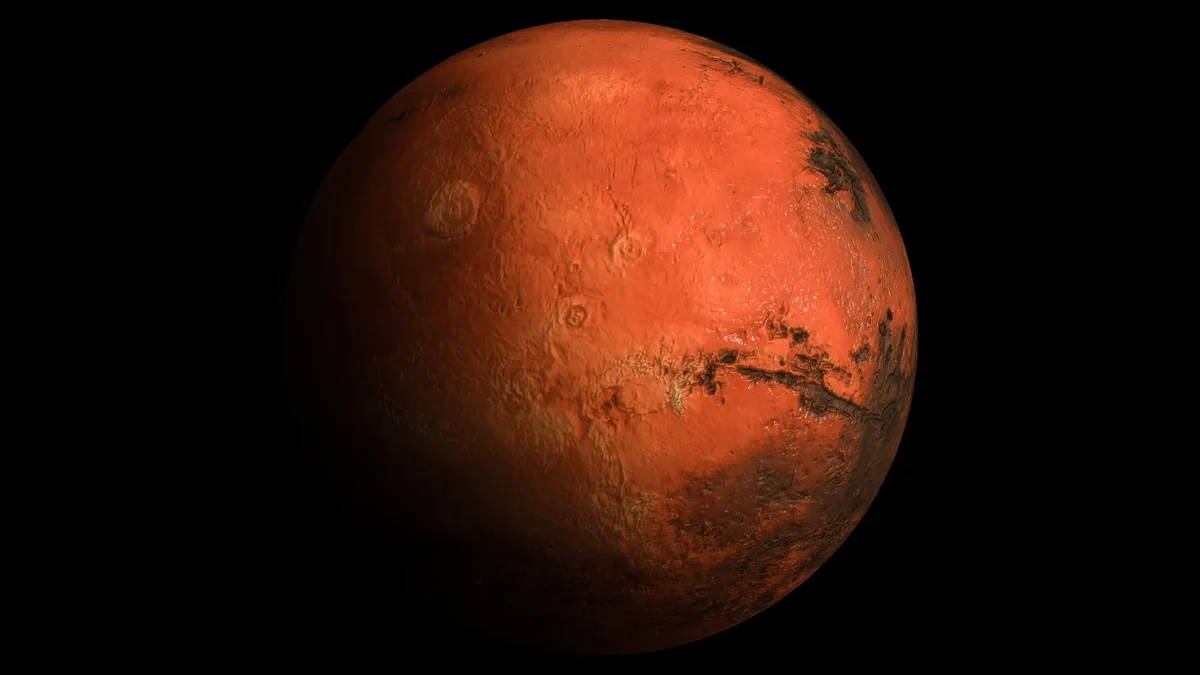
Americans' favorite planet — other than Earth, not included in the question —) is Mars: 19% say this is their favorite planet, including 27% of men and 13% of women. Fewer Americans say their favorite is Saturn (14%), Jupiter (8%), Pluto (7%), or Venus (6%); 38% aren't sure. (Pluto was included as a response option despite being reclassified to a dwarf planet from full-fledged planet 20 years ago.)
Most Americans (55%) say they don’t know what their least favorite planet is. But 12% say Mercury is their least favorite planet. 11% say Pluto is their least favorite, and 9% say Uranus is their least favorite. Only 3% say Mars is their least favorite.
About half (52%) of Americans say they would favor the U.S. sending astronauts to Mars; 19% would oppose this and 29% are not sure. 12% of Americans say Mars should be a greater priority for space exploration than the moon, while 20% say the moon should be a greater priority and 40% say both should be equally prioritized.
37% of Americans have a very favorable view of NASA, up from 30% in November 2025. Men are more likely than women to have a very favorable view of NASA (42% vs. 33%).
At least three-quarters of Americans have favorable opinions of each of Earth (85%), the moon (79%), and outer space (75%). Majorities have favorable opinions of the Apollo 11 mission (70%), the recent Artemis II mission (68%), and Mars (65%). Men are more likely than women to have favorable opinions of the Apollo 11 mission (76% vs. 63%) and the Artemis II mission (74% vs. 62%).
The largely favorable opinion of the Artemis II mission echoes findings from another recent YouGov poll that found 34% of Americans say they loved this recent moon voyage and 24% liked it.
38% of Americans — including 44% of men and 33% of women — think it’s very important that the U.S. be a world leader in space exploration.
43% of Americans say the statement that they agree with more is “private companies and individuals should be able to build their own rockets to take people into space” rather than “space travel should be left to national governments only,” which 33% agree with more. Republicans are more likely than Democrats to say private companies and individuals should be able to build their own rockets to take people into space (55% vs. 34%).
About one-third (36%) of Americans say they think it is very or somewhat likely that in 50 years, at least some people will be living in space permanently, either on another planet such as Mars or on the moon. Men are more likely than women to think this is likely (44% vs. 29%). 46% of Americans — including 44% of men and 49% of women — think this is not very or not at all likely.
Do Americans think forming a colony on the moon is generally a good or a bad idea? 26% say it’s a good idea, 35% say it is a bad idea, and 39% are not sure. Men are more than twice as likely as women to say colonizing the moon is a good idea (37% vs. 15%).
Among people who believe it’s very important that the U.S. is a world leader in space exploration, 44% think colonizing the moon is a good idea and only 20% say it's a bad idea.
Only 4% of Americans think people will form a permanent human colony on the moon within the next 10 years. 7% think this will happen within the next 25 years, 11% think it will happen within the next 50 years, and 13% think it will happen within the next 100 years. 16% think it will be more than 100 years before people form a permanent colony on the moon and 23% think it will never happen.
One in five Americans say they would definitely (7%) or probably (12%) live in a colony on the moon if they had the chance to do so in their lifetime. Two-thirds say they definitely (46%) or probably (22%) would not. Women are more likely than men to say they definitely would not live in a colony on the moon (55% vs. 36%)
While few Americans want to live on the moon, nearly half (47%) say they would like to visit the moon if their safe return could be guaranteed. 58% of men and 37% of women say they would like to visit the moon under these circumstances.
Fewer (29%) say they would pay to be a passenger on a short commercial space flight if they could afford to do so. Men are about twice as likely as women to say they would do this (40% vs. 19%).
Who — or what — might the future moon visitors or colonists encounter out there? 54% of Americans say aliens definitely (20%) or probably (34%) exist.
But for the time being, we may have to settle for the aliens visiting us rather than the other way around. 18% of Americans think aliens have definitely visited Earth in recent years, and 30% think they probably have. 17% think they probably have not visited and 16% say they definitely have not.
Republicans are more likely than Democrats to say aliens have definitely visited Earth in recent years (23% vs. 13%). In November 2025, fewer Republicans (11%) said aliens had definitely visited Earth in recent years.
Related:
- Half of Americans believe aliens have visited Earth
- This poll is over the moon
- More now think NASA will get people to Mars by its 2040 goal than thought so last year
See the results for this YouGov survey
— Carl Bialik contributed to this article
Methodology: This article includes results from an online survey conducted on April 7 - 9, 2026 among 1,105 U.S. adult citizens. Respondents were selected from YouGov’s opt-in panel to be representative of adult U.S. citizens. The sample was weighted according to gender, age, race, education, 2024 presidential vote, 2020 election turnout and presidential vote, baseline party identification, and current voter registration status. 2024 presidential vote, at time of weighting, was estimated to be 48% Harris and 50% Trump. Demographic weighting targets come from the 2019 American Community Survey. Baseline party identification is the respondent’s most recent answer given around November 8, 2024, and is weighted to the estimated distribution at that time (31% Democratic, 33% Republican). The margin of error for the overall sample is approximately 4 percentage points.
Image: Getty (DrPixel)
What do you really think about President Trump, American politics in general, and everything else? Share your reality, join the YouGov panel, and get paid to share your thoughts. Sign up here.