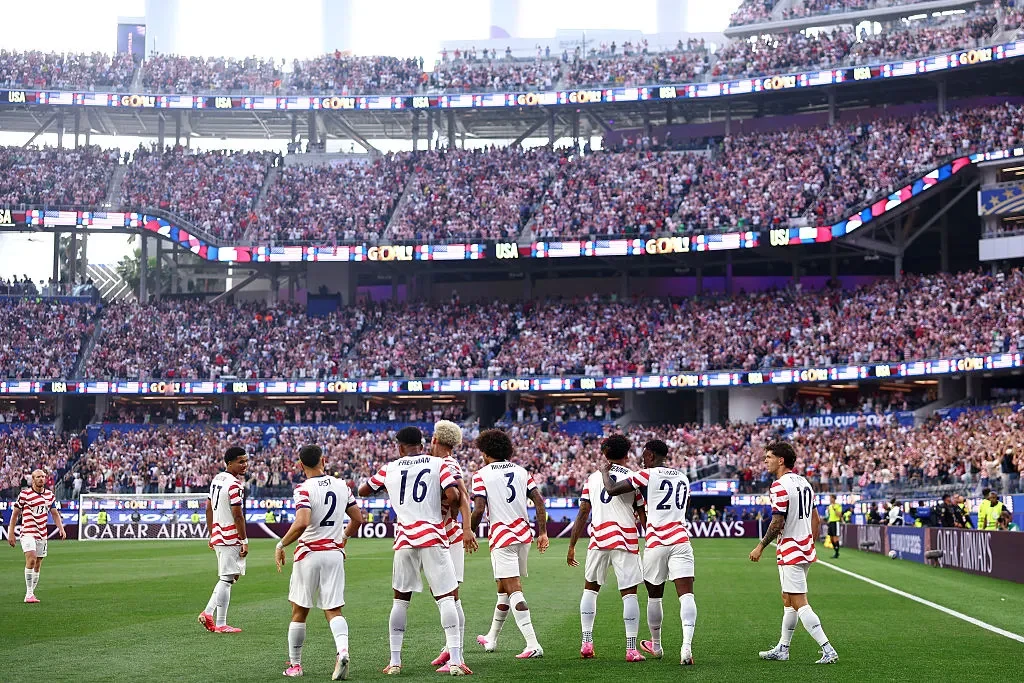
The FIFA World Cup 2026 has only just started, but the tournament is already gaining traction among the U.S. public. Based on data from YouGov SportsIndex, both Buzz and Word of Mouth (WOM) Exposure have risen steadily in the first five days of the 39-day event.
This mirrors a wider surge in soccer popularity in America since the last FIFA World Cup. Global Fan Profiles data tells us that the share of Americans who follow soccer regularly has risen from 8% in late 2022 to 12% in the first quarter of 2026.
Buzz for the FIFA World Cup is up across generations, but Gen Z stands out
Just five days into the tournament, Buzz around the FIFA World Cup 2026 in the U.S. has already reached a far higher point than it did at any stage during the 2022 edition. Ahead of Qatar 2022, Buzz among U.S. adults stood at 4.3 a week before kick-off and reached 6.0 on the opening day. By comparison, Buzz around the 2026 tournament was already at 11.9 seven days before the start, rose to a high of 15.6 on opening day, and hit 17.9 by day five. By contrast, 6.6 was the highest point achieved during the Qatar event.
Younger Americans are leading the charge with the greatest increase in Buzz between the two tournaments, but all generations have recorded notable growth.
Among Gen Z adults, peak Buzz for the 2026 World Cup has reached 43.4, compared with a peak of 25 for the 2022 edition. This lift underlines the extent to which soccer’s growing U.S. profile is pronounced among younger consumers.
Millennials have also recorded a clear increase, with peak Buzz rising from 7.7 in 2022 to 18.1 in 2026. The peak among Gen X has moved from 5.3 to 13.5, while among Baby Boomers it has risen from 3.8 to 9.2.
Americans are not just hearing about the FIFA World Cup, they are also talking about it
The early strength of the tournament is also visible in Word of Mouth (WOM) Exposure, a measure of whether people have heard friends or family talking about a brand, event, or property in the past two weeks.
In 2022, WOM Exposure around the FIFA World Cup in the U.S. built gradually over the course of the tournament, rising from 7.2 a week before the start to a peak of 26.4 by day 29 – the last day of the event. The 2026 tournament has already matched and surpassed that level almost immediately. WOM Exposure stood at 21.7 seven days before kick-off, reached 24.8 on the opening day, and climbed to 27.2 by day four.
There is still plenty of tournament left to play, and WOM Exposure scores often rise as stakes increase, knockout rounds approach, and casual audiences begin to tune in. With the final scheduled for July 20, the ceiling may be significantly higher still.
But the early data indicates that the FIFA World Cup 2026 has already broken through nationally in comparison to previous tournaments. This might be a bumper season for soccer in the U.S. – and also for event sponsors.
Methodology: YouGov SportsIndex collects data on thousands of brands and events every day. Buzz measures whether U.S. adults have heard something positive or negative about a sporting event or league in the past two weeks, with scores calculated by subtracting negative responses from positive responses. Data is based on U.S. adults aged 18+ and compares FIFA World Cup 2022 and FIFA World Cup 2026 scores across equivalent tournament periods.