Pepsi finishes top of YouGov’s full-tournament ranking, followed by Pringles and Fox.
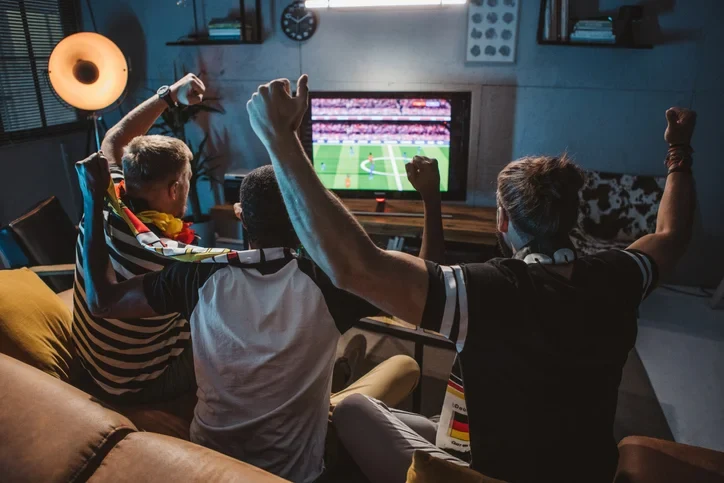
The FIFA World Cup 2026 has wrapped up after 104 matches across five weeks, but the competition between brands continued well beyond the pitch.
Using YouGov BrandIndex, we analyzed more than 2,000 brands to identify those that gained the most with U.S. consumers during the tournament. The ranking measures changes in Ad Awareness, Buzz and purchase Consideration, with extra weight given to Consideration.
Our first look, published midway through the tournament, examined brand performance during its opening 18 days. Extending the analysis across the full 39-day period from June 11 through July 19 provides a more complete picture: several early leaders maintained their momentum, while new brands bubbled to the top as campaigns, viewing habits and fan activations developed over the course of the tournament.
This time, we focus on the 16 highest-ranking brands with clear U.S.-focused FIFA World Cup or soccer-related campaigns, promotions, partnerships and activations.
Pepsi converts football culture into consumer consideration
Pepsi finishes #1 with an Ad Impact Score of 40.6, the clear leader in the final ranking.
The brand recorded the largest increase in both Buzz, up 12.2 points, and purchase Consideration, up 10.4 points. Ad Awareness also rose by 7.5 points, giving Pepsi the most balanced performance among the top 16.
Its Pepsi Football Nation platform was designed around football culture rather than official tournament status. The campaign leaned into fan rituals, chants and the emotional intensity of the sport, supported by a global roster of football stars.
That distinction matters because Coca-Cola, not Pepsi, is FIFA’s official soft drink partner. Pepsi nevertheless generated the stronger BrandIndex movement by positioning itself as a participant in fan culture rather than simply an advertiser around it.
Official sponsorship provides access. Pepsi shows that cultural relevance can still win the conversation.
Snacks remain central to the viewing occasion
Pringles ranks #2 with gains across all three BrandIndex metrics: Ad Awareness increased by 8.5 points, Buzz by 8.1 and Consideration by 8.6.
The brand benefited from Kellanova’s U.S. Soccer partnership and its “Score for Your Pack” promotion, which used specially marked products, soccer prizes and retail activity to connect the snack brand with the summer tournament.
Quaker places #6. As the Official Breakfast of FIFA World Cup 26 and sponsor of the Player Escort Program, Quaker found a different consumption occasion from the traditional watch-party snack brands. Its Ad Impact Score of 24.7 included increases of 7.0 points in Buzz and 6.1 points in Consideration.
General Mills also ekes in at #16 following its tournament-long fan fests and a partnership with Amazon to highlight star players.
Together, Pringles, Quaker, and General Mills show how broadly the tournament can influence packaged-food brands—from the sofa to the breakfast table.
Official status delivers visibility, but activation determines impact
Fox ranks #3 overall and recorded the largest Ad Awareness increase among the top 16, rising 9.5 points.
As the official English-language U.S. broadcaster, FOX Sports carried all 104 matches across FOX, FS1 and FOX One, supported by expanded studio coverage and tournament programming. Few brands had a more direct relationship with the viewing experience.
Coca-Cola ranks #10. The official FIFA partner supported its long-running sponsorship through the “Feel It All” campaign, limited-edition packaging, Coca-Cola x Panini sticker activity and fan experiences. Its largest movement came in Consideration, which increased by 6.7 points.
Buchanan’s ranks #12 with a 6.9-point increase in Ad Awareness and a 7.1-point rise in Buzz. The whisky brand was part of Diageo’s role as an Official Spirits Supporter in the Americas, supported by limited-edition bottles and its “Nuestro Mundo” campaign.
Alaska Airlines, meanwhile, shows how host-city partnerships can give brands a more localized route into the tournament. Ranked #4, the airline served as an Official Seattle World Cup 2026 Host City Supporter and introduced a dedicated aircraft livery celebrating Seattle’s role in the competition. Consideration increased by 7.6 points, its strongest metric gain.
These brands had different levels of formal association with the event, but each gave consumers something visible and tangible: coverage, packaging, travel or a connection to a host city.
Duracell and Samsung use familiar football faces
Duracell places #5 after recording a 7.8-point increase in Consideration, the third-largest rise among the top 16.
Its “Messi Reboot” campaign featured Lionel Messi across television, digital, social media, retail activity and sweepstakes. The idea connected Duracell’s core promise of dependable power with one of the sport’s most recognizable figures.
Samsung ranks #11, supported by a tournament-timed television campaign starring Thierry Henry. The campaign positioned Samsung’s 2026 TVs around the World Cup viewing experience, encouraging fans to watch the tournament on a larger and more immersive screen.
Samsung’s Ad Awareness increased only slightly, by 0.4 points, but Buzz rose by 8.2 and Consideration by 6.9. That pattern suggests the campaign may have done more to deepen interest among exposed consumers than to substantially expand the number who recalled seeing Samsung advertising.
Both brands demonstrate the value, and cost, of borrowing established football equity. A famous player can provide immediate cultural recognition, but the strongest creative still connects that talent directly to the product.
Restaurants turn matches into reasons to visit
California Pizza Kitchen and Hooters finish almost level, ranking #8 and #9 respectively.
California Pizza Kitchen’s “SEE PK” campaign linked rewards and promotions to penalty kicks, including free pizza offers and a mobile “Faceoff Pizza” activation. The brand increased Ad Awareness by 6.6 points, Buzz by 6.8 and Consideration by 5.2.
Hooters leaned more directly into match viewing. Locations opened early for selected games and promoted food and drink offers connected to Team USA and the broader tournament. Its Consideration score increased by 6.1 points.
Universal Studios Hollywood ranks #14 after turning Universal CityWalk into a tournament destination. Its activation included match screenings with Telemundo, fan pop-ups and themed food and drink. Buzz increased by 8.6 points, one of the largest gains in the ranking.
The lesson is straightforward: restaurants and entertainment destinations do not need official sponsorship rights to participate. They can make themselves part of where and how fans experience the tournament.
Enterprise makes every corner count
Enterprise ranks #7 with the second-largest increase in Buzz among the top 16, up 10.9 points.
Its #OnEveryCorner campaign, fronted by Rob McElhenney, turned corner kicks into a promotional mechanic. Fans in seven countries, including the U.S., could enter to win a vehicle whenever a corner resulted in a goal by posting designated hashtags on X.
The campaign worked because it focused on a repeatable part of match play. Rather than relying on one team, player or result, Enterprise gave fans a reason to pay attention whenever the ball moved toward the corner flag.
That helped transform a routine moment in the game into an ongoing brand trigger throughout the tournament.
Google and Waymo help fans navigate the tournament
Google ranks #13 after integrating the World Cup across several products rather than relying on one traditional advertising campaign.
Search helped users follow matches and tournament information, while Maps and Waze supported travel and navigation in host markets. Gemini offered planning and content tools, and YouTube served as a Preferred Platform for FIFA World Cup 2026.
Waymo ranks #15 and provides one of the clearest examples of a brand rising later in the tournament analysis. Buzz increased by 10.4 points, although Consideration rose by a more modest 2.1 points.
The company explicitly promoted its service as “match-ready,” expanded coverage across six U.S. host cities and highlighted journeys to matches and watch parties. Waymo also debuted its first national brand campaign during FOX’s USA–Paraguay broadcast.
Google helped fans find, follow and understand the tournament. Waymo focused on physically moving them through host cities. Both illustrate how major events create opportunities for utility brands—not only traditional sponsors and advertisers.
Where's Bustelo?
The top ranker of YouGov's initial World Cup analysis, Bustelo falls out of the top 16 when looking across the whole tournament.
Bustelo’s Game Face campaign went viral for its limited-edition coffee cans, but appeared to not have sustained throughout the whole tournament.
Notably, Bustelo ran an advertisement during the FIFA World Cup Final, which initial data suggests sent the coffee brand back on the path toward its mid-tournament highs.
Methodology
The rankings in this article are based on YouGov BrandIndex data collected among U.S. adults interested in the FIFA World Cup. The analysis compares two periods: the 39 days before the tournament began on June 11, and the tournament period from June 11 to July 19.
The starting universe included more than 2,000 brands tracked in YouGov BrandIndex. Brands were ranked using an Ad Impact Score, calculated as:
Ad Awareness change + Buzz change + (Consideration change x 2)
This formula is designed to identify brands gaining not only in visibility and conversation, but also in consumer consideration.
The top-gaining brands were then reviewed for clear FIFA World Cup or soccer-related campaigns, sponsorships, licensed products, promotions or tie-ins. The final published list includes 16 brands with notable campaign activity.
Metrics used in this analysis:
- Ad Awareness: Which of the following brands have you seen an advertisement for in the past two weeks?
- Buzz: Over the past two weeks, which of the following brands have you heard something positive or negative about, whether in the news, through advertising, or talking to friends and family?
- Consideration: When you are in the market next to make a purchase, which brands would you consider?
Scores are shown as point changes between the two comparison periods. Figures may be rounded.
Among the final 16 brands included in the published ranking, minimum sample sizes for each metric were n>330 in the current period and n>350 in the previous period for Ad Awareness, Buzz and Consideration.
About YouGov BrandIndex
YouGov BrandIndex is an always-on brand tracking tool that measures consumer perceptions of thousands of brands across sectors and markets. It helps marketers monitor brand health, benchmark against competitors and understand how consumer perceptions shift over time.
For major cultural and sporting events such as the FIFA World Cup, BrandIndex can help identify which brands are breaking through, which campaigns are changing consumer perceptions and which categories are gaining most from heightened fan attention.