The FIFA World Cup offers brands a direct route into one of the largest sporting audiences in the world. For official sponsors, this exposure opportunities can be significant – recent YouGov analysis shows how Gap Kids, Coca-Cola, Pringles, Doritos and Cheetos have all recorded noteworthy gains across Awareness, Buzz and Consideration.
But official rights are not the only way for a brand to attract attention around the event. YouGov BrandIndex data suggests that Levi’s and Gillette – neither of which is an official FIFA sponsor – found an unusual route into the conversation.
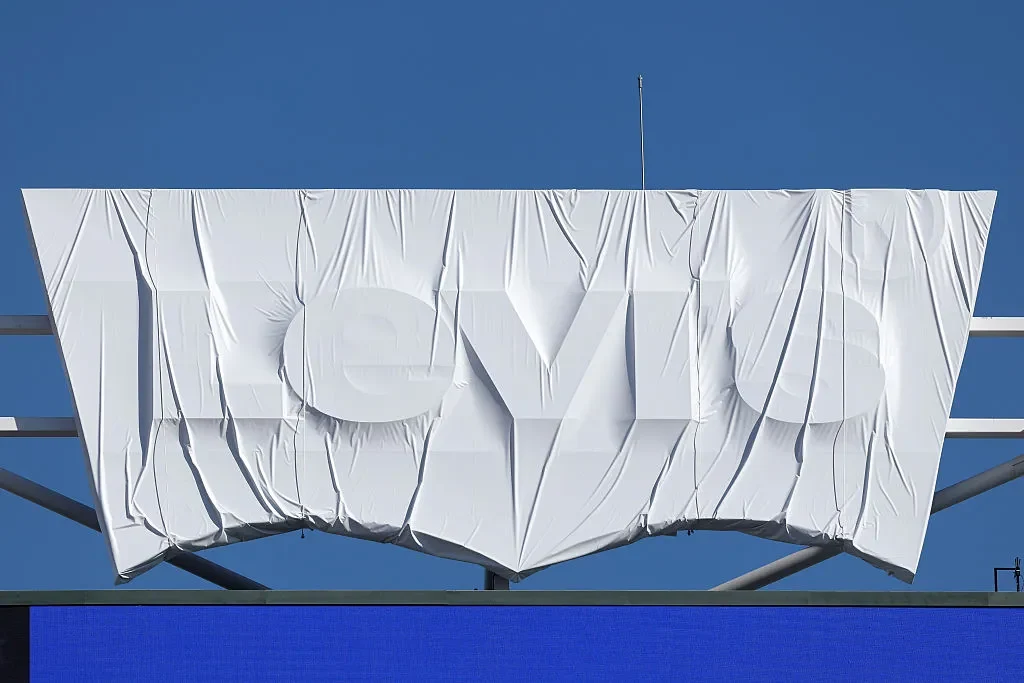
FIFA’s clean-venue rules required non-partner branding to be concealed at tournament stadiums, including the names and logos attached to Levi’s Stadium in California and Gillette Stadium in Massachusetts. Both brands used the opportunity to get creative – turning the restriction into a marketing moment.
Levi’s may have followed the rules by masking the stadium’s wordmark, but the carefully placed cover kept the brand’s distinctive batwing silhouette clearly visible.
Levi’s also replicated the censored wordmark across its social channels and stores, owning the narrative around the moment. Gillette capitalised on the opportunity with a social campaign that depicted its stadium branding concealed beneath shaving foam.
The activations generated widespread online attention. But did that attention translate into measurable movement among FIFA World Cup fans?
Buzz rises for Levi’s and Gillette among FIFA World Cup fans
On June 11, the opening day of the FIFA World Cup, Levi’s had a Buzz score of 23.0 among U.S. adults interested in the tournament.
Buzz measures whether consumers have recently heard something positive or negative about a brand.
By July 12, Levi’s Buzz score among FIFA World Cup fans had risen to 29.1, an increase of 6.1 points.
The improvement was not entirely linear. Even though media coverage about the campaign was almost immediate, Levi’s score moved within a relatively narrow range during the earlier stages of the competition before climbing more sharply in July. But by the latest date in the analysis, its Buzz score was at its highest point during the period.
Gillette experienced a similarly substantial increase overall. Its Buzz score among FIFA World Cup fans stood at 22.9 on June 11 and reached 28.1 by July 12, representing a rise of 5.2 points.
It’s worth noting that for both brands the movements among FIFA World Cup fans are especially remarkable when placed alongside score trajectories among the wider U.S. population. This strengthens the likelihood that tournament-related activations may have had a role to play.
The uplift was also visible in Word of Mouth Exposure, suggesting the brands were not only being heard about more often but were also being discussed more. Among FIFA World Cup fans, Levi’s WOM Exposure rose from 17.4 on June 11 to 22.9 on July 12, while Gillette’s increased from 16.1 to 19.2.
Methodology: YouGov BrandIndex collects data on thousands of brands every day. Buzz scores are based on whether respondents have heard anything positive or negative about a brand over the past two weeks, while Word of Mouth Exposure measures whether they have spoken about the brand with friends or family during the same period. Scores are based on daily surveys of U.S. adults interested in the FIFA World Cup and are reported as a net score on a scale from -100 to +100 for Buzz and as a percentage from 0 to 100 for Word of Mouth Exposure. The average daily sample size was 522 FIFA World Cup fans for Levi’s and 294 for Gillette. Data is weighted using a propensity scoring methodology with targets from the American Community Survey to ensure representation by age, gender, race, education and region. Unless otherwise stated, scores are shown as a four-week moving average. The analysis covers May 13 to July 12, 2026.