Key finding:
- Budweiser’s Ad Awareness score rose from 23% on launch day to 36% by May 13 among Americans aged 21+
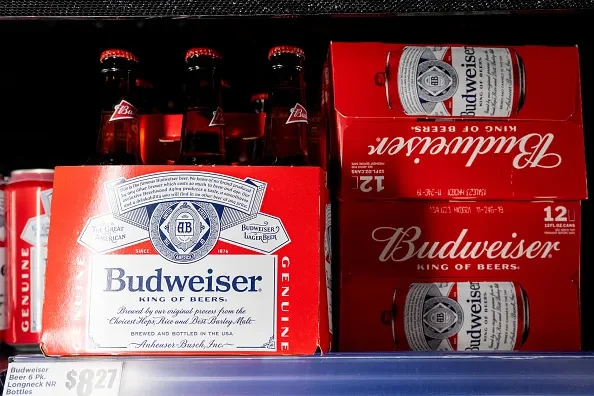
Budweiser launched its new “Great Delivery” campaign on April 30, 2026, as part of a broader summer push celebrating the brand’s 150th anniversary alongside America’s upcoming 250th birthday. Early data from YouGov BrandIndex suggests the campaign has boosted visibility for the brand.
For the purposes of this analysis, we are looking at Ad Awareness – the percentage of consumers who say they have seen an advertisement for a brand in the past two weeks – to understand how Budweiser’s latest campaign has landed among audiences.
Ad Awareness rises following campaign launch
On the day Budweiser launched “Great Delivery” (April 30), the brand’s Ad Awareness score stood at 23% among Americans aged 21+.
Following the campaign launch, the score trended upward, eventually peaking at 36% on May 13. This marks a +13-percentage point increase from launch day.
Although the score eased after the peak, it remained elevated at 28% by May 16, still five percentage points higher than on launch day.
The data suggests the campaign creative is reaching consumers effectively and remaining memorable among both the broader public.
Methodology:
YouGov BrandIndex collects data on thousands of brands every day. Budweiser’s Ad Awareness score is based on the question: Which of the following brands have you seen an advertisement for in the PAST TWO WEEKS?. Scores are reported as percentages, based on daily surveys of US adults. Data is weighted using a propensity scoring methodology with targets from the American Community Survey (ACS) to ensure representation by age, gender, race, education, and region. Figures are shown as a 1-week moving average with average sample size ranging from 224-249 between April 18 to May 16, 2026.
Image credits: Getty Images