
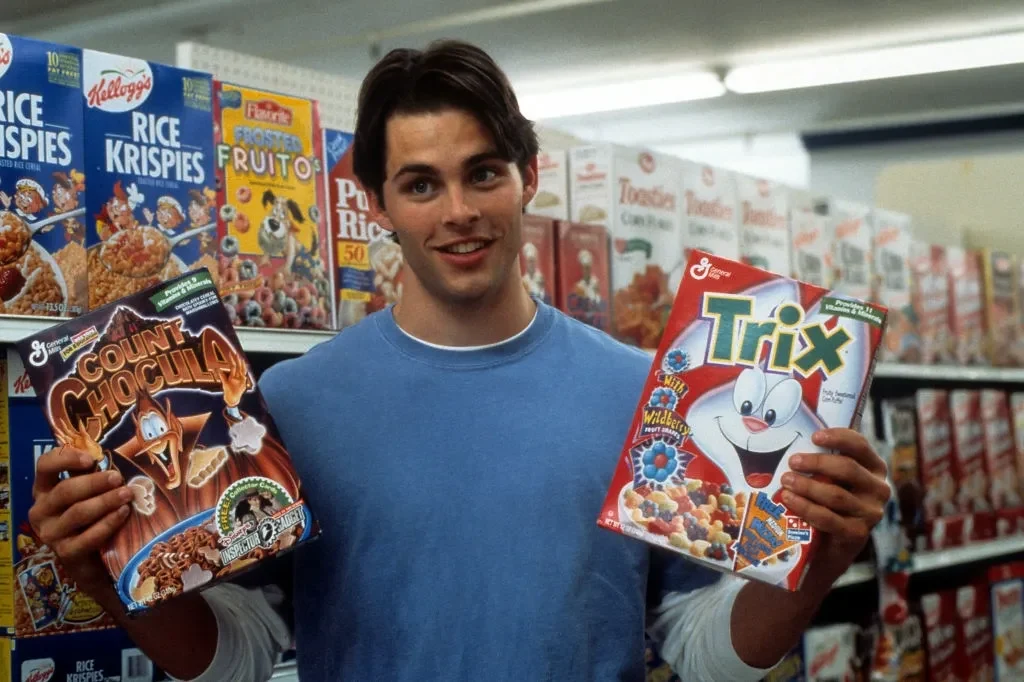
Key findings:
- 45% of U.S. adults say they always or often notice brands or products appearing in movies, TV shows, or streaming content.
- 76% of viewers who notice product placement say food and beverage brands are the most visible category, far ahead of automotive (45%) and technology/mobile devices (41%).
- 40% of U.S. adults believe product placement is more noticeable today than it was three years ago, rising to 52% among adults aged 18-34.
- 52% of U.S. adults consider product placement an effective form of advertising, while only 14% view it as ineffective.4
- 4% have taken at least one action after seeing a brand featured in entertainment content, including 22% who searched for the product online and 10% who made a purchase.
Product placement has become a growing talking point among viewers. Brands featured in Netflix’s Nobody Wants This drew attention for how prominently they appeared on screen. More recently, The Devil Wears Prada 2 has also generated buzz for its extensive brand partnerships.
Against this backdrop, new YouGov Survey data examines how often U.S. adults notice product placement, and how they respond to brands featured in entertainment content.
How often do U.S. adults notice product placement in movies, TV shows, and streaming content?
Nearly half of U.S. adults (45%) say they always or often notice brands or products appearing in movies, TV shows, or streaming series, while 54% say they notice them sometimes or rarely.
Younger adults are particularly attentive to product placement. More than half of those aged 18-34 (53%) say they always or often notice branded products in entertainment content, compared with 39% of adults aged 55 and older.
Which types of brands are most noticeable in entertainment content?
Among U.S. adults who notice product placement, food and beverage brands are by far the most visible category, with 76% saying they notice them. Automotive brands (45%) and technology and mobile devices (41%) follow.
Category visibility varies across demographic groups. Men are more likely than women to notice automotive brands (52% vs. 38%), while women are more likely to notice beauty and personal care products (40% vs. 21%). Younger adults aged 18-34 are especially likely to notice technology and mobile devices (52%), fashion and luxury brands (45%), beauty and personal care products (43%), gaming brands (31%), and health and wellness products (36%).
Does product placement feel more obvious today?
Two in five U.S. adults (40%) say product placement is more noticeable today than it was three years ago, including 17% who say it is much more noticeable. Only 8% say it is less noticeable, while 35% believe it has stayed about the same.
Younger adults are particularly likely to perceive an increase. A majority of 18-34-year-olds (52%) say product placement is more noticeable today, compared with 33% of adults aged 55 and older.
Most U.S. adults view product placement as an effective advertising channel
More than half of U.S. adults (52%) view product placement as an effective form of advertising, including 14% who consider it very effective. Only 14% describe it as ineffective, while 25% say it is neither effective nor ineffective.
Views are broadly consistent across demographic groups, though adults aged 18-34 and 35-54 are slightly more likely than older adults to consider product placement effective (54% vs. 50%).
What makes product placement annoying to viewers?
While many see product placement as effective, viewers draw the line when it feels overly intrusive. The most common complaint is when placements feel forced or unnatural, with 48% of Americans saying this makes them excessive or annoying.
Other commonly cited issues include characters talking about brands unnaturally (41%), brands being shown too frequently (37%), products being used in unrealistic ways (37%), and branding distracting from the story (36%).
Younger adults are generally more sensitive to these issues. Half of 18-34-year-olds (50%) say forced or unnatural placements are annoying, and 49% dislike characters talking about brands unnaturally. By contrast, one-quarter of adults aged 55 and older (25%) say product placement does not feel excessive or annoying to them.
What actions do consumers take after seeing a brand on screen?
For many viewers, product placement goes beyond awareness and drives engagement. More than two in five Americans (44%) say they have taken at least one action after seeing a brand featured in entertainment content.
The most common actions are searching for the brand or product online (22%), talking about it with others (18%), considering a purchase (17%), visiting the brand's website or social media page (16%). Only around one in ten (10%) have purchased a product after seeing it featured in a movie or TV show.
Younger adults are significantly more likely to engage with brands after seeing them in entertainment. Nearly three in five adults aged 18-34 (58%) say they have taken some action, compared with 32% of those aged 55 and older.
Methodology: YouGov Surveys: Serviced provides quick survey results from nationally representative or targeted audiences in multiple markets. This study was conducted online on June 8-9, 2026, with a nationally representative sample of 1,183 adults (aged 18+ years) in the US, using a questionnaire designed by YouGov. Data figures have been weighted by age, race, gender, education, and region to be representative of all adults in the US (18 years or older), and reflect the latest population estimates from the Census Bureau’s American Community Survey.
Image: Getty Images