 United Kingdom
  United States
  Deutschland
  France
  España
  Italia
  International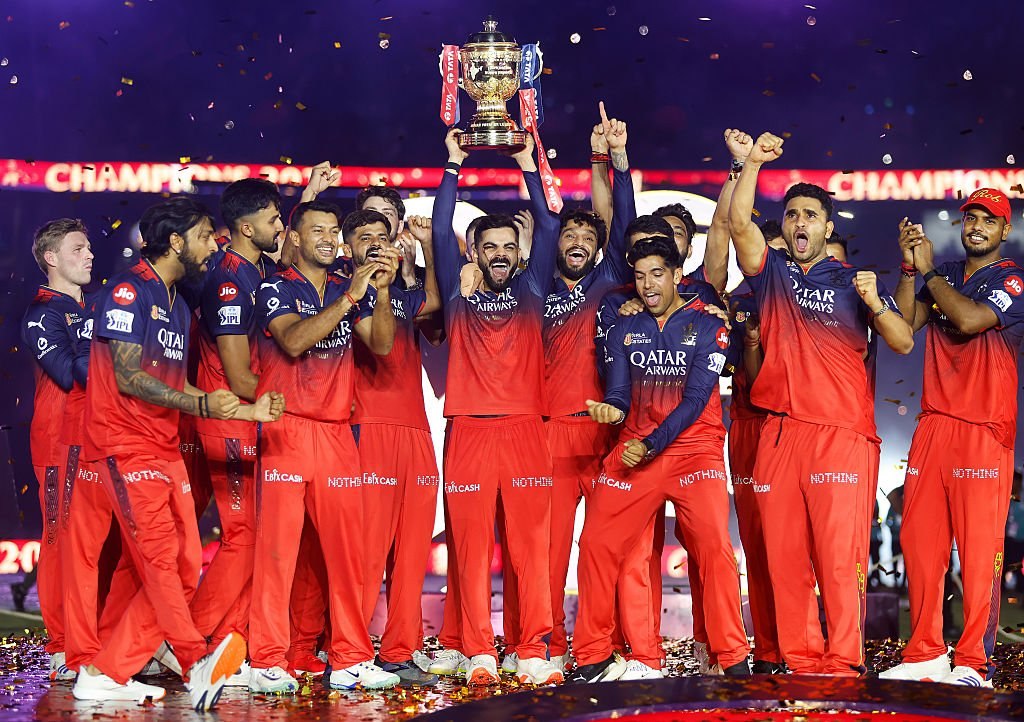
- By Umang Poddar
The IPL provides brands something few media environments can match: repeated, high-attention exposure over several weeks. But repeated exposure does not always translate into clear ownership. In a tournament this crowded, the more revealing question is not whether viewers noticed a brand, but whether they connected it with the right team.
That is what makes this season’s sponsor data interesting in surveys conducted by YouGov. Across eight weekly waves among respondents who said they had watched at least one IPL match live in the previous seven days, Royal Challengers Bengaluru emerged as the strongest team platform in the set amongst the teams we ran the study for (including Chennai Super Kings, Kolkata Knight Riders and Punjab Kings). Nothing, RCB’s front-of-jersey sponsor, then converted that platform into the clearest ownership.
The team context is worth keeping in view. RCB came into 2026 as defending champions after winning their first IPL title in 2025, and went on to retain the trophy this season, with Virat Kohli again central to the campaign and ending the tournament on 675 runs. Punjab Kings, by contrast, opened with a six-match unbeaten streak but finished fifth. Chennai Super Kings spent the season without MS Dhoni taking the field.
RCB appears to have been the strongest default team association
One way to judge the strength of a team platform is to look at where viewers place sponsors when they get the answer wrong.
Across the three brands that did not belong to RCB, the average rate of being wrongly linked to RCB was 17.2%. That compares with 11.2% for Chennai Super Kings, 9.5% for Kolkata Knight Riders, and 8.2% for Punjab Kings.
This pattern held through the season. In every weekly wave, RCB was the most common wrong-team destination among the teams tracked. That matters because it suggests RCB occupied a stronger place in sponsorship memory than the other teams in this set. When viewers were unsure, they were more likely to default to RCB than anywhere else.
Nothing lags on recall, leads on ownership
The difference between visibility and ownership becomes clearer when recall is compared with team linkage.
On raw weekly sponsor recall, Nothing did not top the list. Etihad Airways was recalled by 53.4% of weekly live viewers across the season, Hero VIDA by 46.9%, Nothing by 38.4%, and CP Plus by 35.5%.
Nothing also did not lead on the strongest form of memory. On the share saying they remembered the brand “very clearly”, Etihad was marginally ahead at 53.8%, followed by Nothing at 52.6%, Hero VIDA at 48.3%, and CP Plus at 47.9%.
But the ranking changes once the question becomes team ownership. Nothing was correctly linked to RCB by 58.5% of respondents. Etihad followed at 45.6%, Hero VIDA at 41.2%, and CP Plus at 36.9%.
That suggests Nothing was doing something more valuable than simply being seen. It was being placed correctly.
The gap looks wider still when the analysis is limited to respondents who chose one of the four tracked teams rather than saying “not sure” or naming another team. In that more decisive group, 70.0% placed Nothing with the correct team. The comparable figures were 55.9% for Etihad, 52.7% for Hero VIDA, and 47.9% for CP Plus.
The Nothing-RCB link was also cleaner than the others
Another way to assess sponsor ownership is to compare a brand’s correct team association with its strongest wrong-team rival.
By that measure, Nothing again stands apart. Its ownership margin was 48.5 percentage points. Etihad’s was 27.2 points, Hero VIDA’s was 23.7 points, and CP Plus stood at 21.1 points.
In practical terms, that means Nothing was much less likely than the other brands to be confused with another team. That is a strong result in a tournament where viewers are exposed to heavy commercial clutter across jerseys, TV ads, streaming ads, commentary, and social content.
This is also why the RCB effect should be read carefully. RCB clearly offered the strongest platform in this set. But platform alone does not explain the gap. Nothing still appears to have done more with that platform than the other sponsors did with theirs.
How the brand stood out seems to matter
The stand-out data offers a clue as to why that may have happened.
When respondents were asked what mainly made each brand stand out during IPL coverage, jersey branding was the top reason for Nothing at 27.7%. For Etihad, jersey branding also led, at 26.0%.
The pattern looked different for Hero VIDA and CP Plus. For both brands, TV or streaming ads were more likely than jersey branding to be named as the main reason they stood out. Hero VIDA recorded 26.3% for TV or streaming ads compared with 19.4% for jersey branding. CP Plus showed a similar split, at 23.0% versus 19.5%.
Some brands seem to be remembered mainly as advertisers around the tournament. Others seem to be remembered more directly through the team asset itself. Nothing appears to sit more firmly in the second group.
Category context makes the result more notable
The four brands tracked here are all consumer-facing, but they are not selling into identical market conditions.
Nothing competes in smartphones, probably the noisiest and most commoditised category in the set. CP Plus operates in home-surveillance systems, Hero VIDA in electric two-wheelers, and Etihad in international travel. These are all consumer categories, but they differ in purchase cycle, decision involvement, and competitive clutter.
That makes clean ownership especially valuable for Nothing. In a crowded smartphone market, awareness alone rarely does enough work. The brand must be remembered distinctly. In that sense, the Nothing-RCB result is not just a recall story. It is a clarity story.
The association strengthened as the season progressed
There is also evidence that the Nothing-RCB link became firmer over time.
Correct linkage for Nothing rose from 54.8% in Wave 1 to 64.3% in Wave 8. Over the same period, the share saying they remembered the brand “very clearly” increased from 45.3% to 58.1%.
That does not mean every weekly movement should be overread. But taken together, it suggests repeated exposure over the season might have helped reinforce the sponsorship link.
What this means for sponsors
The broader lesson is that sponsorship value seems to be built in two layers.
The first is the strength of the team platform itself. In this set, RCB looked strongest on that measure. Defending champion status, positive form and run of results, and Kohli’s central role gave the team a strong place in audience memory.
The second is how effectively the sponsor converts that platform into clear mental ownership. On that measure, Nothing stood out. It was not the most recalled brand overall, but it was the one most clearly and cleanly attached to its team.
For sponsors, that is a useful reminder. In a property like the IPL, the question is not only whether viewers saw the brand. It is whether they remember who it belonged with.
That is where sponsorship starts to move from exposure to ownership.
Methodology: Analysis based on eight weekly YouGov waves conducted during group stages of the IPL 2026 season among respondents who said they had watched at least one IPL match live in the previous seven days. Brands analysed: Nothing, Hero VIDA, CP Plus, and Etihad Airways.