



Wide differences in awareness across countries
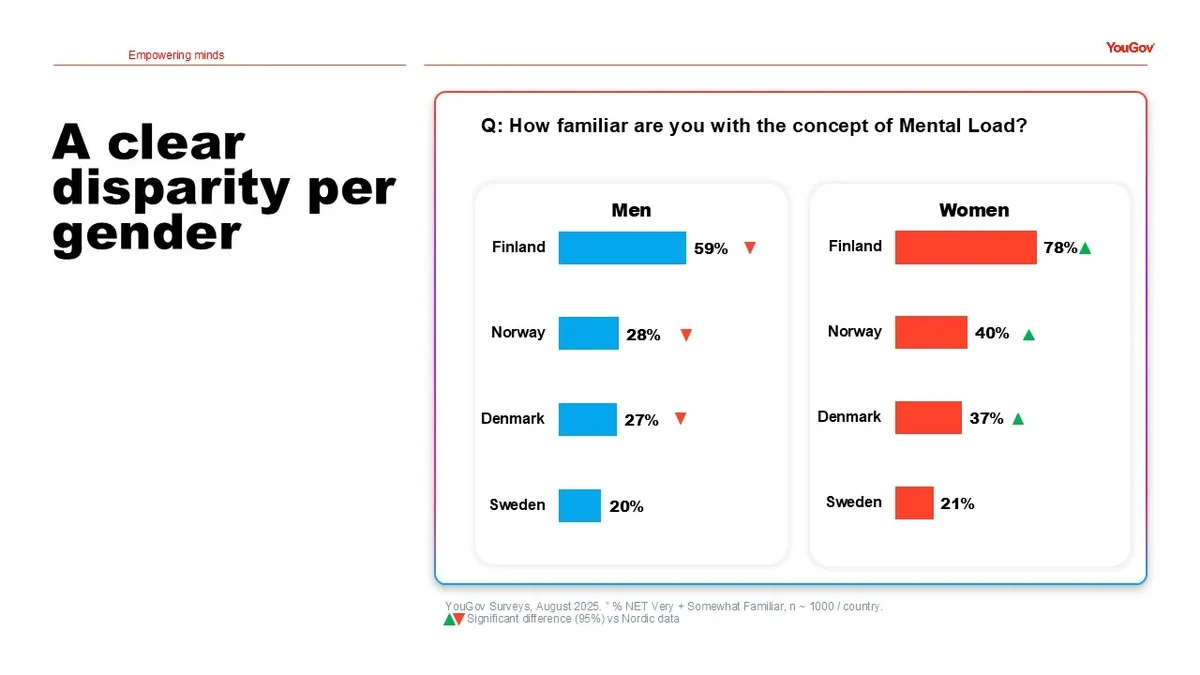
YouGov’s new report, Empowering Minds, sheds light on how people in Denmark, Finland, Norway and Sweden navigate the ongoing cognitive and emotional effort required to keep modern life running smoothly. Although mental load has become part of the contemporary wellbeing conversation, awareness varies significantly. Finland shows the strongest familiarity, with more than two‑thirds of the population recognising the term (68 %) and what it means in practice, while Sweden remains at the opposite end of the spectrum, where only a fifth of respondents report any awareness at all (20 %).
Disproportionate strain reveals a deeper wellbeing divide
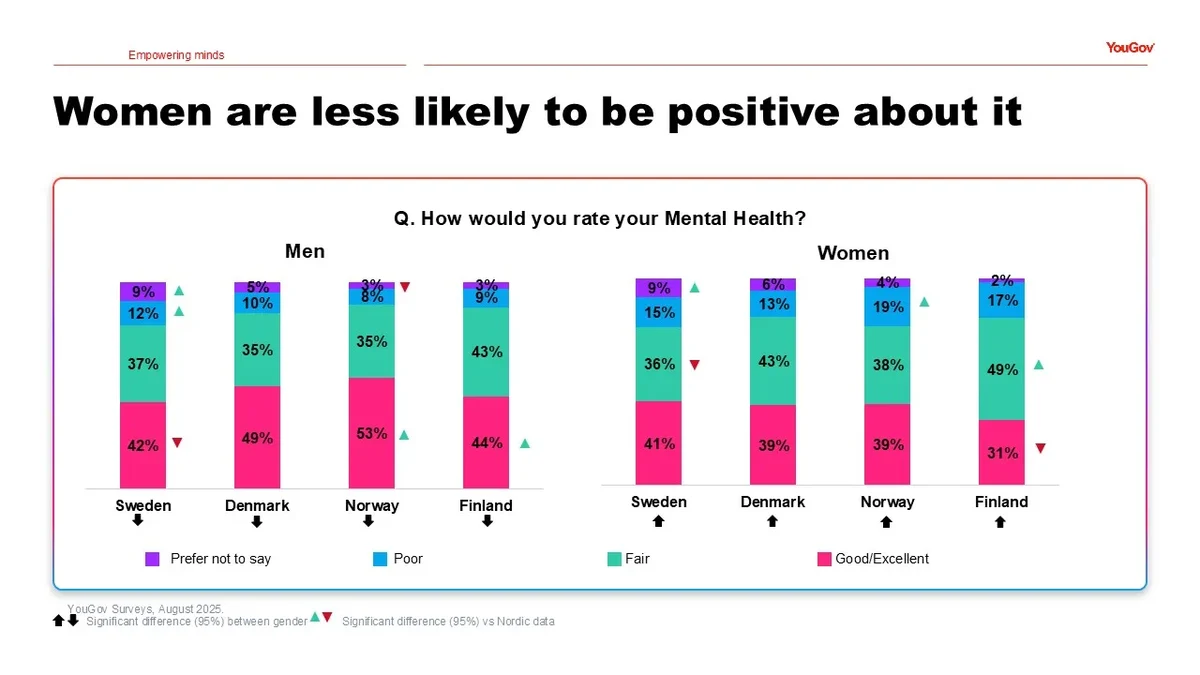
This uneven understanding mirrors equally uneven lived experiences. Women across the Nordics continue to report lower mental wellbeing than men, driven by higher levels of stress‑related physical symptoms such as tension, sleep problems and fatigue. Swedish women stand out as the group reporting the highest incidence of such symptoms in the region. At the same time, many say they struggle to reconcile daily obligations with opportunities for rest and leisure — particularly young mothers and individuals managing tighter financial circumstances, who describe the most pronounced sense of pressure and emotional overload.
Help-Seeking: Strong Intentions, Limited Follow‑Through
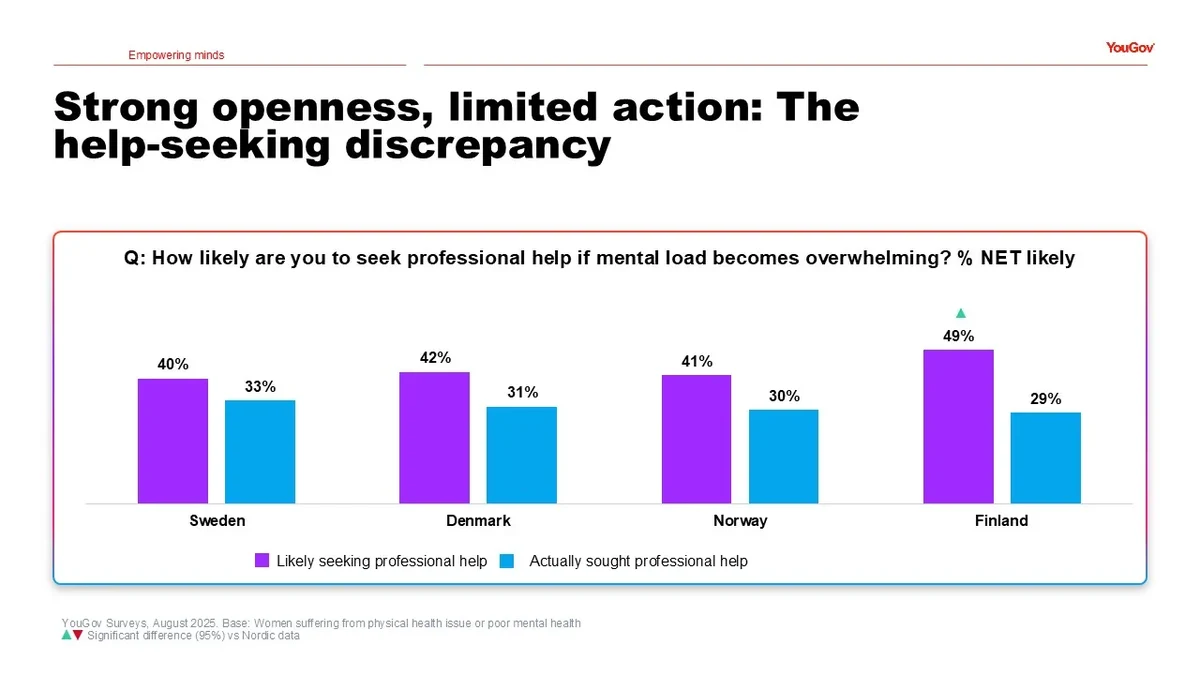
The question of how people move from recognising mental strain to seeking support reveals one of the most significant gaps highlighted in the study. While respondents across the Nordics express a high level of openness toward seeking professional help if mental load becomes overwhelming, their actual behaviour tells a different story. The new data illustrates this clearly: Sweden shows a relatively close alignment between intention and action, with 40 % of people saying they would likely reach out for professional support and 33 % reporting that they already have. Denmark shows a similar level of willingness, yet the number of those who have acted on it remains noticeably lower.
The divergence becomes even more visible in Norway, where a large share of respondents describes themselves as open to seeking help, but a considerably smaller portion have taken the step. Finland stands out most clearly in this regard. While nearly half of Finnish respondents say they would be likely to seek professional help — the highest across all four markets — less than a third have done so. This imbalance highlights a crucial challenge for employers, health systems and public institutions: the psychological threshold between considering help and accessing it remains high, even in markets where openness is strong. Supporting wellbeing therefore requires not only promoting available services, but ensuring people feel confident and supported enough to use them.
What emerges across all findings is that mental load is not simply a personal challenge — it is a structural one. YouGov’s data shows that both men and women experience mental strain, but women disproportionately internalise the pressure, frequently carrying the sense that their efforts are never quite enough and finding it more difficult to set personal boundaries. As workplaces across the Nordics continue to evolve, these pressures signal the need for more targeted, proactive and accessible organisational approaches to wellbeing.
About the report:
The findings in this report are based on online interviews (CAWI) conducted via the YouGov panel. The survey consisted of a structured questionnaire with an average completion time of approximately five minutes.
Data was collected using nationally representative samples of adults aged 18 years and older in Finland, Sweden, Norway, and Denmark. Quotas were applied on gender, age, and region to ensure representativeness within each country.
Approximately 1,000 interviews were conducted per country.
Fieldwork was carried out in September and November 2025.