
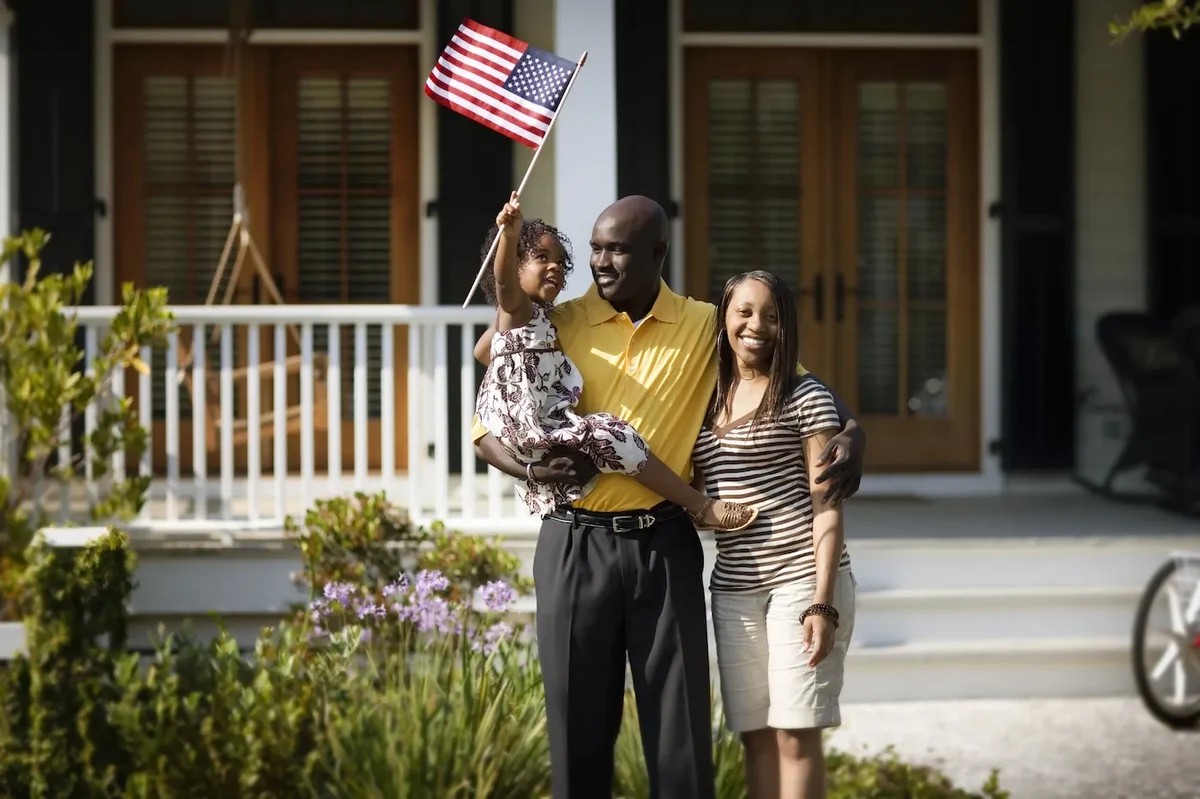
What is the American Dream? Have you reached it? Will you?
For many, the American Dream feels unreachable. About half of adult citizens in a recent YouGov poll doubt they will be able to get there. Only 26% say they have achieved the American Dream, and 21% say they haven’t gotten there yet but expect they will.
That’s a large drop in positive expectations in the last 17 years. An April 2009 CBS News/New York Times Poll found that three in four adults either believed they had achieved the American Dream or would achieve it in their own lifetime, 28 points higher than the share today.
Americans' belief in the American Dream is tied to their age, income, region, and political party identification. Only 5% of adults under 30 but 55% of those 65 and older say they have achieved the American Dream. And the better off your family is, the more likely you are to say you have reached or will reach it. That’s a change. Sixteen years ago, those with lower incomes were as positive as those with the highest incomes about their prospects for achieving the Dream: 84% of those with incomes below $30,000 said they had reached the American Dream or were sure they would.
Republicans are slightly more likely than Democrats now to think they'll achieve the American Dream. And Americans who live in the West are slightly more positive about their chances than are those in other regions. The vast majority of those 65 and older who haven’t achieved the Dream expect they never will.
Politics is a strong indicator of belief in the American Dream. The CBS News/New York Times Poll conducted in April 2009 — a few months after Barack Obama became president — found that more than one-third (39%) of Democrats said they had achieved the American Dream – 12 points higher than the share saying so in 2005 and 22 points higher than today. About half (48%) of Republicans in 2009 believed they had achieved the Dream. That declined only 7 percentage points in the ensuing 17 years. 41% of Republicans today say they have reached the American Dream.
53% of Americans now say they won’t ever reach the Dream (31%) or don't know if they will (22%), about twice the share of 17 years ago.
One-quarter (23%) of Americans reject even the existence of such a thing as the American Dream, while another 17% are not sure whether it exists or not. That rejection rate is even higher among Black Americans and younger adults. About half of Democrats and Independents agree there is such a thing as the American Dream, but even more Republicans are sure: 79% of Republicans believe in the Dream. Those Americans who believe the American Dream is unreachable for them are especially negative about its existence. Nearly half (47%) of them don’t think it exists. About one-third (35%) believe it does. The rest aren’t sure either way.
While the vast majority of those who have reached the American Dream or think they will also believe it exists, only about one-third of those who don’t expect to achieve the Dream believe it does.
The differences in expectations about the American Dream illustrate the difficulty in achieving it today. 70% of Americans think it’s harder to achieve today than it was for their parents. About half (51%) say their parents achieved the Dream or will achieve it – nearly double the share of adults today who think they have personally made it.
But even having a parent who you think did or will reach the American Dream helps only somewhat. Just 37% of those who believe their parents achieved or will achieve the Dream say they have personally attained it as well. An even smaller share (15%) of those who believe their parents did not achieve the American Dream and won't achieve say they have managed to get there themselves.
Homeownership is associated with higher levels of belief in having achieved the American Dream. But American homeowners vary in how they have achieved homeownership. About one-third of Americans who have managed to buy their own homes say they were helped in buying their first home by their parents, who either gave them the home, paid part of the deposit, or helped financially in another way. This is especially true among younger homeowners.
What is the American Dream? An AI analysis of the full set of answers to an open-ended question asking what the American Dream means to Americans grouped responses into three types. One set expressed the traditional notion that the Dream involves owning a home, raising a family, and financial security. A second set of responses focused on freedom and opportunity. And the third set of responses denied that the Dream is possible today.
Housing matters. Owning a home is part of what constitutes the American Dream to many Americans. Fifteen years ago, about half (53%) of Americans called it very or extremely important, according to a YouGov/Economist Poll. Even more do today: 58% say owning a home is a very or extremely important part of achieving the American Dream, including two-thirds of homeowners and half of renters.
But Americans also believe there are barriers to achieving home ownership. One important barrier is the perception of an existing housing crisis. 70% of Americans say there is a national housing crisis and 49% say there is a housing crisis in their own communities. Even more in the West (60%) say there is a housing crisis where they live.
Homeownership requires at least some financial capacity. Asked whether 21 potential barriers to achieving the American Dream today are major barriers, more than two-thirds select each of the cost of living (74%) and housing costs (70%). Far fewer say immigration (25%) and regulation (17%) are major barriers. Both Democrats and Republicans are most likely to say economic factors are major barriers.
Financial stability is tied to homeownership and beliefs about the American Dream. About two-thirds (69%) say high housing costs severely threaten the American Dream, and majorities say a decline in the quality of the educational system (63%) and an overall economic decline (61%) are also severe threats. More than half of Americans also cite each of several other cultural, economic and political factors – lack of leadership in government (59%), political division (58%), decline in moral values (55%), wealth inequality (54%), unemployment (52%), and bigotry/discrimination (52%) — as severe threats to the Dream. Far fewer see severe threats coming from abroad: 26% cite immigration as a severe threat and 21% cite foreign competition.
Democrats are most likely to cite high housing costs (80%), a lack of leadership in government (77%), and wealth inequality (77%) as severe threats to the future of the American Dream. Republicans are most likely to cite a decline in moral values (68%), a decline in Americans’ work ethic (64%), and crime and illegal drugs (60%).
See the results for this YouGov survey
— Taylor Orth and David Montgomery contributed to this article
Methodology: This article includes results from an online survey conducted on January 27 - 30, 2026 among 1,106 U.S. adult citizens. Respondents were selected from YouGov’s opt-in panel to be representative of adult U.S. citizens. The sample was weighted according to gender, age, race, education, 2024 presidential vote, 2020 election turnout and presidential vote, baseline party identification, and current voter registration status. 2024 presidential vote, at time of weighting, was estimated to be 48% Harris and 50% Trump. Demographic weighting targets come from the 2019 American Community Survey. Baseline party identification is the respondent’s most recent answer given around November 8, 2024, and is weighted to the estimated distribution at that time (31% Democratic, 33% Republican). The margin of error for the overall sample is approximately 4 percentage points.
Image: Getty (AE Pictures Inc.)
What do you really think about President Trump, American politics in general, and everything else? Share your reality, join the YouGov panel, and get paid to share your thoughts. Sign up here.