
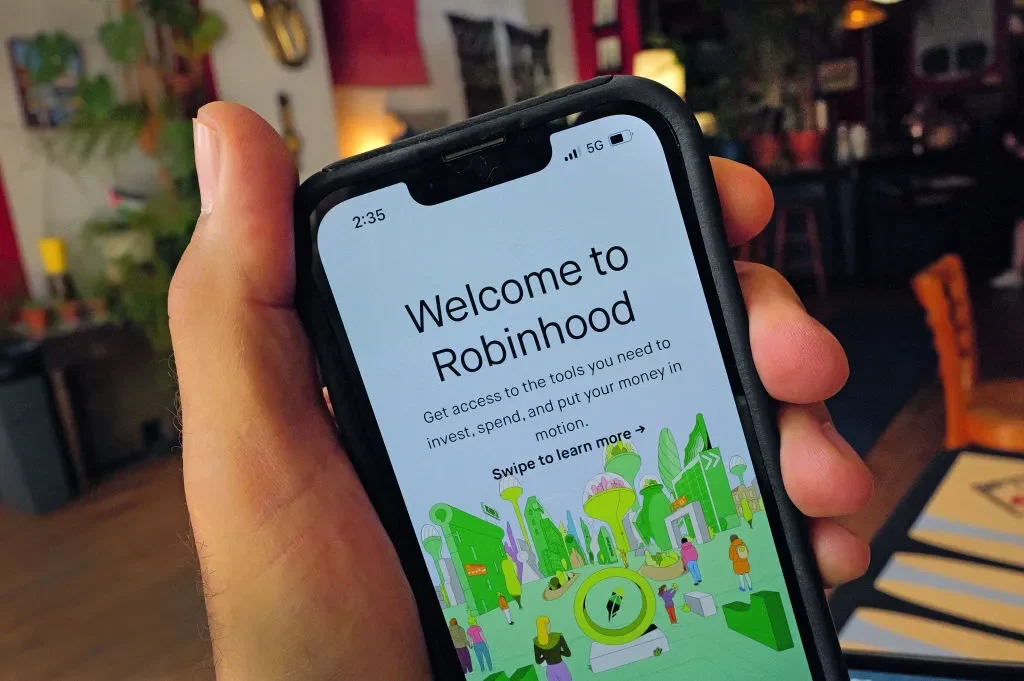
Robinhood has experienced considerable momentum in 2026.
The investment platform reported record quarterly revenue of $1.31 billion in the second quarter, up 32% year over year. Funded customers reached 28.4 million by the end of June and edged up again to 28.5 million in July.
But Robinhood’s growth is not just visible in its financials. YouGov BrandIndex data suggests perceptions of the brand among U.S. consumers have shifted substantially over the past five years.
Robinhood’s brand health has strengthened over five years
Robinhood’s Index score – a composite of Impression, Quality, Value, Reputation, Satisfaction and Recommend – stood at -1.0 in September 2021, dipped to -1.7 in August 2022, and then climbed steadily to reach 7.1 by September 2, 2026.
The individual measures tell a similar story. Comparing the latest six-month period with the corresponding period in 2021, Impression has risen from -4.9 to 6.9, Quality from -3.3 to 6.7, Reputation from -1.7 to 6.9 and Recommend from -3.0 to 6.2. Value has moved from 0.1 to 7.9, while Satisfaction has increased from 2.2 to 5.0.
Five years ago, four of the six measures were negative. Today, all six are firmly positive.
It makes sense, then, that Consideration has moved in the same direction. The share of U.S. adults who would consider Robinhood when next looking for an investment provider has doubled, from about 4% at the start of the observation period to around 9% recently.
Who are Robinhood’s customers in 2026?
To put Robinhood’s customer profile in context, we can compare it with two contrasting investment platforms – Fidelity and Webull.
Fidelity serves as a useful benchmark for a large, established provider with a broad mainstream customer base, while Webull offers a closer digital-first comparison, given its stronger focus on self-directed investing and app-based trading. Together, they provide two reference points for understanding where Robinhood’s audience sits within the wider investment market.
Millennials make up 42% of Robinhood customers and Gen Z another 17%, meaning close to six in ten (59%) belong to these two generations. While it is a similar picture with Webull (60%), it is lower among Fidelity customers (43%).
The opposite is true at the other end of the age spectrum. Baby Boomers and older consumers account for 29% of Fidelity customers, compared with 13% at Robinhood and 12% at Webull.
Robinhood and Webull also have a more heavily male customer base, with men accounting for 71% of customers at both platforms, compared with 59% at Fidelity.
There are differences in the amount customers have invested too. About a third (34%) of Robinhood customers have $9,999 or less invested while the number is slightly higher for Webull (40%), it is notably lower among Fidelity customers – just 12%.
At the other end of the scale, while 41% of Robinhood and 34% of Webull customers have $100,000 or more invested, the figure rises considerably – to 60% – of Fidelity customers.
Robinhood customers are more likely to react to market movements
The differences extend beyond demographics, including how Robinhood customers respond when markets fluctuate.
Two in five Robinhood customers (39%) say they generally maintain their investments when markets fluctuate, similar to the share among Fidelity customers (40%) and higher than among Webull customers (32%). Another fifth (21%) of Robinhood customers say they do not pay much attention to market fluctuations at all, compared with a quarter (25%) of Fidelity users and one in six (17%) with Webull accounts.
Robinhood customers are somewhat more likely than Fidelity customers to make careful adjustments to their investments when markets move (23% vs 18%). Webull customers are most inclined to do so still, at 36%.
Just 6% of Robinhood customers say they make impulsive investment decisions in response to market fluctuations. That is markedly higher than among Fidelity customers (1%), but slightly below Webull customers (8%).
Robinhood customers are also less likely than Fidelity customers to seek professional advice when markets fluctuate, at 8% versus 14%. Among Webull customers, the figure falls to 3%.
Digital sources play a bigger role for Robinhood investors
There are even clearer divides when it comes to where customers go for investment information.
Internet searches are used by 59% of Robinhood customers – much higher than the 45% of Fidelity users but notably lower than the 70% of those with Webull accounts.
Social media produces similarly wide gaps. While more than a third of Robinhood customers (36%) use social platforms to learn about investment products or strategies, this figure is halved for Fidelity users (18%). However, it rises to almost half of those on Webull (47%).
Robinhood customers are also more likely than Fidelity users to turn to friends and family for investment information (40% vs. 30%), while those on Fidelity are considerably more likely to both rely on a financial adviser or professional (38% vs. 26%) and get investment information directly from their financial company (38% vs. 22%).
Taken together, the data paints a picture of Robinhood as a platform that still has a distinctly digital-first customer base but is no longer defined by that alone. Its users look much closer to Webull’s demographically and are especially reliant on online and social sources for investment information. At the same time, Robinhood’s improving BrandIndex scores over the past five years suggest its advance has extended beyond attracting and engaging this audience, with perceptions of the brand itself strengthening considerably.
Methodology
YouGov BrandIndex collects data on thousands of brands every day. Robinhood’s Index score is a composite measure of overall brand health, calculated by averaging scores for Impression, Quality, Value, Satisfaction, Reputation and Recommend. Scores can range from -100 to +100. Scores are based on a 12-week moving average with an average daily sample size of 6,206 U.S. adults.
YouGov Profiles data is based on continuously collected data from U.S. adults aged 18+. For this analysis, respondents were filtered to those who have money invested and use Robinhood, Fidelity or Webull as a current investment provider. Data covers the 52 weeks ending August 30, 2026. Sample sizes vary by question and platform. Figures have been rounded to the nearest whole percentage point.