


Across the Nordic region, well-being is defined as balance – between body and mind, activity and rest, enjoyment and restraint. Nowhere is this more evident than in Denmark and Sweden, where consumers rank among Europe’s most health-conscious yet pragmatic populations.
In true Nordic fashion, balance beats extremes: movement and mindfulness coexist with measured indulgence. Rather than cutting back completely, Danes, Swedes and Norwegians favor moderation – proving that a strong sense of well-being can go hand in hand with enjoying life responsibly.
A strong Nordic approach to well-being
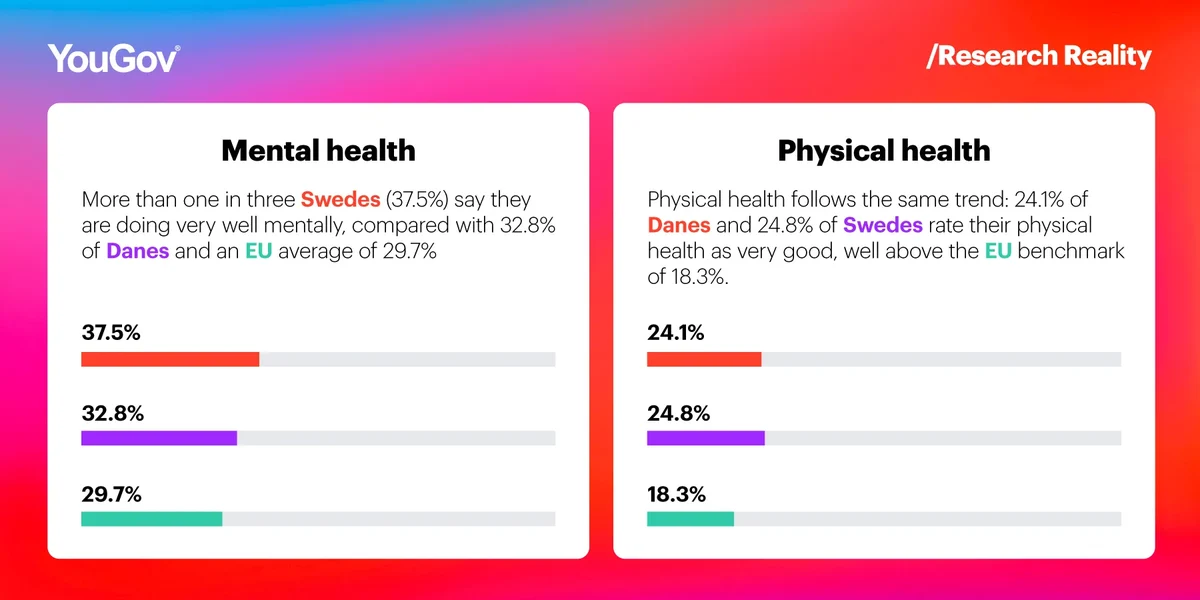
Mental well-being remains a regional strength. More than one in three Swedes (37.5%) say they are doing very well mentally, compared with 32.8% of Danes and an EU average of 29.7%. Physical health follows the same trend: 24.1% of Danes and 24.8% of Swedes rate their physical health as very good, well above the EU benchmark of 18.3%.
While Danes move a bit more than the EU average, Swedes track closely with the broader European trend. In Denmark, 17% say they always move enough each day and 42.2% often do so – both above the EU averages of 14.7% and 39.7%. Swedes follow closely behind, with 15.5% always and 39.3% often staying active.
Mindful drinking: moderation over abstinence
Across Europe we are seeing a tendency towards “sober curiosity”, being among the top 50 trends in social media and mentioned 36,998 times. One in three in Europe already adopt a lifestyle without alcohol.
When it comes to alcohol in the Nordics, Danish and Swedish consumers show another tendency. Most plan to maintain their current habits – 56.1% of Danes and 55.6% of Swedes – compared to 46% across the EU. Only a small share expects to reduce intake (13.2% in Denmark and 16% in Sweden, versus 17.7% across the EU).
Going alcohol-free: A generational shift
According to the Behavior Change Spring 2025 Report, Denmark, Sweden, and Norway record some of the lowest levels of alcohol-free living in Europe, with nearly half of Danes and Norwegians (43%) and Swedes (46%) saying they would not want to try living without alcohol. However, around one-third in each generation already live alcohol-free. But the data also reveals a clear generational division: younger and older cohorts differ markedly in their ambition – or reluctance – to try it.
- Gen Z: 32% already live alcohol-free, and another 32% would like to try
- Millennials: 34% already do so, and 27% are interested
- Gen X: 33% live alcohol-free, while 48% say they wouldn't want to
- Boomers/Silent generation: 30% live alcohol-free, and 57% reject the idea outright
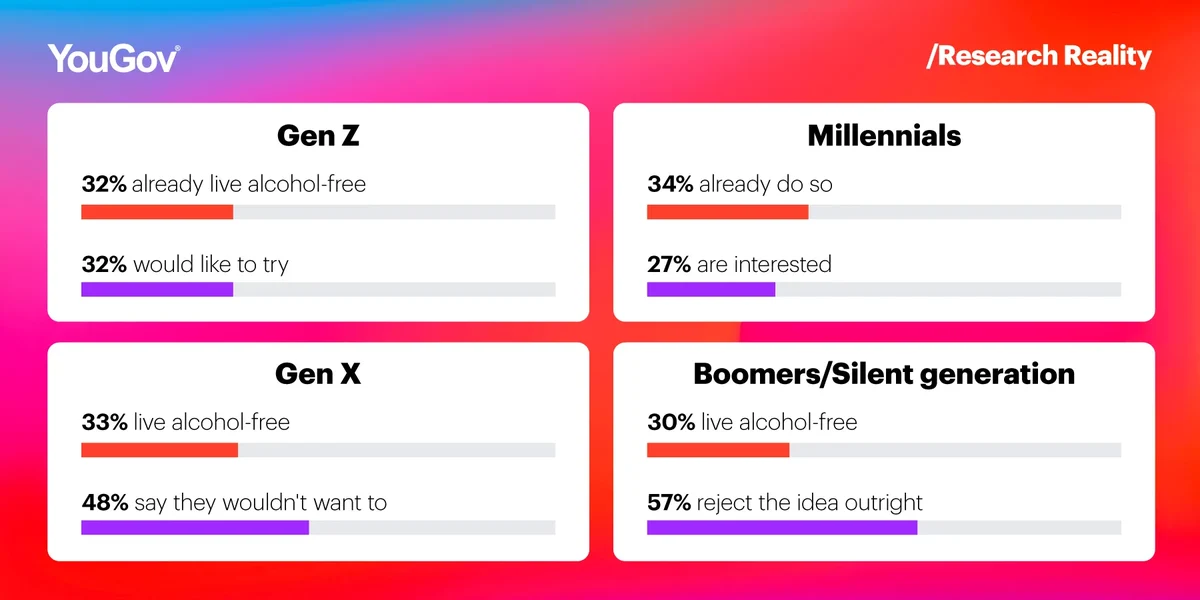
Younger consumers are redefining what well-being means – experimenting with moderation and avoidance – while older generations remain attached to traditional social drinking habits.
Health as structure, not restriction
Amid the Nordic reputation for balance and structure, one finding stands out: Danes, Swedes and Norwegians consistently place “fun and joy” at the top of their personal priorities. Rather than simply evidencing a balanced mindset, this emphasis on enjoyment may also help explain why they are less inclined to give up alcohol altogether – and why their overall mental well-being scores surpass the EU average.
For brands and policymakers, this signals an opportunity. With fun and joy sitting at the heart of Nordic priorities, initiatives that make room for pleasure and sensory stimulation – across both alcoholic and non-alcoholic options – will resonate most strongly.
A culture of conscious equilibrium
Rather than viewing alcohol as a health threat, Nordic consumers see it as part of a balanced lifestyle built on moderation, mindfulness, and fun. The goal isn’t to abstain – it's to stay in control while enjoying social moments. For FMCG brands, the opportunity lies in supporting solutions that reflect these values and needs.
For deeper insights into how well-being is evolving across Europe, and the impact on FMCG shopper behavior, explore our Who Cares? Who Does? 2025 report and the Trend Reality report.