




Asian influence moves into the mainstream
Asian influence on European consumers is no longer niche. For years, Europe looked to Asia as a distant source of inspiration, driven by a mix of admiration and surprise. Today, Asia has become a powerful driver of everyday lifestyles. Asian trends influence how people eat, travel, care for themselves, and define what feels modern and desirable.
This is rooted in more than a passing fascination. It reflects a deeper cultural ambition: Japanese longevity and minimalism, Korean pop culture, Southeast Asian street food, Chinese innovation, and the continent’s highly efficient digital ecosystems all point to a mindset that blends tradition with futurism, ritual with speed, and meaning with convenience. In a period marked by uncertainty, Asia is increasingly becoming a reference point for practical solutions, rather than just momentary trends.
Travel behavior illustrates how these aspirations are no longer only observed from afar, but actively lived. While overall travel levels (e.g. among Germans) stagnated last year, trips to Far East destinations increased by 12% year-on-year, driven mainly by Japan, Vietnam and Indonesia (YouGov Shopper Travel & Mobility, Germany). This first-hand exposure likely accelerates the translation of cultural curiosity into concrete consumer and shopper behavior back home.
Nutrition that combines joyful exploration, convenience and wellness
Asian food is not new to Europe, but its role is changing. What used to be an occasional culinary excursion is becoming part of everyday eating habits.
One driver is the desire for exploration and an expanded culinary repertoire. Bubble tea and matcha have conquered the hearts of young consumers, and umami is no longer a foreign term for many. In YouGov’s latest Behavior Change survey, 24% of Europeans want retailers to offer more international specialties. Even 19% of Boomers agree, showing that curiosity in the food category does not strongly depend on age. In Germany, 63% of shoppers buy from Asian grocery stores at least occasionally, making them the most popular ethnic shops among consumers without a migration background (YouGov Ethno Shopper Study 2025, Germany).
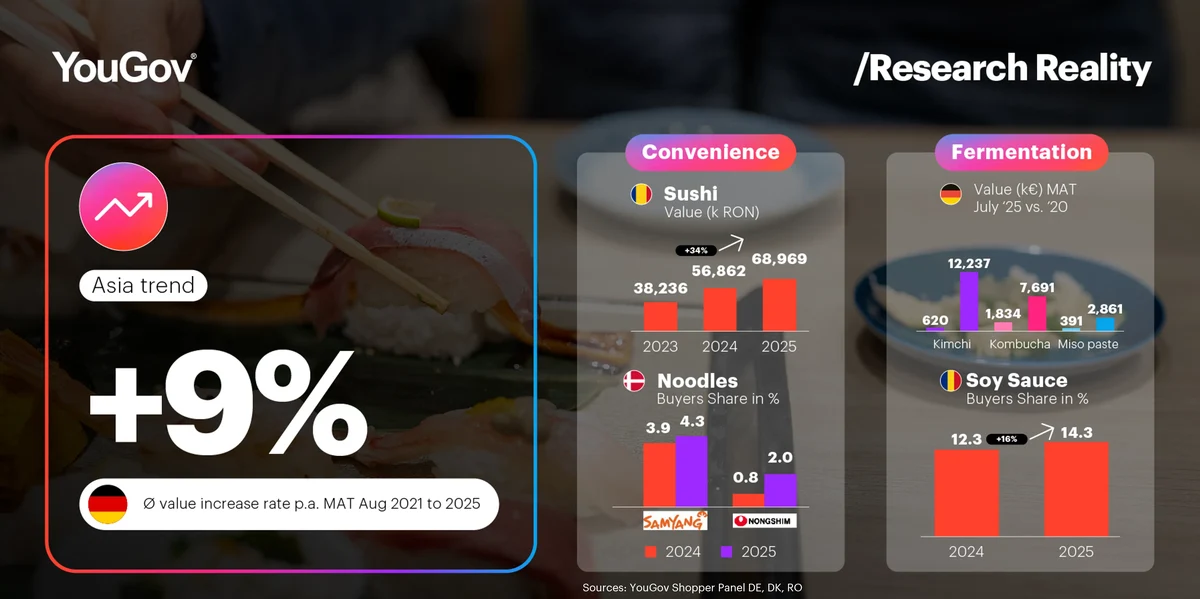
Convenience adds another important layer. Ready-to-eat sushi, instant noodles, ready meals and snackable formats have found their place in European supermarkets and baskets. They cater to time-poor consumers while still delivering variety, flavor and, in many cases, a comparatively healthy product proposition.
This health and wellness orientation further reinforces the appeal of Asian food cultures. Fermentation is a prominent example, mentioned more than 50,000 times across media and social media in YouGov’s Trend Reality study. Products such as kimchi, miso, and kombucha connect gut health, taste, and perceived naturalness. Gut-friendly foods now rank second on European shoppers’ retail wish list. In Central and Eastern Europe, they even outperform international specialties, at 28% versus 24%.
The impact of fermentation extends beyond the traditional ethnic shelf. Demand for probiotic-rich and microbiome-friendly solutions is increasingly influencing innovation across categories, including home and skin care, highlighting cross-category spillover effects.
Beauty rituals, expertise and Gen Z-led adoption
Skincare and beauty represent another core area of Asian influences. Sheet masks, skin cycling, and the pursuit of ‘glass skin’ have become embedded in European routines. While K‑beauty, J‑beauty, and C‑beauty differ in nuance, they share a holistic philosophy: ritualized care, distinctive ingredients, a strong focus on prevention and longevity, and high innovation intensity – all of which resonate deeply with today’s consumer mindset.
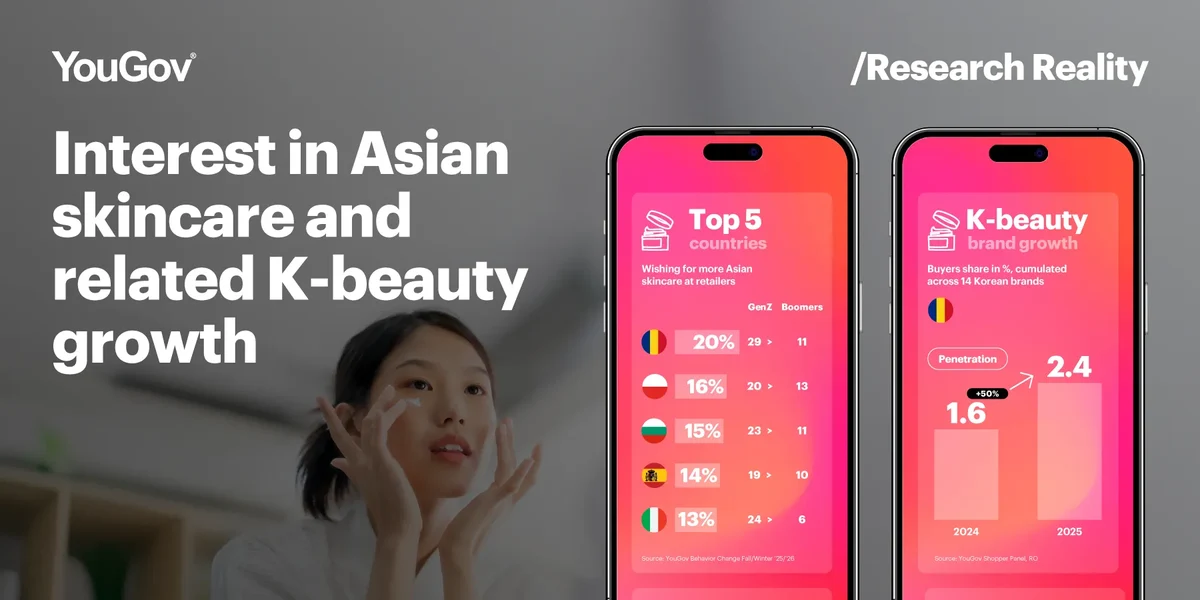
While interest in Asian food appeals across generations, K-beauty is particularly driven by younger consumers. In Italy, one third of skincare shoppers say they choose Korean beauty products when possible, rising to almost half among shoppers between 18 and 24 (YouGov survey, February 2026, Italy).
Besides being trendy and hyped on social media (26%), key reasons are:
- Perceived higher quality and more effectiveness (22%)
- Expertise and suitability for sensitive skin (16%)
- Strong innovation credentials (12%)
Romania shows especially strong appetite for Asian beauty. Shoppers there are the most eager to see more Asian beauty brands listed by their retailers, and these brands are already growing despite still relatively low mass-market penetration. In both Romania and Italy, the generational differences are particularly visible.
Retailers have understood the message and are responding by integrating Asian beauty concepts into mass assortments and private-label propositions.
Inspiration for the future of retail and food systems
Asian influence is also visible in retail models and experiences. Asian retail platforms have firmly entered the European landscape, with players such as Temu, Shein, and AliExpress highlighting both shopper openness and the logic behind their adoption.
Physical retail inspiration includes bento-style convenience, in-store preparation, and vending machines offering everything from meals to cosmetics. Such vending machines, ubiquitous in many Asian cities, have reached 45% penetration in Italy and are increasingly being explored in markets like Germany and France to compensate for missing local convenience stores in rural areas.
Retail media, particularly audiovisual inspiration at the point of sale, which is common in Asia, is also gaining relevance, even if European shoppers still show mixed reactions:
- digital screens with ads and promotions are seen as slightly more useful (14%) than annoying (11%)
- audio announcements in store are significantly more annoying (27%) than useful (9%)
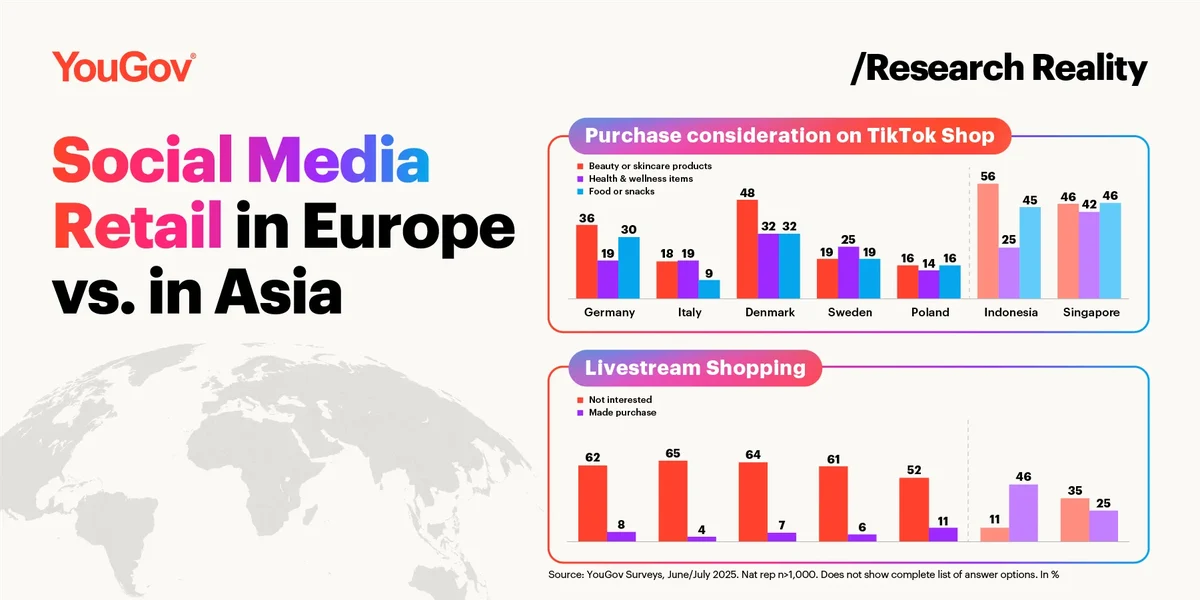
Digitally, Asian retail models continue to set the pace. Livestream shopping, social commerce, ultra-fast delivery, and seamless online–offline integration are well established in Asia and are starting to take hold in Europe. However, overall openness in Europe still lags behind Asia.
Looking further ahead, Asia is also shaping the future of food itself. From the adoption of advanced food technologies such as CRISPR to innovations like Korean meat rice, and Singapore acting as an important test market for novelty food, the region plays a central role in defining what tomorrow’s nutrition could look like.
What Asian-inspired consumption patterns mean for FMCG and retailers
Embracing Asian influences is not about copying, but about translating underlying principles into locally relevant solutions.
For FMCG brands and retailers, this means:
- Thinking in terms of lifestyles rather than categories: Asian influences cut across food, beauty, health, and broader consumption mindsets
- Balancing convenience with authenticity, combining ease with depth
- Embedding ritual and meaning: not just products, but experiences
- Designing inspiring retail environments without overwhelming shoppers
- Using Asia as a lens on the future, particularly for ageing, health, and digital retail
For a glimpse of where consumer behavior is heading next, look east.