



The effects of economic and socio-political conditions
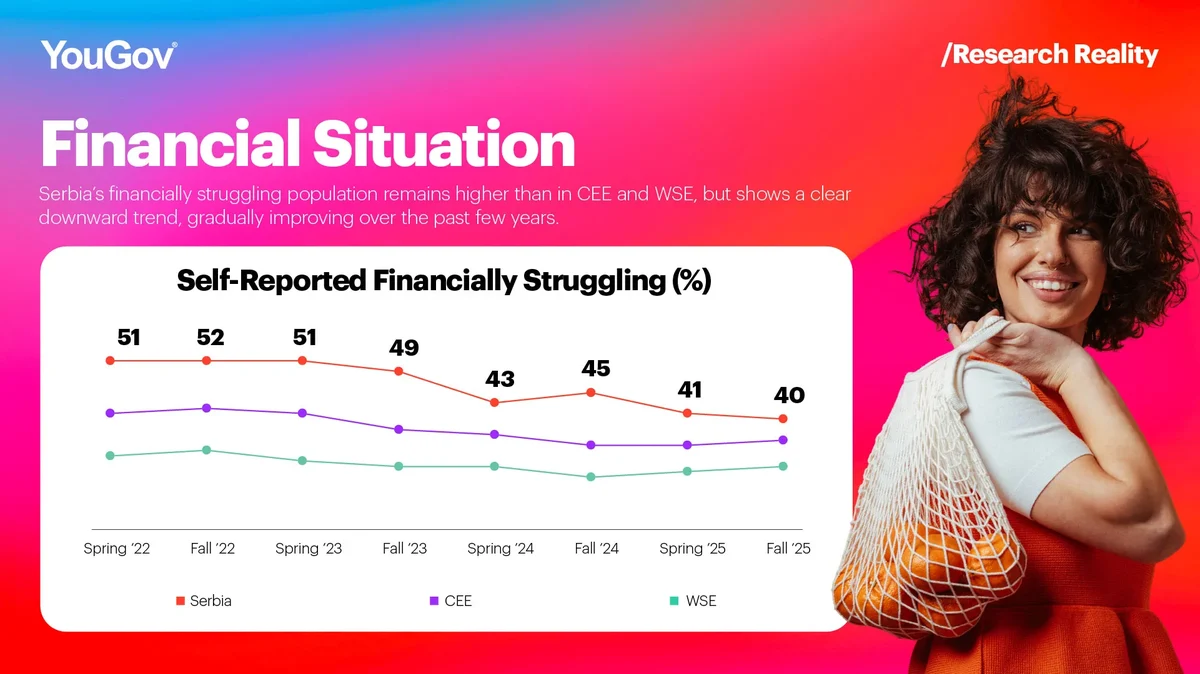
The effects of economic and socio-political conditions on consumer behavior in Serbia were evident throughout 2025. Serbia once again ranked among the highest in terms of the share of the population perceiving their current financial situation as problematic (40%). Although this trend has shown a decline compared to previous years, Serbia still exceeds the WSE and CEE averages.
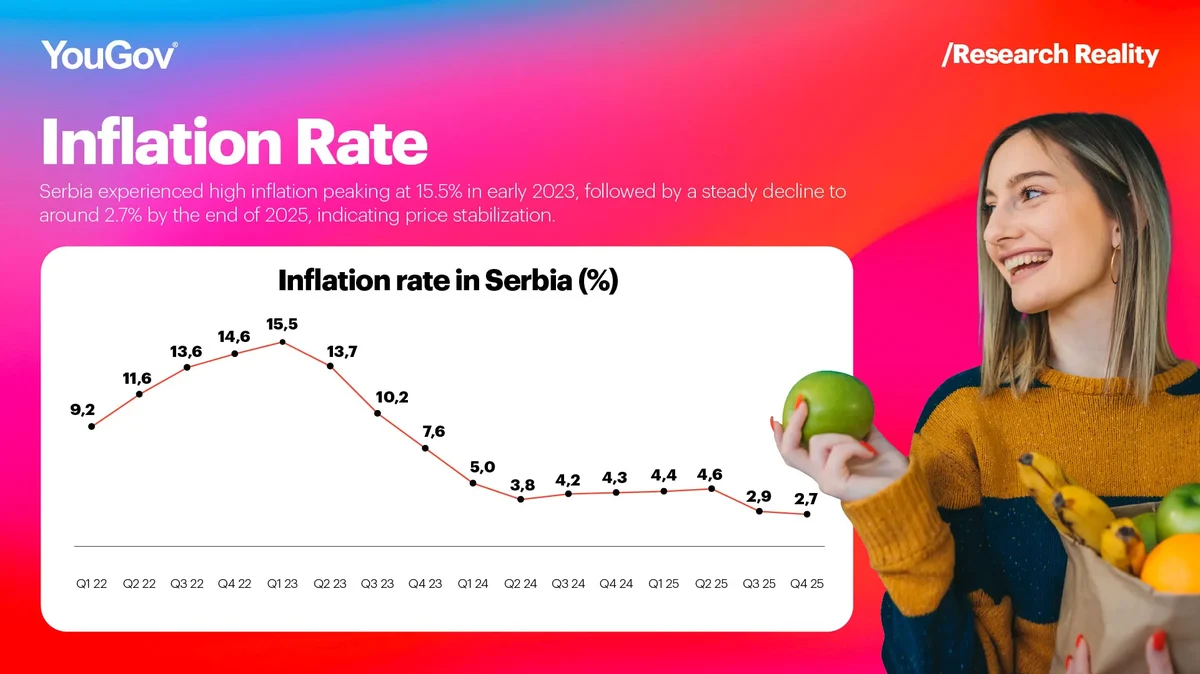
These financial challenges were influenced by a period of elevated inflation, which peaked at 15.5% in the first quarter of 2023. This sharp rise reflected global economic pressures and domestic factors that pushed prices higher. Since then, inflation has steadily decreased, falling to around 2.7% by the end of 2025, signaling a stabilization of price growth.
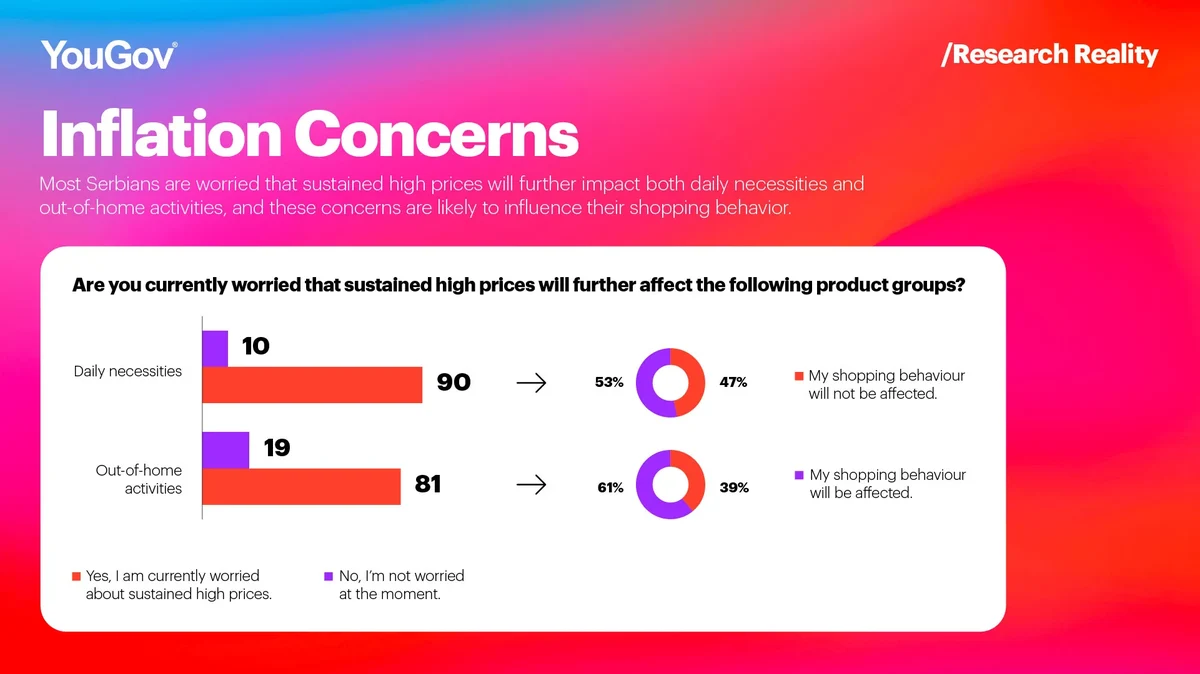
In Serbia, 90% of all respondents express concern about the sustained high prices of daily necessities, and among them, slightly more than half say this worry will influence their shopping behavior. Similarly, 80% of all respondents are concerned about the sustained high prices of out-of-home activities, with slightly less than two-thirds of this group emphasizing that their concern will affect their behavior related to such activities.
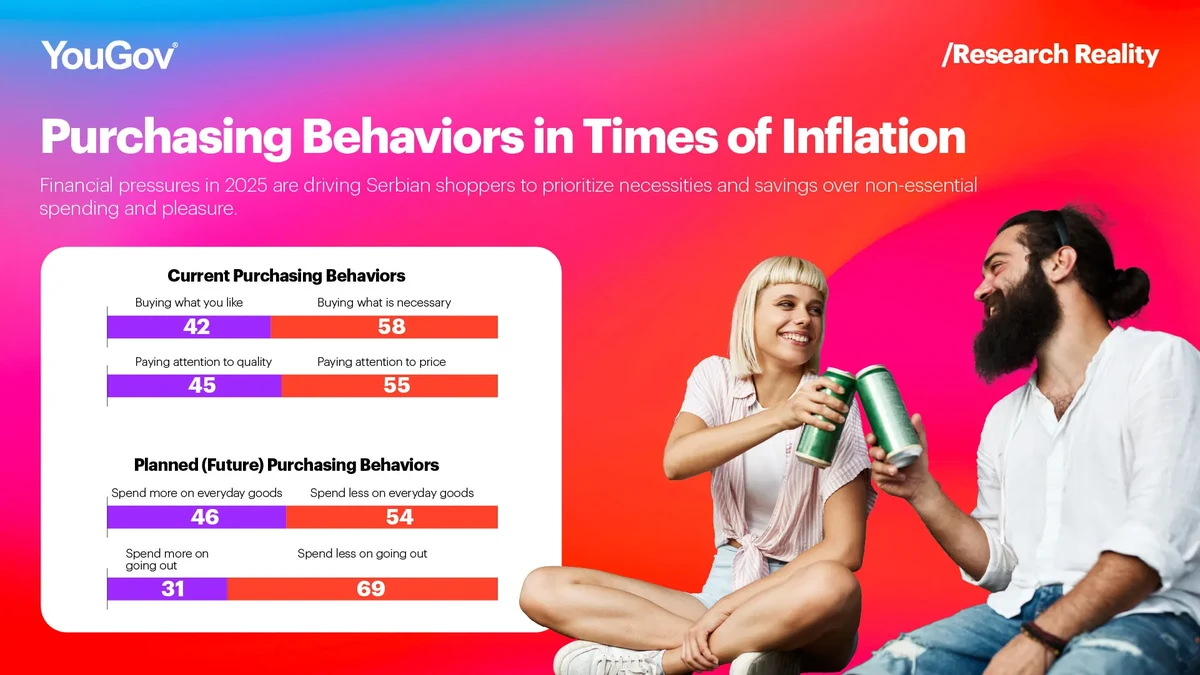
Due to financial turmoil, shoppers in Serbia in 2025 adjusted their purchasing behavior toward saving. Almost three-fifths buy mainly necessities rather than items they find appealing, and more than half pay more attention to price than to quality. In other words, necessities and savings take priority over pleasure and quality.
Regarding future purchasing intentions, more than half of shoppers plan to spend less on everyday goods. Additionally, almost 70% of respondents intend to spend less on out-of-home activities, further reflecting their willingness to sacrifice pleasurable activities due to the need to save.
Another clear indicator of Serbian shoppers’ efforts to manage household budgets under economic pressures is the steadily rising popularity of promotional purchases and private-label products.
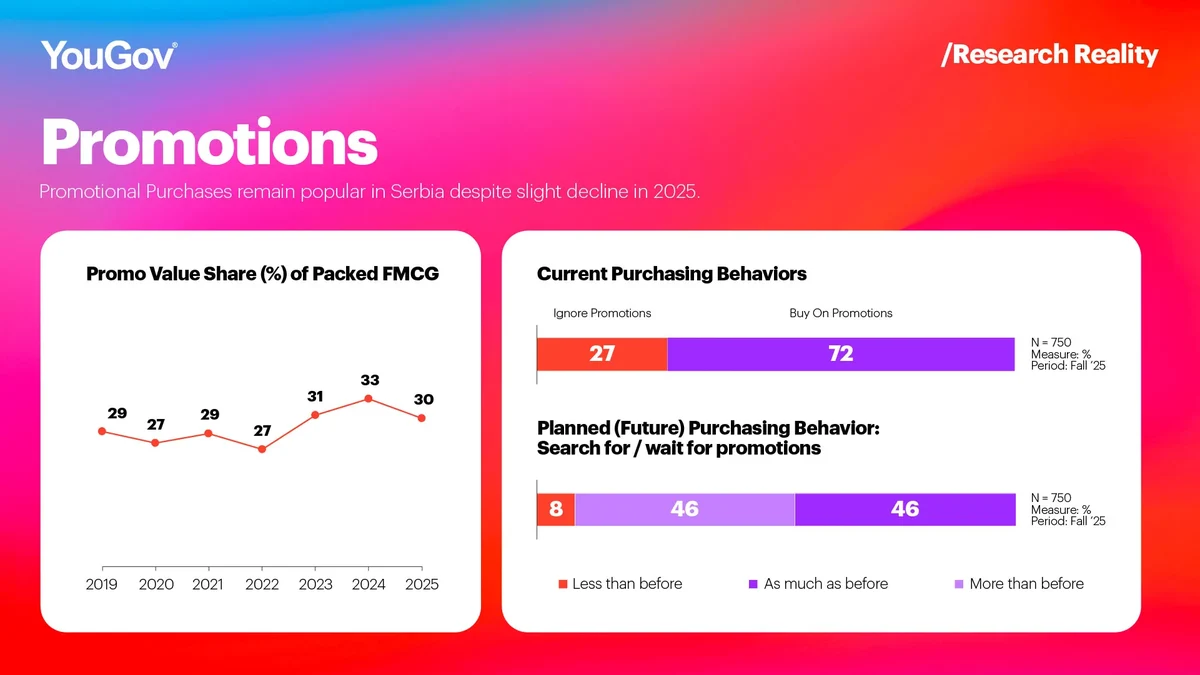
Over the past few years, there has been a noticeable increase in the popularity of buying FMCG products on promotion. The recorded value share of packaged FMCG products purchased on promotion was 33% in 2024. In 2025, a decline of 3 percentage points was observed, which can be most probably influenced by government measures focused on limiting retail margins. With this burden, retailers stopped investing in promotion and returned to regular pricing. However, despite this decline, promotional purchases remain very popular, as nearly three-quarters of customers in Serbia report buying products on promotion. Additionally, 46% of respondents indicated that they plan to pay even more attention to promotions in the upcoming period compared to before.
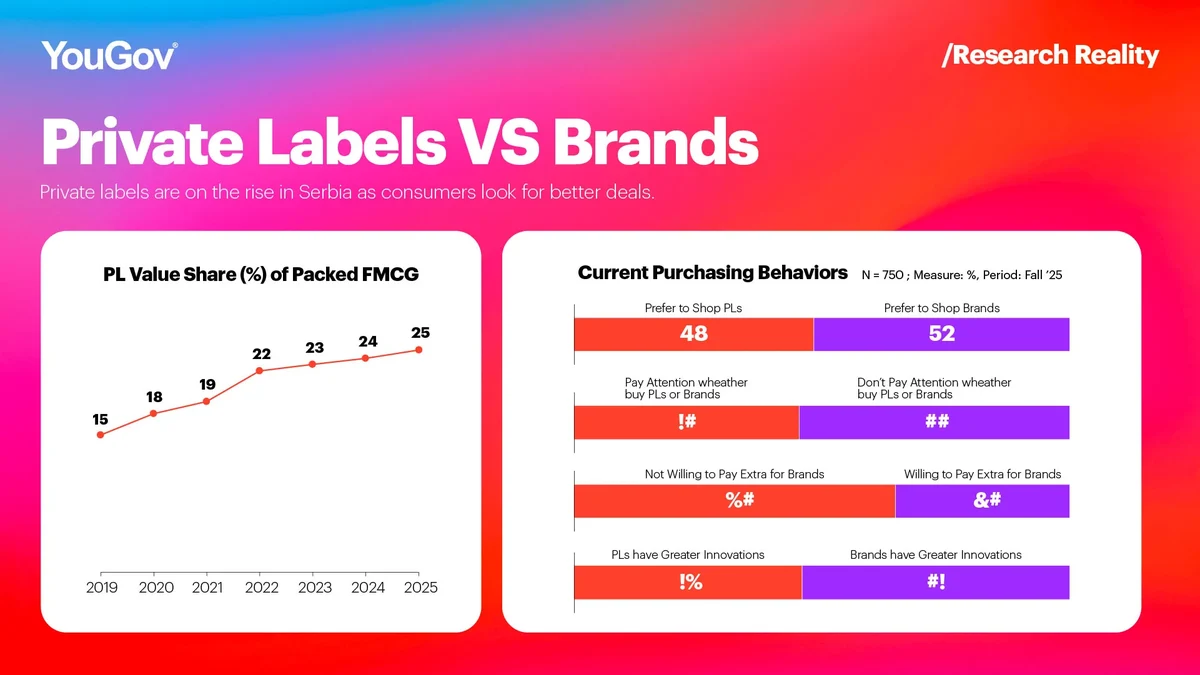
Also, there is a very clear trend of rising popularity of private labels (PLs). During 2025, a record value share of PLs was noted, reaching as much as 25%. The popularity of PLs is further supported by the fact that nearly half of consumers favor buying PLs over branded products. This can be best explained by the data showing that as many as 65% of respondents emphasize that they would not pay extra for brands. Therefore, the tendency of consumers in Serbia to save money is again noticeable. However, more than half of respondents still favor brands when it comes to perceived innovation: 46% say PLs have greater innovation, while 54% believe brands do.
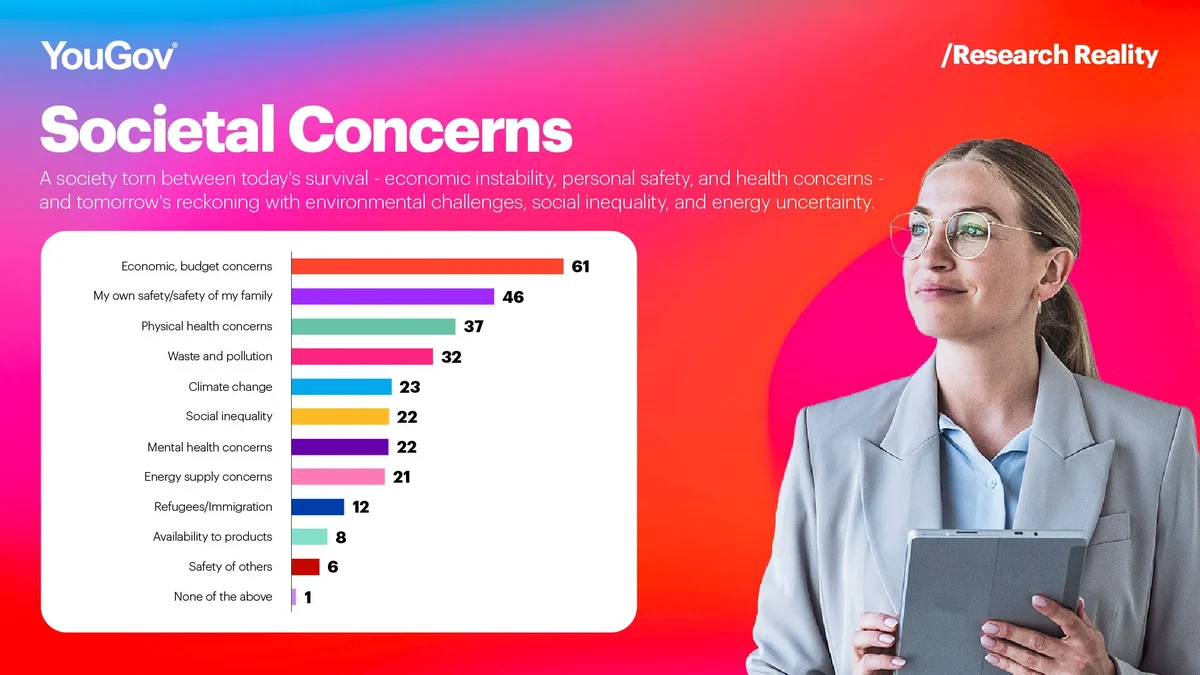
Across 2025, the leading societal concern among citizens of Serbia was economic and budget issues, identified by 60% of respondents. Personal safety also emerged as one of the major concerns, with nearly half of people worried about their own safety or that of their family. This concern can be linked to numerous socio-political events throughout the year - particularly widespread civic and student protests and blockades - as well as the growing polarization of society, both economic and political. Health-related issues were highly ranked, with 37% concerned about their physical health and 22% about their mental health.
Environmental issues were another prominent source of worry, particularly waste and pollution, mentioned by around one third, alongside climate change, highlighted by nearly a quarter. Concern about ecological issues, especially air pollution, can be attributed to Serbia’s longstanding problems with air quality during the winter months and the lack of political initiatives to address them. Other environmental challenges in the country include virtually non-existent recycling, issues with drinking water in certain regions, and public concern over local and global initiatives to open lithium mines in Serbia, which could pose an ecological disaster for both the country and the wider region. Finally, social inequality and energy supply were also notable societal issues, each mentioned by almost a fifth of people. The concern over energy supply could be related to the introduction of sanctions by the United States on Serbia’s NIS, the country’s oil industry.
Methodology:
YouGov Shopper Serbia is built on continuously collected data from 2,000 households, representing the country’s total population.
YouGov Shopper offers access to a wealth of expertise and quality consumer panel data. We help the world’s most recognized FMCG & Retail brands to deliver superior customer experiences at every stage of the shopper journey. Learn more about YouGov Shopper.