




What contributes to a fulfilling life? In today’s political and economic climate, the conversation feels more relevant than ever.
For brands and marketers, happiness is not just a philosophical concept – it increasingly shapes everyday consumer behavior. From small indulgences to lifestyle rituals, emotional wellbeing is becoming an important driver of consumption.
An emotional climate marked by uncertainty
Across Europe, economic security and safety remain the dominant concerns. Yet mental health is also a significant issue, with 19% of Europeans placing it among their top three worries.
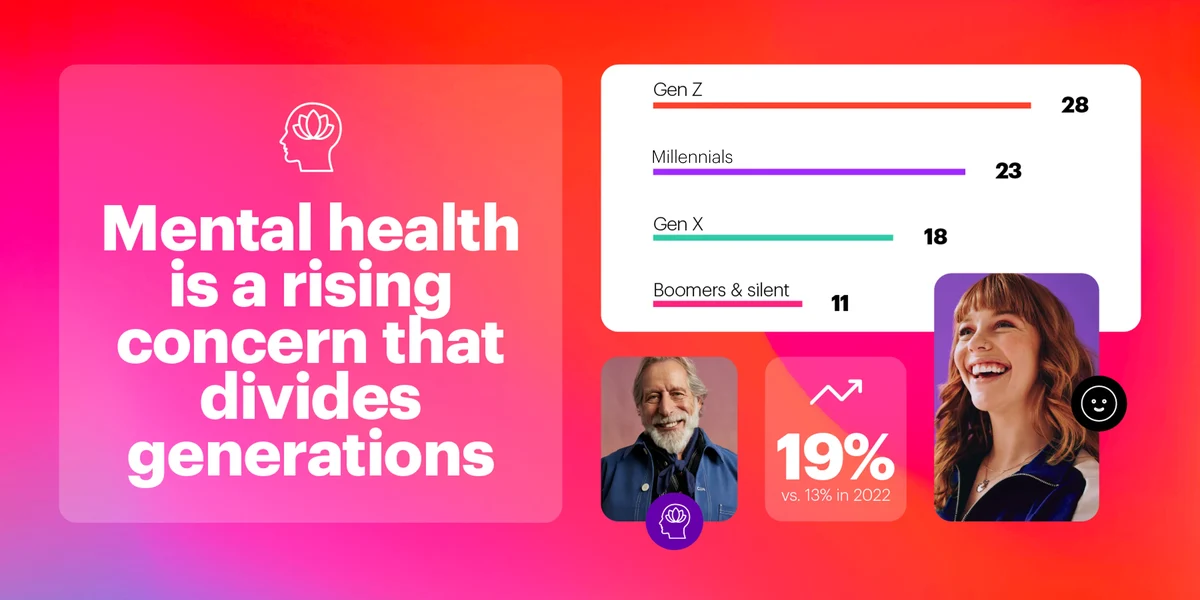
The concern is particularly pronounced among younger generations, with 28% of Gen Z and 23% of Millennials reporting high mental health concern, compared with 18% of Gen X and 11% of Boomers. According to our Trend Reality study, mental health is also the most discussed trend topic on social media.
Financial worries intensify the emotional tension. Nearly half of Europeans (45%) expect their financial situation to worsen, while only 5% believe it will improve. As a result, long-term optimism is limited: 64% focus primarily on the present, 25% look back nostalgically, and just 11% feel excited about the future.
Nostalgia is especially strong among those who feel financially strained. One third (33%) of financially struggling consumers say they look back to the past, compared with 20% among those who feel financially comfortable.
At the same time, the desire for small indulgences in the present is rising. The intention to “treat oneself” has reached its highest level in three years (18%). Younger generations lead this trend: 29% of Gen Z and 22% of Millennials plan to indulge themselves more often, compared to 15% of Gen X and 12% of Boomers.
Anchors of wellbeing
Despite this challenging context, people still find stability in several areas of their personal life. About one third of respondents report high levels of wellbeing, with the highest scores in:
- eating habits and nutrition
- relationships and social connections
- a sense of meaning and purpose
- having time and space to laugh and enjoy themselves
Across life stages, satisfaction follows a U-shaped curve: higher in youth, dipping in midlife, and rising again among the oldest generation. A plausible explanation is that people become more content as they age, with the exception of physical activity and appearance, where satisfaction decreases over time.
Overall, this paints a nuanced picture. While external pressures increase, people anchor their wellbeing in personal relationships and meaningful moments, but also in consumption. Nostalgia often translates into a preference for familiar routines and products that evoke simpler times, while the need for comfort and reward drives consumers to seek “micro-moments” of joy.
Everyday mood boosters
Consumers actively try to enhance their mood through a mix of lifestyle activities and small daily rituals. Exercise or sports (30%), inviting friends or family (29%) or taking a relaxing bath or shower (28%) are amongst the most popular ways to lift spirits. Food and drink also play a central role in mood management. Enjoying a warm drink is the most popular food and drink related mood booster (42%), followed by indulging in a sweet treat (38%) and cooking/ baking something enjoyable (36%).
However, mood management strategies differ between target groups:
- Gender: Men rely more on exercise (37% vs. 24%) and alcoholic drinks (30% vs. 18%), while women more likely clean their home (23% vs. 16%) or pamper themselves with skincare, cosmetics or grooming products (19% vs. 7%)
- Financial situation: Struggling consumers rather turn to cleaning (21% vs. 17%), smoking or vaping (15% vs. 10%), and to sweet treats (40% vs. 34%), while the financially comfortable exercise more (34% vs. 24%), go out more (23% vs. 19%), and enjoy alcoholic drinks more (26% vs. 22%).
- Household situation: Ordering takeaway food is more mood-lifting for households with children than those without (23% vs. 16%).
Turning emotions into FMCG opportunities
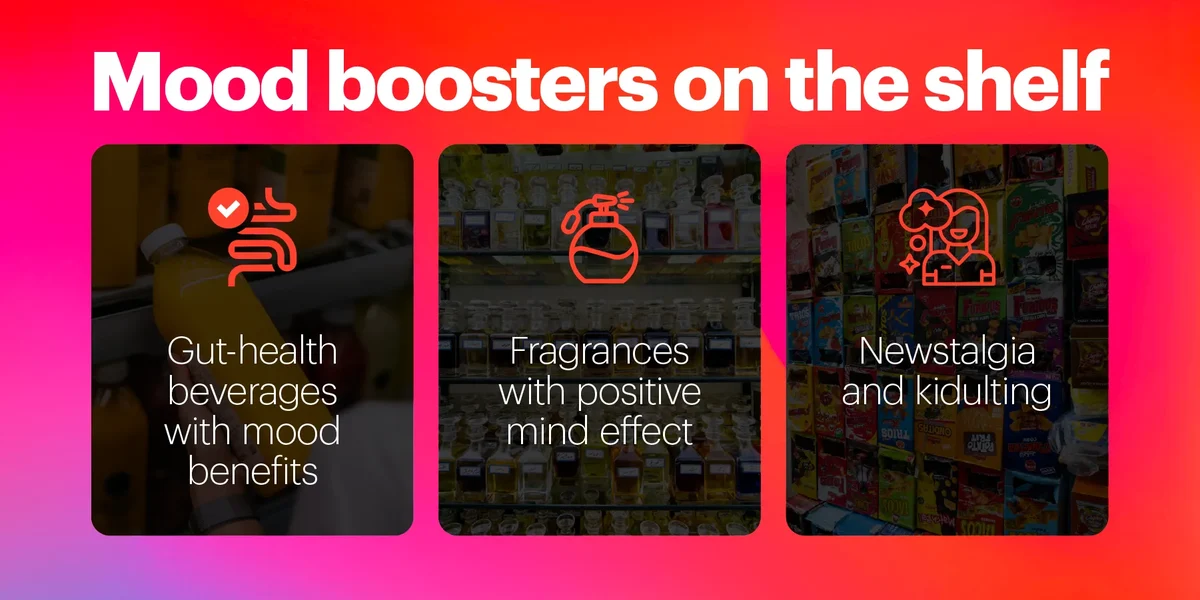
These findings highlight how closely mood, happiness, and mental wellbeing are linked to everyday consumption. Brands are increasingly responding with products that tap into these emotional needs. The food-mood-connection is increasingly visible in product innovation, such as:
- beverages referencing the brain-gut-axis and promising mood or wellbeing benefits
- deodorants combining physical freshness with mood-enhancing fragrances
- trends like newstalgia, cluttercore, or kidulting, which tap into emotional comfort, nostalgia, and playfulness.
Understanding what makes people feel good – and how this differs across generations, gender, financial situations, and household types – opens new opportunities for brands. In today’s mood economy, the key question is no longer what people buy, but how it makes them feel.
So the question for brands becomes: How can your portfolio contribute to making customers feel happier?