
Key findings:
- 39% of U.S. adults have donated goods to charity in the past 12 months, while 35% have personally donated money.
- Half (50%) of those who donated money made one-off donations only, while 30% combined one-off and regular donations.
- 49% of U.S. adults say they are likely to donate money to charity in the next 12 months.
In the first of a three-part series on charitable giving in the U.S., YouGov explores how adults have supported charities over the past 12 months, how participation varies across generations and whether people expect to donate money in the year ahead.
How do U.S. adults support charities?
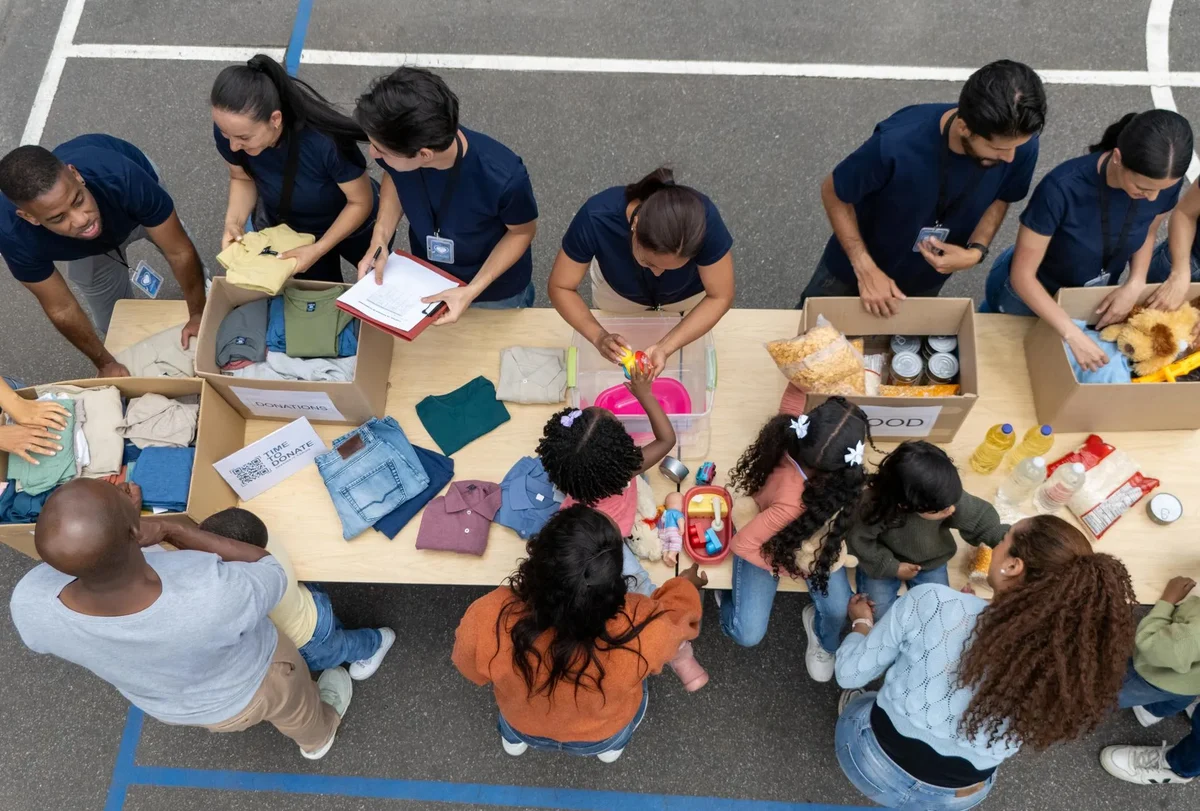
Nearly two in five U.S. adults (39%) say that in the past 12 months they have personally donated goods to charity, such as to a food bank, charity shop or toy campaign, making this the most common activity measured.
Over a third (35%) have personally donated money, while 24% have bought something from a charity shop.
Other forms of support for charities are slightly less common. Around 15% have volunteered, 11% have shared or promoted an appeal or campaign online and 9% have fundraised. Around 9% have donated through their workplace, and 6% have sponsored someone.
Nearly a third of U.S. adults (31%) say they have not done any of these activities in the past 12 months.
Which generations are most likely to donate to charity in the U.S.?
Women are more likely than men to have donated goods in the past year (44% vs. 33%), while equal shares of men and women have given money (35% each).
Donating goods is more common among older generations, with half of Baby Boomers (50%) having done so compared with 44% of Gen Xers, 33% of Millennials and 22% of Gen Z adults.
Monetary giving follows a similar pattern. More than two-fifths of Baby Boomers (45%) have personally donated money, compared with 35% of Gen Xers and 27% each of Millennials and Gen Z.
Younger adults are more likely to report some other forms of participation. One in five Gen Z adults (20%) have volunteered for a charity, compared with 12% of Boomers. Gen Z adults are also more likely to have fundraised (13%) than Millennials or Gen X (8% each).
Do U.S. charity donors give regularly or make one-off donations?
Among U.S. adults who have donated money to charity in the past 12 months, half (50%) have only made one-off donations. Three in ten (30%) combined one-off and regular giving, while 16% have just made regular donations.
Donation patterns also vary by generation. Among donors, 56% of Millennials made one-off contributions only, compared with 46% of Baby Boomers.
Baby Boomer donors are more likely to combine one-off and regular giving: 40% did so, compared with 30% of Gen X donors and 20% each of Millennial and Gen Z donors.
How many U.S. adults plan to donate to charity in the next 12 months?
Looking ahead, 49% of U.S. adults say they are either very (28%) or somewhat (21%) likely to donate money to charity between now and August 2027. A quarter (25%) reckon they are unlikely to donate, while 18% are neither likely nor unlikely.
Baby Boomers are the generation most likely to give (55%) in the next 12 months (including 35% who say they are very likely). This compares with 48% of Gen X, 46% of Gen Z, and 42% of Millennials.
Overall, the data shows that donating goods and money remain the most common ways U.S. adults support charities, while both recent monetary giving and intentions to donate over the coming year vary notably by generation.
Methodology: YouGov Surveys: Serviced provides quick survey results from nationally representative or targeted audiences in multiple markets. This study was conducted online between August 20-21, 2026, with a nationally representative sample of 1,291 adults (aged 18+ years) in the US, using a questionnaire designed by YouGov. Data figures have been weighted by age, race, gender, education, and region to be representative of all adults in the US (18 years or older), and reflect the latest population estimates from the Census Bureau’s American Community Survey.
Image: Getty Images