
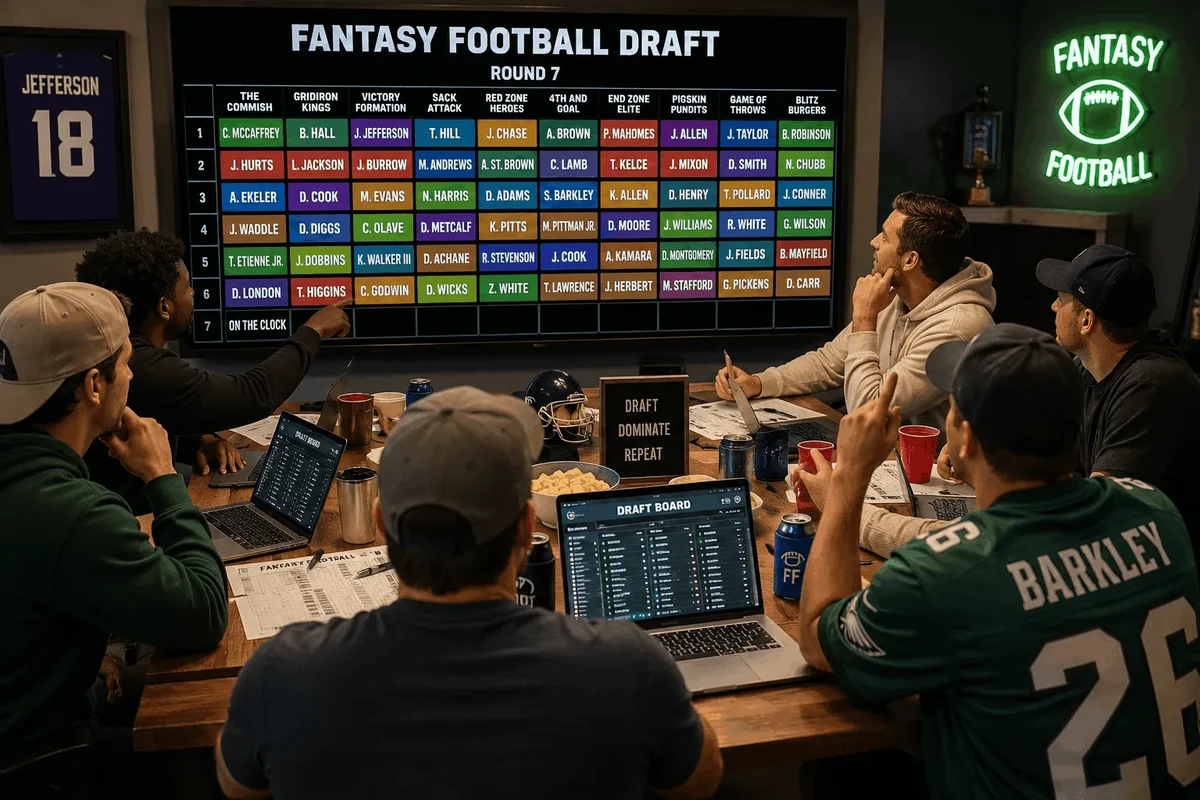
With NFL training camp and the preseason underway, the fantasy football season has already begun. Players are drafting, preparing for drafts, and searching for leagues to join.
A recent YouGov survey finds that 9% of U.S. adults plan to play fantasy football this season, with nearly one-quarter (23%) of that group planning to play in three or more leagues.
Who are fantasy football players in the U.S., and how much are they investing in the hobby?
Beyond their participation in the game itself, fantasy football players stand out from non-participants in several ways.
Fantasy football players tend to skew younger, as they are nearly twice as likely to be between 18 and 24 years old compared to U.S. gen pop.
They are also more likely to be affluent, with fantasy football players being 15% more likely to earn more than $200,000 annually.
Among players, nearly a third (31%) consider themselves "very heavy viewers" of the NFL, watching 13 or more hours of NFL football per week. This commitment to 13+ hours of the NFL weekly is nearly three times higher than that of all U.S. adults interested in the NFL.
The high level of engagement also translates into spending, with 25% of players typically spending more than $100 annually on fantasy football-related activities.
What drives Americans to play fantasy football?
Among those planning to play this year, the opportunity to compete is a key draw, with 67% of players saying it is a reason they play. More than half of players also reference making the football season more interesting (58%) and socializing (57%) as a reason to play.
Content zone: How and where do players consume fantasy football content
With millions of Americans playing fantasy football, the game has evolved into a year-round hobby for many participants. Nearly half (47%) of U.S. adults planning to play fantasy football this year consume related content throughout the entire year, demonstrating that engagement extends well beyond the NFL season itself.
When looking for expert insights, fantasy football players turn to a variety of brands, with ESPN leading the way.
66% of fantasy football players go to ESPN/ESPN Fantasy for their expert content and/or to house their leagues. Yahoo (42%) and Fox Sports (32%) are the second and third most cited options.
What keeps fantasy football players coming back?
While winning isn’t everything, it is likely to be the end goal for most fantasy football players. And it seems that a lack of success may be a deterrent for former players not planning to play this year.
Nearly a third (32%) of former players told us that they had never won a league, compared to just 6% of those planning to play this year. Furthermore, those who plan on playing this year are more likely to believe they win more frequently than others (35%) than former players (19%).
Overall, fantasy football players are a particularly engaged group of NFL fans. They tend to be younger and are typically more affluent. More than anything else, fantasy football players invest in their love for the game through content engagement and financial investment.
Methodology:
YouGov Surveys: Self-serve. August 11, 2026. U.S. adults: n> 1,200; Fantasy football players n> 100; Former fantasy football players n> 135; Interested in NFL: n> 775.
Fantasy football players are defined as respondents who are planning to play fantasy football this year.
Former fantasy football players are defined as respondents who have played fantasy football before, but do not plan to do so this year.
"Interested in NFL” segment defined as respondents who say they are a little bit interested in the NFL, somewhat interested in the NFL, or that the NFL is one of their TOP interests.