




In 2026, shoppers across Denmark, Finland, Norway and Sweden are navigating economic caution alongside selective enjoyment. Our continuous consumer panels show a region defined by financial polarization, rising budget concerns, and a strong focus on the present.
Polarization and rising budget concern
Across the Nordics, 36% describe themselves as financially struggling, 34% as neutral, and 30% as comfortable. These regional averages, however, mask substantial national differences that shape everyday purchasing realities.
“Financial polarization is no longer just a background trend – it is actively shaping how consumers shop, what they prioritize, and how they define value,” says Charlotte Alring, Commercial Director Sweden & Norway. “Across the region, we see a growing need to balance strict budgeting with a desire to still feel rewarded in everyday purchases.”
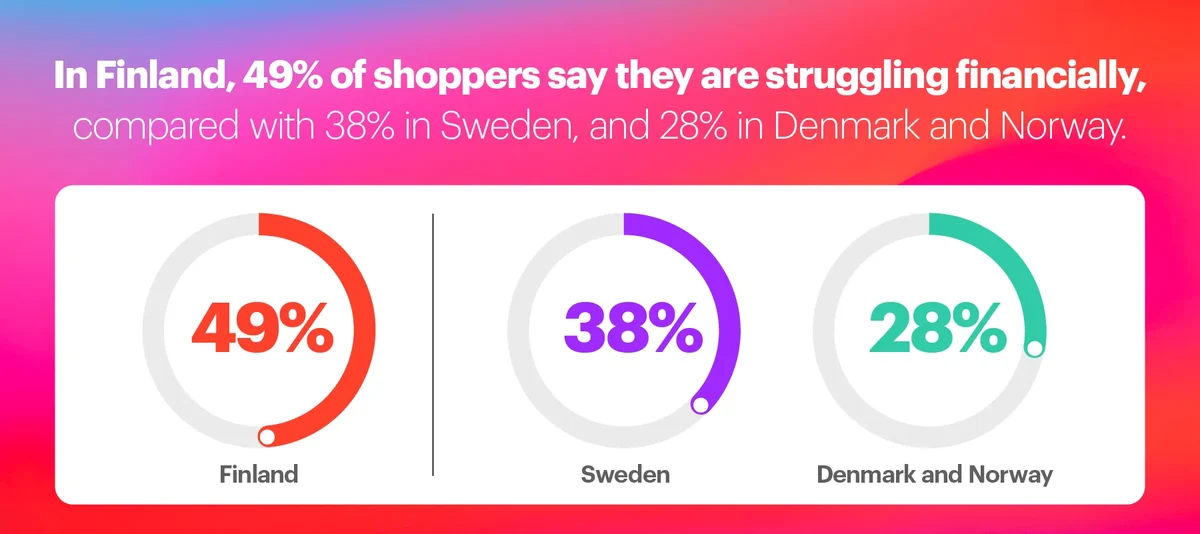
In Finland, 49% of shoppers say they are struggling financially, compared with 38% in Sweden, and 28% in Denmark and Norway. At the other end of the spectrum, close to half of Danish shoppers describe their finances as very comfortable, while fewer than 1 in 10 say the same in Finland. This contrast highlights how different financial starting points coexist within the same region.
This financial backdrop feeds directly into broader societal concerns. Budget concerns rank as the top societal issue across all four countries (48%), followed by climate change (34%) and own/family safety (33%). While economic worries dominate, mental health concerns are rising across the region, and climate and pollution concerns have moved slightly into the background compared to previous years.
Cautious outlook, present focus
Expectations for the future reflect this cautious environment. Across the region, 42% believe their financial situation will worsen, while only 5% expect improvement and 11% say they feel excited about the future. Most shoppers concentrate on the immediate: 66% focus on the here and now, while 23% feel nostalgic about the past.
National differences again stand out. Pessimism is strongest in Finland, where 51% expect their finances to worsen and only 3% expect improvement. In Denmark, 36% expect worsening, nearly as many foresee no impact, and 7% believe their financial situation will improve. Together, these figures point to a region where caution outweighs optimism, but intensity varies by market.
Control first – but room for small escapes
In response, many shoppers prioritize control. The main coping strategies are checking prices (53% expects to do this more), searching for promotions (46%), and cutting food waste (43%). In Finland, lower basket sizes reflect stronger financial pressure.
“Shoppers are incredibly intentional right now – they are planning, comparing and optimizing more than before,” explains Charlotte Alring.
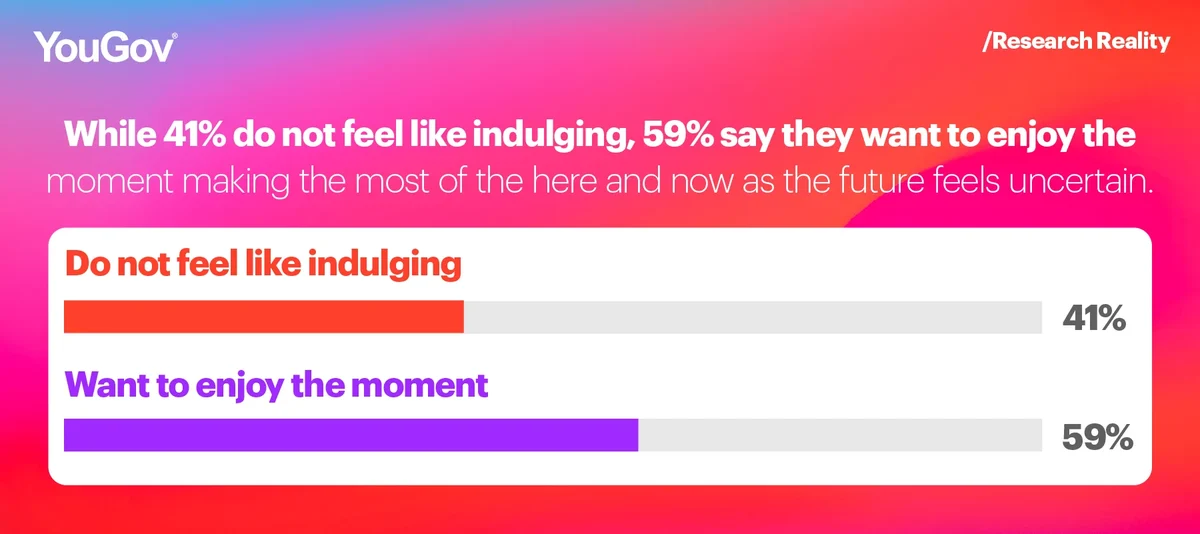
At the same time, enjoyment remains part of the equation. While 41% do not feel like indulging, 59% say they want to enjoy the moment making the most of the here and now as the future feels uncertain. Warm drinks, sweet treats, and cooking or baking rank among the top food-related mood boosters, alongside exercise and time with friends or family.
Promotions do not only serve the rational motive of saving money; they also deliver an emotional payoff. While price discounts are considered the most rewarding, discounts on near-expiry products rank second in this region – compared with an average ranking of #5 across Europe. This reflects how savings are closely linked with a strong local commitment to reducing food waste.
Although many shoppers are still feeling financially constrained, there is slightly more room for treats and small indulgences. As a result, promotions that encourage trial are seen as more rewarding than before, particularly those offering free extras or cashback.
Health and selective growth areas
Health has become a leading driver of FMCG choices in the Nordics, surpassing quality as a stated influence. Budget friendliness remains particularly important in Finland, while waste avoidance is especially significant in Denmark and Norway.
Retail growth opportunities across the region include international specialties, gut-friendly foods, gourmet ingredients and nutritional supplements. Beauty supplements and wellness products resonate especially strong with retail shoppers in Sweden, while craft beer gets higher interest in Norway.
Overall, Nordic FMCG in 2026 reflects a region balancing financial caution with selective indulgence – where protection of household budgets and small, present-focused moments coexist.