



Emergency preparedness is gaining renewed attention in Belgium. With increasing media focus and government recommendations, households are encouraged to keep an emergency kit at home, enabling them to remain self-sufficient for several days in the event of disruptions such as power outages, extreme weather or supply chain issues.
But how prepared are Belgian households in practice? Our recent survey shows that while awareness is widespread, actual behavioural adoption still lags. This reveals both a gap and a clear opportunity for retailers and FMCG manufacturers.
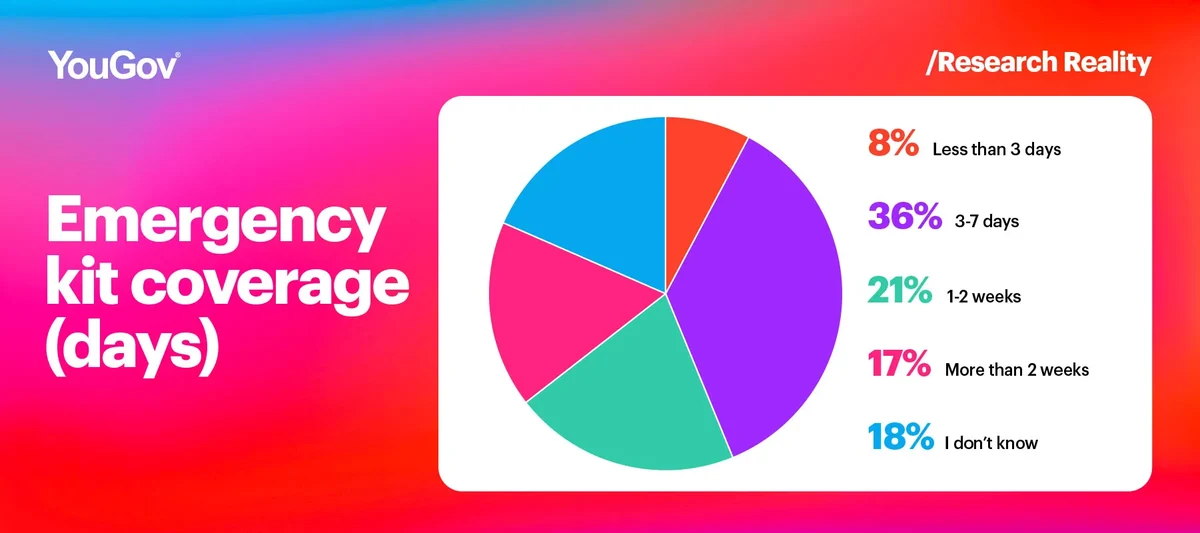
Awareness itself is not the issue. Nearly nine in ten Belgian households are familiar with the concept of an emergency kit. However, this awareness often remains superficial: only about one third of consumers say they clearly understand what such a kit should contain. This lack of depth is particularly noticeable among younger consumers, whereas older Belgians (especially those aged 65 and above) feel significantly more confident in their knowledge. There is also a slight regional difference, with households in Flanders reporting somewhat higher levels of understanding than those in the South and Brussels. Overall, consumers appear receptive to the idea but miss concrete guidance to translate awareness into action.
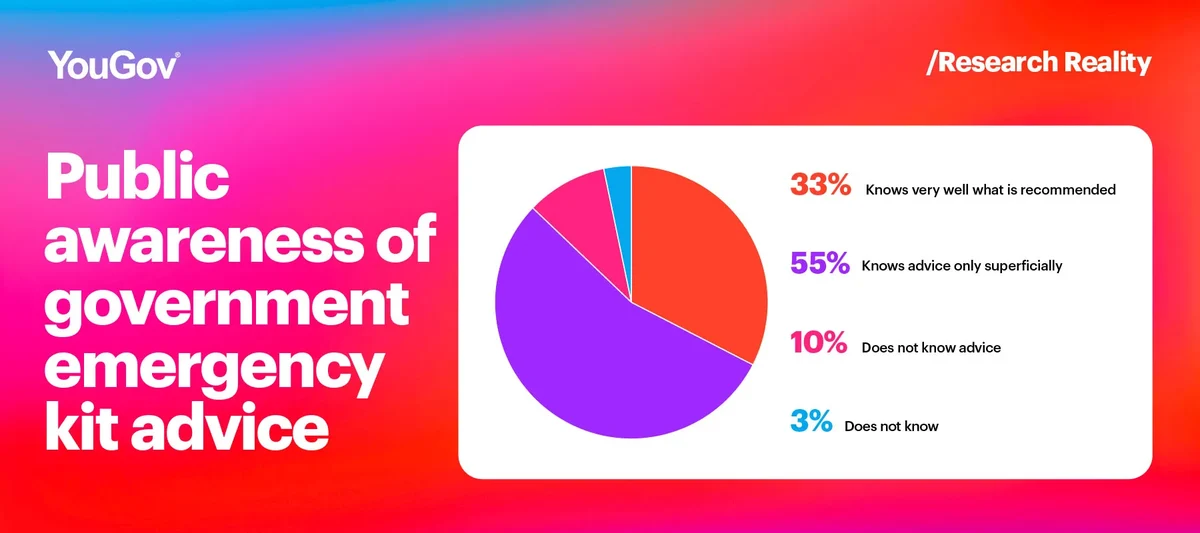
This becomes even more apparent when looking at actual preparedness. Only a very small share of households (around 3%) has a fully prepared emergency kit. Another 15% are partially equipped, but the majority of Belgians have not taken action: nearly 60% reports having no kit at all and no intention to create one. The challenge is therefore not to create awareness, but to convert passive interest into concrete behavior.
When looking at what consumers actually stock, the picture is clear. Belgian households focus primarily on essential staples such as dry food, canned goods and bottled water, alongside everyday necessities like hygiene products, medication and toilet paper. Basic non-food utility items such as batteries, candles, and flashlights are also widely present. In contrast, more specific or preparedness-oriented products, such as ready meals or specialized food items, are far less common. This indicates that consumers approach the topic as an extension of their pantry, rather than as a dedicated or strategic preparation exercise.
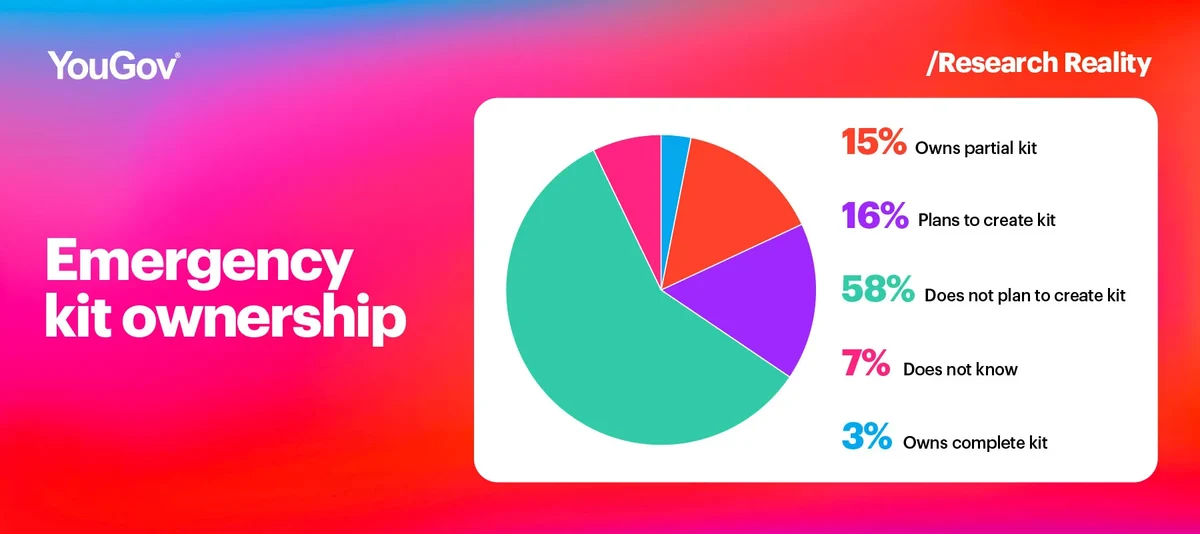
Even among those who do have supplies at home, preparedness remains relatively limited in scope. Most households are equipped to manage for a period of three to seven days, in line with general recommendations, but only a minority extend beyond one or two weeks. A notable proportion of consumers are unsure how long they could actually cope. Here again, differences between groups emerge: older consumers tend to be better prepared for longer periods, while younger households often appear less structured and more uncertain. Regional differences are modest but point in a similar direction, with slightly higher preparedness levels in Flanders.
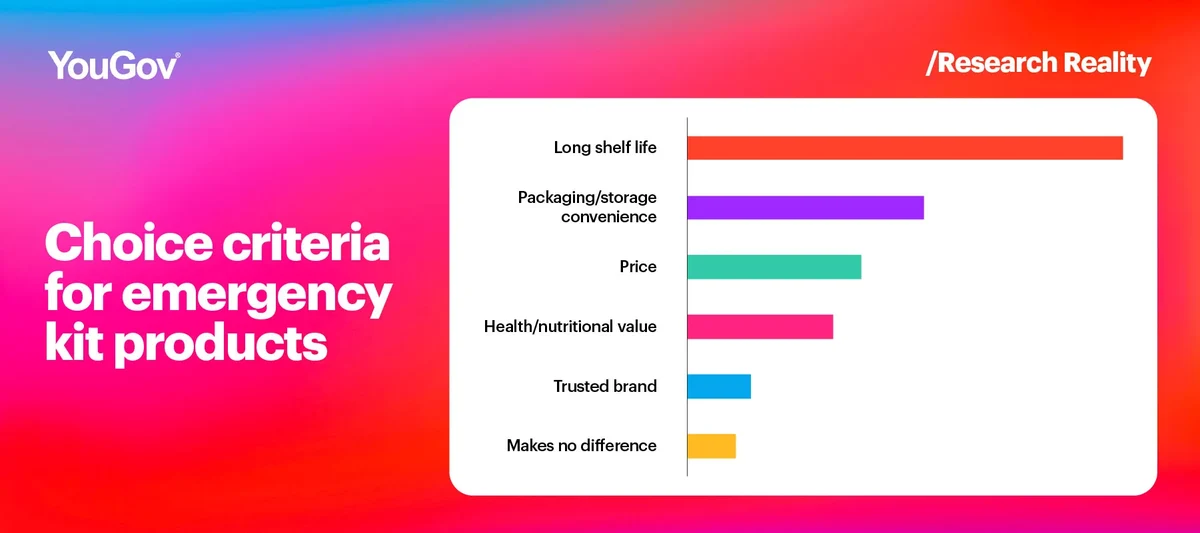
Interestingly, the way consumers make product choices for emergency use differs from typical FMCG behavior. Functional considerations dominate. Shelf life is by far the most important criterion, far outweighing price or nutritional value, while brand plays only a minor role. This highlights a strongly rational decision-making process, where reliability, durability and ease of storage matter more than brand affinity, a dynamic that contrasts with most other categories.
At the same time, younger consumers stand out as a particularly interesting group from a commercial perspective. They are significantly more likely to have actively purchased products with emergency preparedness in mind. This suggests that, despite lower overall knowledge levels, they are more reactive and more willing to act when triggered. As such, they represent a key entry point for retailers and brands looking to develop this category.
Taken together, the findings point to a market that is still in its early stages. Belgian consumers are aware of emergency preparedness but have not yet translated it into structured behavior. For retailers and FMCG manufacturers, this creates a clear opportunity. By simplifying the proposition, integrating preparedness into everyday shopping, and focusing on functional product benefits, they can help consumers take the next step.
In that sense, emergency kits represent more than just a niche concept. They are an emerging category where demand exists, but remains largely untapped, waiting to be activated by those who can make preparedness simple, tangible and relevant to everyday life.