





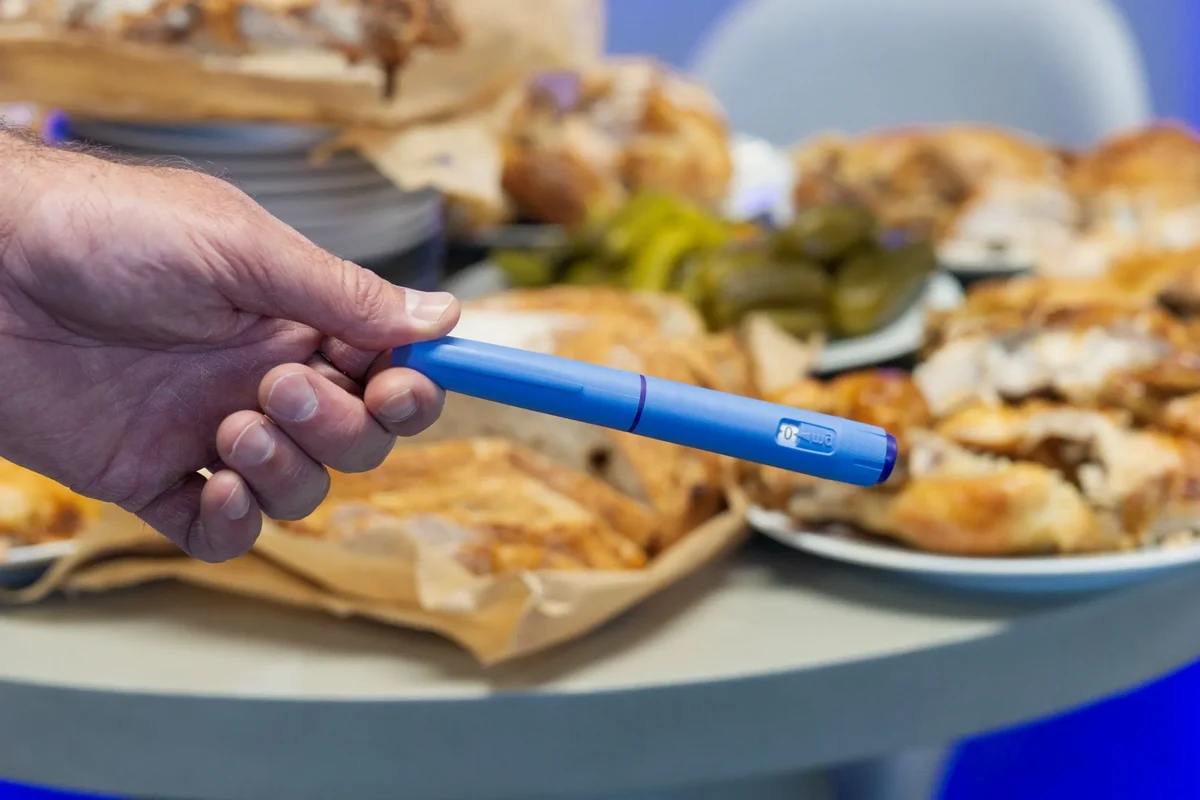
When everything feels uncertain, the body becomes a lever
Periods of uncertainty push people toward what they can control. Increasingly, control is exercised through the body.
Across Europe, health has become an active project rather than a passive state. Only 1 in 10 Europeans report no health concerns, while 47% are worried about their body weight, making it the leading issue ahead of stress (34%) and sleep (33%).
This shift provides the context for understanding the rise of GLP‑1 medications such as Ozempic, Wegovy, and Mounjaro. Their success is not an isolated pharma story, but the result of deeper changes in how people think about wellbeing, control, and self-optimization.
The mindset shift behind health shortcuts
The rise of GLP-1 is not happening in isolation. It reflects a broader shift in how consumers define health, evaluate outcomes, and approach everyday choices. Three underlying mindset changes are paving the way for fast-track health solutions:
From wellbeing to self-optimization
Health is increasingly viewed through a performance lens. Just feeling good is not enough; consumers want to look and function better and extend their active lifespan. This is visible across categories: the rise of protein products, the mainstreaming of functional nutrition, and the adoption of self-tracking behaviors all point to a more outcome-oriented approach. Consumption becomes a tool for self-optimization.
From lifestyle to “managed health”
At the same time, the boundaries between food, beauty, and healthcare are blurring. Functional nutrition, supplements, and dermatological skincare are gaining traction because they promise clear, science-backed benefits. Around half of consumers consider products supporting immunity to justify their price (Who Cares? Who Does? Health 2025), underlining a growing trust in medically inspired, outcome-driven solutions.
From effort to efficiency
Expectations around effort are also shifting. Traditional approaches such as lifestyle change are often perceived as slow and difficult to sustain. Consumers increasingly prefer solutions that reduce friction and deliver faster, more predictable results. This is reflected in the growth of convenience-driven formats such as healthy snacks, drinkable meals, and functional waters.
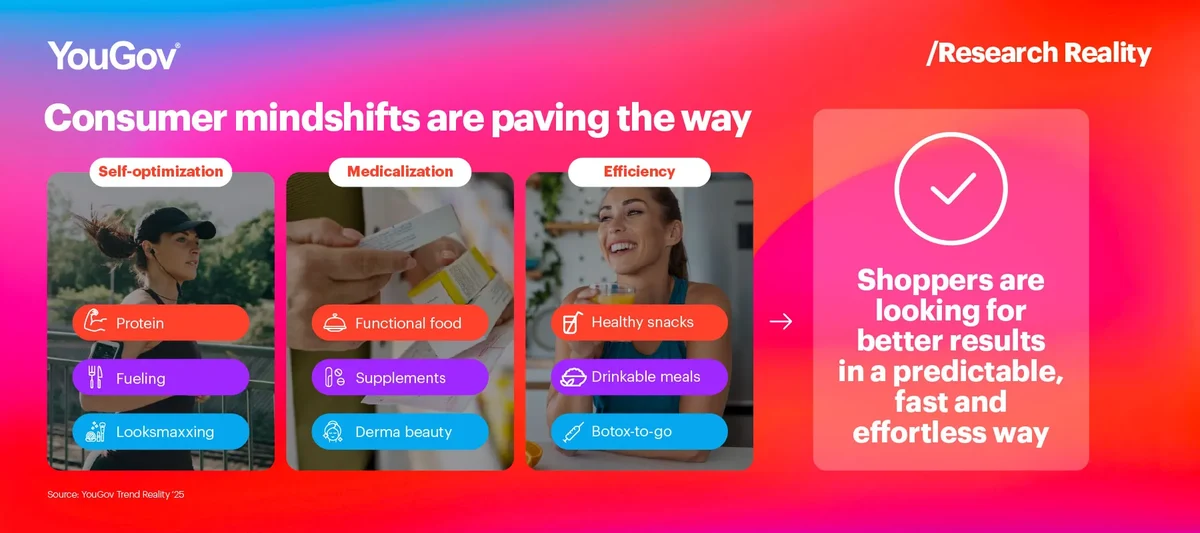
Together, these shifts redefine what “good” health solutions look like – creating demand for approaches that combine speed, predictability, and effectiveness.
Weight-loss as a central health lever
Weight management has become one of the most salient health concerns across Europe, reflecting both rising obesity levels and heightened awareness of its long-term impact.
Across EU countries, the share of overweight populations ranges from around 40% to over 60%, while obesity levels have continued to increase in recent years (Eurostat, 2025). As a result, weight loss is no longer a niche lifestyle topic but a central lever for improving long-term health outcomes.
One in four Europeans links weight reduction to longevity. More broadly, 42% say longevity and long-term health factor frequently into their everyday choices, embedding the topic deeply into daily decision-making. At the same time, longevity is increasingly defined as maintaining mobility, independence, and quality of life – not just living longer.
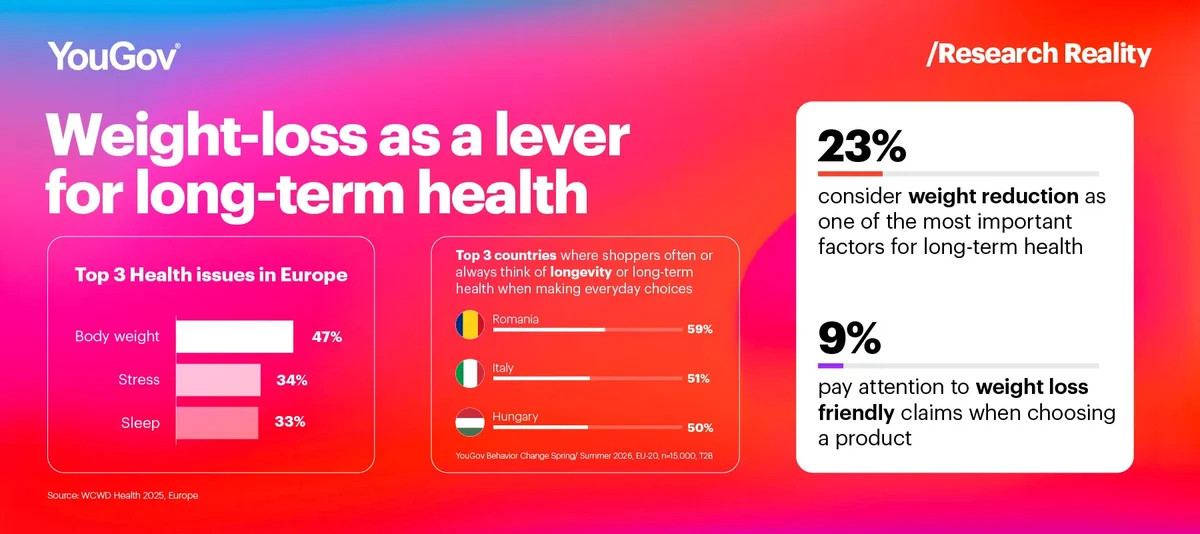
However, traditional approaches are often seen as effort-intensive and difficult to sustain. This drives demand for solutions that deliver faster, more predictable outcomes – a space where GLP-1 medications naturally fit.
From niche to scale: the rise of GLP-1
GLP-1 weight-loss medications have rapidly moved beyond medical circles into mainstream awareness, with 48% of European consumers already aware of Ozempic by 2025 (Trend Reality 2025). Awareness varies significantly: it is higher among Gen Z and in markets such as the Nordics, the UK, and Austria, peaking at 71% in Denmark, while remaining lower among Boomers and in markets such as Hungary and France. Economically, the impact is already material, with GLP-1 users representing €70 billion in FMCG spending power across Europe. (Who Cares? Who Does? Health 2025).
Across four key markets – Italy, the Netherlands, Germany, and Poland – as much as 3.6 million households are currently using GLP-1 medication. Taking consumers who plan to start using within the next six months into account, the user base could double in the short term, indicating strong demand momentum. Importantly, GLP-1 considerers behave differently:
- More snacking: German considerers spent €23 per buyer on savory snacks in the last 6 months vs. €15 on average.
- Less fruit and vegetables: In the same period, Italian considerers spent around €115 on fruit and vegetables vs. €152 for GLP users.
Looking ahead, wider availability, lower prices, and next-generation therapies are likely to accelerate adoption. Even before launch, 5% of shoppers are already aware of triple-agonist treatments. GLP-1 is no longer a niche trend, but a fast-growing force already influencing FMCG demand ahead of full-scale adoption.
Beyond weight loss: a shift in consumption logic
The impact of GLP-1 extends beyond reduced appetite. While many users report eating smaller portions, snacking less, and experiencing prolonged satiety, the more important shift is in decision-making.
Reduced “food noise” does not simply lead to lower consumption – it leads to more selective consumption. Shoppers become more deliberate; expectations rise, and tolerance for low-value choices declines, fundamentally reshaping how value is defined.
What shopper baskets reveal
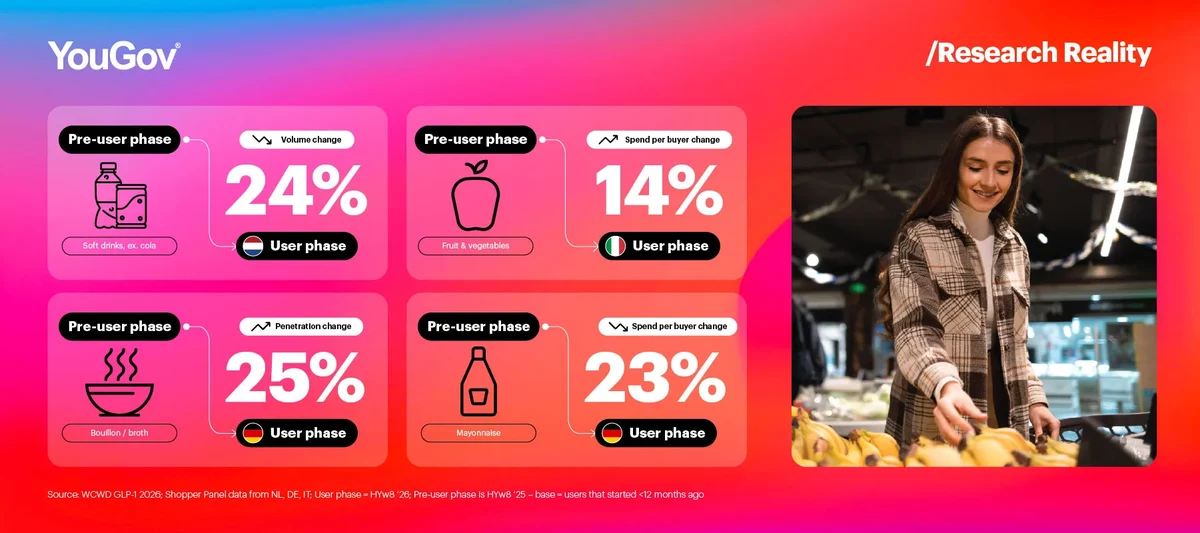
Purchase data confirms that the impact is not a simple volume decline, but a reallocation of value across categories. In the Netherlands, for example, users spend across 169 FMCG categories declines by 1%, while volumes drop by 5%, illustrating this shift. Reduction effects are visible in typical consumption-heavy categories:
- Snacking declines, amongst Germans both in spend (almost €10 less) and buyer reach (10 percent point drop)
- Soft drinks volumes decrease significantly e.g., -24% for fruity soft drinks, -30% for iced tea in the Netherlands
- Wine purchases among short-term users in Italy decreased significantly, while water consumption increased.
At the same time, health-aligned categories gain relevance:
- Higher spend on fruit and vegetables: Italian short-term users spent €145 pre-usage, increasing to €165 after starting treatment – the average buyer increased spend by only €4.
- Increased demand for fresh protein: Poultry volumes per buyer increased by 12% in the Netherlands – increasing from 4.1kg to 4.6kg within six months. Those who have used GLP-1 medications for over a year buy 7kg in the same period.
Side effects also drive compensatory behaviors. With 20% of users reporting digestive issues, the German OTC category has grown by 13% over the past six months. Compared with the same period a year earlier, total user spend is up 69%.
A more selective, function-driven consumer
As consumption occasions shrink, each choice carries more weight. Shoppers increasingly evaluate products not just on taste or price, but on nutritional and functional value. This increases relevance for categories aligned with efficiency and performance, including protein-based products, hydration and gut health solutions, functional foods, and selected OTC categories. At the same time, this creates tension: food is not only functional but also emotional and social, requiring brands to balance performance with enjoyment.
What this means for FMCG brands
GLP 1 is not a short-term disruption but part of a broader shift in how consumers prioritize, justify, and evaluate their choices. For FMCG, this is not simply about declining volume – it is a redefinition of value.
Key implications:
- Less volume, more value consumption declines, expectations increase
- From indulgence to “smart enjoyment”: pleasure must be paired with function
- From products to ecosystems: demand shifts toward integrated health solutions
- More selective shoppers: fewer decisions, higher scrutiny per choice
- New white space: opportunities for non-medical solutions replicating GLP-1 benefits
Understanding this shift requires moving beyond stated intent and focusing on observed behavior – in real baskets, over time, and across markets.