
Key findings:
- 68% of Britons have at least one active credit card; 13% have three or more.
- Debt management becomes the top reason for holding multiple cards among 5+ card users, cited by 47%.
- 26% of 5+ card users are likely to apply for another card within a year, compared with 9% of single-card users.
How Britons use and manage their credit cards can vary depending on how many cards they hold, new analysis of YouGov Profiles data shows.
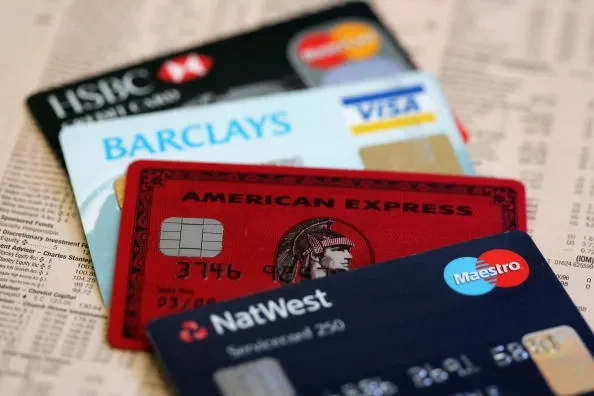
Currently, two-thirds of British adults (68%) have a credit card, with around a third (35%) owning a single card. However, about one in three (32%) are multi-card users.
Reasons for owning multiple cards differ based on number owned
The data shows that the reasons these Britons own more than one credit card differ depending on how many they own. Among those with two active credit cards, the main motivating factor is the cards’ unique benefits (37%), followed by making sure they have an emergency backup (29%) in case they need it. Transferring balances and managing debt (16%) and improving their credit score (16%) are the next most popular.
For those with three cards, the main driver for having multiple cards is again their unique benefits (44%), but the ability to transfer balances and manage debt (30%) comes second, closely followed by making sure they have an emergency backup (29%).
And it is a similar story for those with four cards, with cards’ unique benefits (45%), transferring balances and managing debt (37%) and having an emergency backup (30%) ranking highly. However, there is also a different major factor in why this group want more than one card – taking advantage of lower interest rates (also 30%).
The data finds that the reasons for multi-card ownership change more substantially among people with five or more active credit cards. Here, transferring balances and managing debt takes the top spot (47%) ahead of unique benefits (42%), with access to a higher total credit limit ranking third (36%). Lower interest rates and introductory offers and sign-up bonuses follow (each cited by 32%).
Carrying debt becomes more common as card count rises
YouGov’s analysis finds that the more cards someone has, the less likely they are to pay off their balance in full each month. While around seven in ten single-card users (69%) say they pay their entire balance every month, this falls to 46% among those with five or more cards.
Similarly, when it comes to making the minimum repayment, those with five or more cards are almost three times as likely as those with one or two cards to make the minimum repayment every month (22% vs 8%).
Those with more cards have larger outstanding balances
Linked to this, the data shows that that those with a higher number of more active cards have larger outstanding balances.
Three-card users are the most likely (29%) to have outstanding balances of £1,000 to £4,999, with similar proportions of two (24%), three (22%) and five+ (22%) card users owing between £1,000 to £4,999 on their accounts. By comparison, those with just one card are the least likely (17%).
Those with five or more cards are the most likely to carry outstanding balances of between £5,000 to £9,999 (17%) followed closely by four (16%) and three-card owners (14%). A similar pattern emerges among those carrying at least £10,000 on their cards.
By contrast, those with fewer cards have lower outstanding balances, with single-card owners being the most likely (69%) to have less than £1,000 in outstanding balances and those with five or more being the least likely (23%).
Britons with the most cards are the most open to another
The more cards someone had, the more likely they are to look for another. More than a quarter (26%) of those with five or more cards say they are likely to apply for a new credit card in the next 12 months, with a fifth (22%) of those with four cards saying the same. However, this falls to about one in eight of people with two (12%) or three (13%) cards. By comparison, just one in eleven (9%) of single-card users say the same.
The data points to particular patterns among British consumers. As the number of cards owned increases, so does the likelihood of carrying debt and maintaining larger outstanding balances. Notably, those with the most cards remain the most receptive to acquiring even more, suggesting an ongoing cycle of credit expansion among heavy users.
Methodology:
YouGov Profiles is based on continuously collected data through rolling surveys, rather than a single limited questionnaire. Figures are drawn from responses collected between September 2025 and September 2026, using a 52-week dataset updated weekly. Data is nationally representative of adults (18+) in Great Britain and weighted by age, gender, region, education, and social grade.
Image credit: Getty Images