



Prices, Inflation, Consumer Confidence, FMCG spending
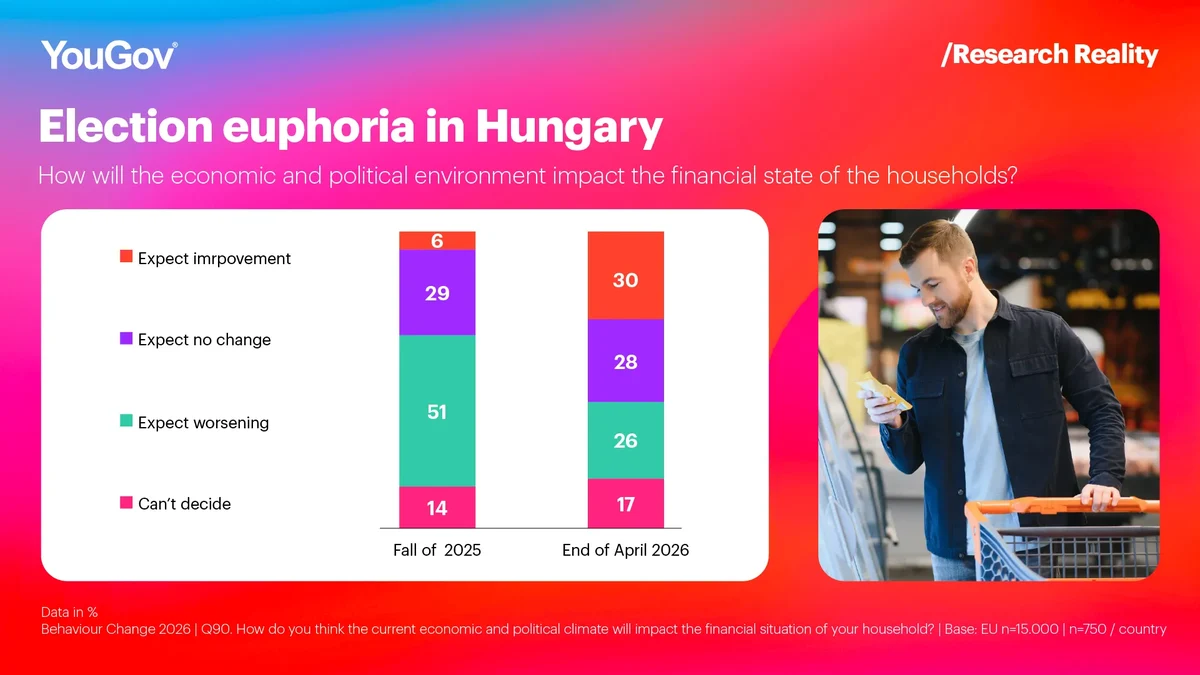
Following the inflationary crisis of recent years, the rise in food prices had slowed to a minimum by the first half of 2026 in Hungary. Consumer confidence soared following the elections. YouGov Shopper's Behavior Change 2026 study shows the election euphoria among Hungarian households: a growing and well-above the CEE average proportion of households expect an improvement in their financial situation due to the economic and political environment.
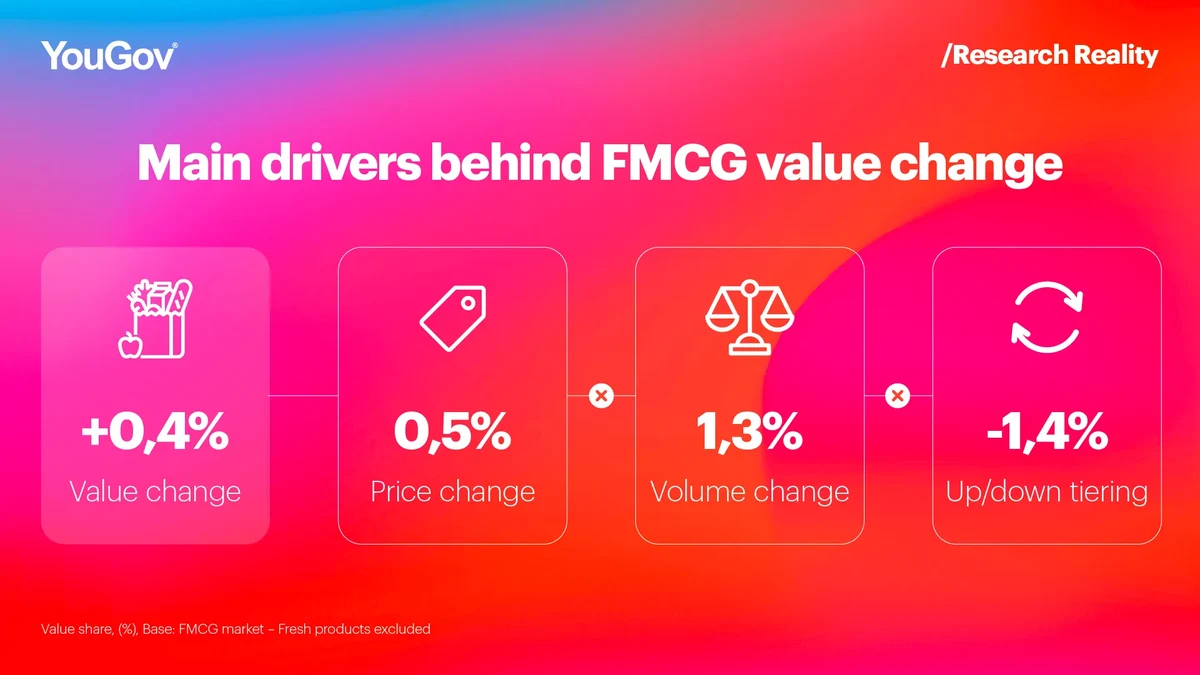
Despite the consolidation of prices and the rising consumer confidence, households continue to spend cautiously, the changing environment has not yet led to a breakthrough in households’ purchases of FMCG products. In the first half of the year, FMCG spending increased by 0.4% compared with the same period last year, roughly in line with the proportion of price changes. Turnover change is still mainly driven by price, as average basket size grew by around 4%, while buying frequency decreased. Comparing the last 12-months period with a year before, a slight volume increase can be observed. Alongside the margin caps the rate of promotional offers remains stable, and demand for private label products has not changed significantly either.
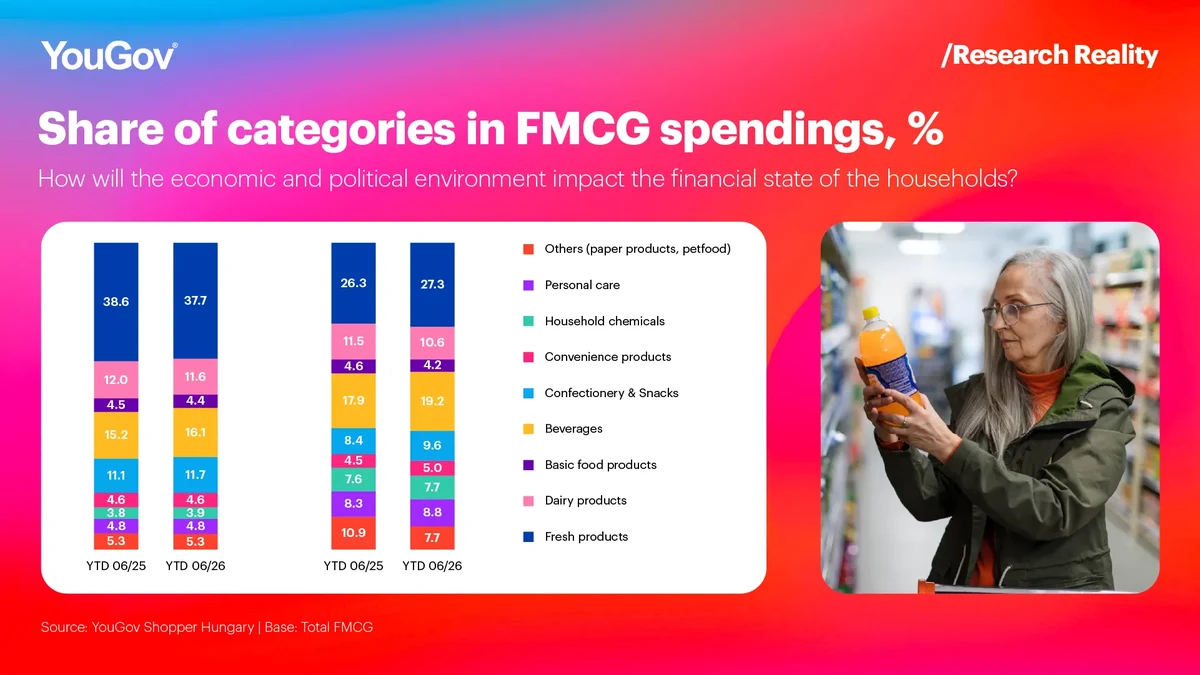
Household's purchasing behavior has not changed considering the channels either. In the first half of 2026 share of the most important channels has not changed significantly compared to the previous year. The discount channel's previously slowing growth stopped, its market share remained unchanged compared to a year earlier, but this is mainly driven by the diverging growth trends among the discount chains. The drugstore and the online channels continue to grow with both their turnover and market share increasing. Share of product categories continue to differ between online and offline channels. Fresh products have the highest share online as well, and their share is growing. Beverages, household chemicals, personal care products and other products (e.g petfood and paper) have a higher share in the online basket than the FMCG average.
According to YouGov's #Shopper 2026 study, the high price sensitivity of shoppers persists when selecting a store, even in the more favorable economic climate. However, value for money and expectation regarding quality are also key considerations, with a growing proportion of shoppers naming these as important criteria.
Methodology:
YouGov Shopper Hungary is built on continuously collected data from 4,000 households, representing the country’s total population.
YouGov Shopper offers access to a wealth of expertise and quality consumer panel data. We help the world’s most recognized FMCG & Retail brands to deliver superior customer experiences at every stage of the shopper journey. Learn more about YouGov Shopper.
Behavior Change Spring/Summer ’26 study: 11th edition of the study, providing in-depth insights into Hungarian shoppers, with Hungary included among 22 European markets (9 CEE countries) and approximately 750 respondents per country. The 15-minute CAWI survey was conducted among adult household members responsible for everyday purchases in April 2026, with results tracked against previous waves.
YouGov Shopper 2026 study: N=3,000, drawn from the YouGov Household Panel based on actual purchasing behaviour. Respondents had to have purchased from the respective retailer at least twice between January and June 2026 (once for drugstores) to be eligible for the sample. Data collection took place in June–July 2026.