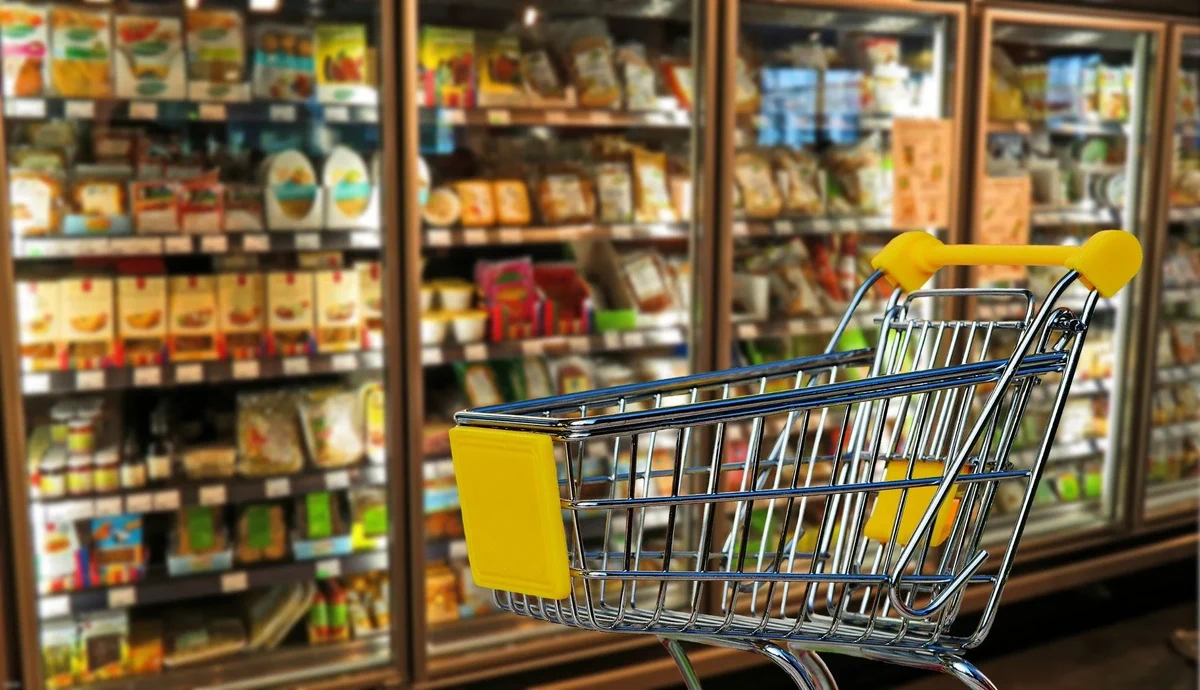
With Ed Miliband having previously said that the EU reset deal would bring down prices for shoppers, cabinet office minister Louise Haigh has rowed back on such claims, saying there is “no guarantee” food prices might come down
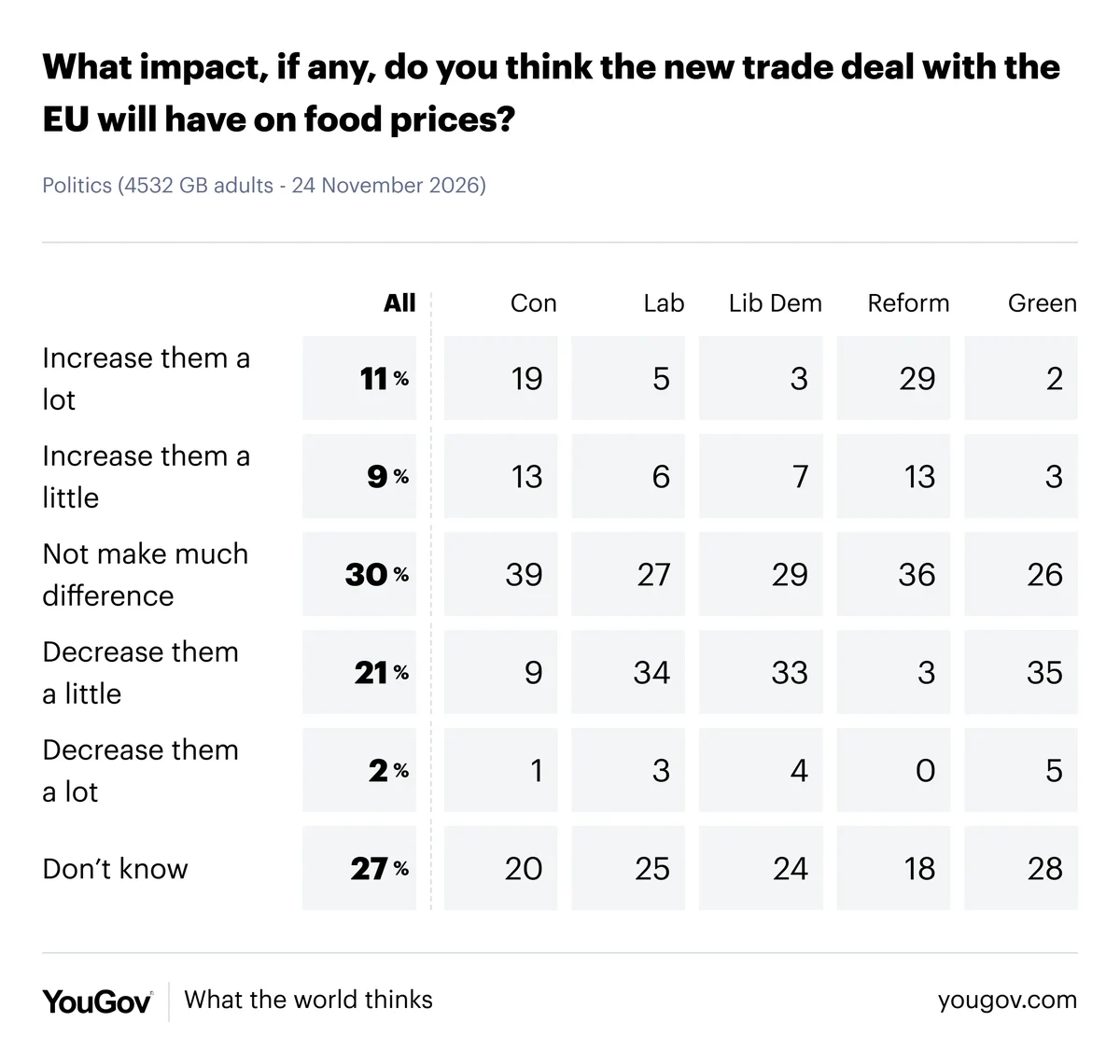
The most common view of the public is that the new trade deal will not make much difference to food prices (30%), while 23% think they will decrease them, and 20% think they will rise as a result
Responses are highly partisan, with Labour, Lib Dem and Green voters more likely to lean towards food prices falling, and Tory and Reform voters tending more towards thinking they will increase
But what do Britons make of the cost of living? To find out, we used our new YouGov AI Interviewer tool to ask respondents: “How are you being affected, if at all, by the current cost of living?”
The AI agent then conducted interviews with each respondent, following up on their responses, in order to provide ‘the why’ behind what Britons think. Our qualitative analysis of attitudes, including quotes, can be found below, along with examples of respondent interviews in their entirety.
Rising food prices and a costlier weekly shop
Many say they feel the cost of living hardest at the supermarket, describing a weekly shop that costs far more than it did a year or two ago for the same items. Some put figures on how much their food bill has grown, or name everyday items whose prices have jumped.
- “The price of a food shop between two people has almost doubled. We’re having to leave twice the amount of money we normally do aside for a food shop, and it’s limiting our disposable income. Going out to eat is also less likely now, as any restaurants have gone up in price so much it costs the same to eat out once as it would to go food shopping for a week, sometimes it may even cost less to shop for a week.” – Woman, 18-24
- “I looked at buying scones at tesco they went from 49p to 2 .10, food shopping went from around 100 per 2 weeks to 150 and it still feels short” – Man, 25-34
- “In the last year my food bill has increased from £80-£100 per week for at family of 3 to £180 to £200. Wages have not increased” – Woman, 45-54
- “A lot, everything is rising in price at the supermarket. Not by a few pennies but by 20p to 50p on the most basic items. The cost of utilities are already high but today’s announcement of the January hike will be crippling” – Woman, 55+
Energy, fuel and household bills
Many also point to the cost of gas and electricity, petrol and diesel, and housing costs such as mortgages and rent. Some describe rationing the heating, wrapping up in blankets or driving less to keep these bills down.
- “Don't put the heating on if possible, and instead just use blankets and get used to the cold” – Man, 18-24
- “I can’t afford to hear the whole house when I work from home I sit in a heated blanket blanket to stay warm and wrap other blankets around me. I save the heating for night time when more than one person is in the house. Car diesel is mega expensive and the government have not cut duty so I simply cannot run the car as much” – Man, 45-54
- “Fuel to heat my home costs half of my income per month and prevents me from going out, socialising and maintaining my home.” – Woman, 55+
- “Not so much food prices but my mortgage and energy bills are up a lot” – Woman, 35-44
Changing how they shop
Some have changed the way they shop to cope with higher prices: switching to own-brand products, moving to discount supermarkets such as Aldi and Lidl, hunting for reduced or on-offer items, or simply buying less.
- “Well at the moment, I've been going to Lidl and Farmfoods because it just tends to be much cheaper. When comparing to other nearby shops everything gets much more expensive” – Man, 18-24
- “We have gone from shopping at Sainsbury’s to now shopping at Aldi because we can get more food for the same cost” – Woman, 25-34
- “Instead of Mutti tinned tomatoes, I'll buy own-label tomatoes; dried pasta instead of fresh; packaged ham instead of deli counter ham. I also buy steak less often.” – Man, 55+
- “I always buy supermarket brand goods now, big brands are far too expensive. Each time I shop I see more prices have increased. I always check out the reduced shelves and the special offers.” – Woman, 55+
Cutting back on treats, socialising and saving
Some say rising costs have squeezed their disposable income, leaving less for eating out, holidays, hobbies and seeing friends. Some also say they are now able to save less than before.
- “I used to play football now I can't due to the need to work more, and I find myself cutting back on subscriptions etc” – Man, 18-24
- “We have had to cut back on a lot of recreational expenditure. We never go out to eat now, and rarely order a takeaway. We haven't gone to any social occasions in over a year and have not visited any leisure spots since 2024.” – Man, 25-34
- “I have noticed food and energy bills going up, mortgage interest rates are still higher than they used to be. My wage has stayed the same though so I have less disposable income than I used to do and don’t go out as much. Me and my family have agreed to spend less on Christmas presents this year as well all have less money.” – Woman, 25-34
- “Really affected. Everything is so expensive. Going out for dinner is impossible, being able to take my kids out and do something is so expensive, living is expensive. My wages just about covers my bills. Basic food shopping is a luxury now and having a night out is a genuine decision about whether it's affordable” – Man, 45-54
Struggling to make ends meet
Some describe real hardship, from relying on credit cards and overdrafts or eating into savings, to skipping meals, using food banks and going without heating.
- “I am struggling to get by each month and manage my money effectively before I didn't have to budget I could just live within my means now I have to eat cheap unhealthy foods just to be able to eat everyday and still do some enjoyable things” – Man, 18-24
- “The cost of living is scaring me now. Yesterday I skipped a meal as it was too expensive so fed my daughter and thats it. Today I ate less so I could save some for tomorrow's meal too.” – Woman, 35-44
- “A lot. I am on a budget of less than £60 per week for two people and a cat. We have dietary intolerances and really struggle to make ends meet. We cannot afford to have the heating on and this encourages damp and mould growth on the walls. There is no money for new clothes and we have a very poor quality of life. Every day is a battle to make ends meet.” – Woman, 55+
- “I have had to go to the food bank because food prices are to high with all my other bills” – Woman, 55+
Managing, for now
Some say they are not much affected or are coping, crediting things such as a good income, savings, job security or living with their parents. Some of these say they are still keeping a closer eye on what they spend.
- “living at home with my parents and not having to pay rent or bills while working a full time job” – Woman, 18-24
- “I’m watching what I spend my money on, maybe a bit more than usual, and making sure I have some savings just in case. I’m lucky enough to have good job security and some savings already so it doesn’t affect me too much” – Woman, 25-34
- “It just means that we have a bit less money available for savings and home improvements at the end of the month, we're lucky enough to be able to afford everything that we need, for the moment.” – Man, 35-44
- “We have a good household income and can afford the higher prices” – Woman, 55+
Wages not keeping pace with prices
Some say the core problem is that their pay has not risen in line with prices, leaving them worse off even after pay rises or promotions.
- “my wage needs to go up i earn minimum wage and can’t move out” – Woman, 18-24
- “It is very bad. I am making more money then I have ever had, got promotions, my lifestyle hasn't changed, I buy the same foods but I have never been poorer. When I was carer on minimum wage I could afford to travel 2 times a year (10 years ago) , now I am registered manager make twice as much and can bearly afford living. My lifestyle hasn't changed , luve in the same place, eat the same food and cant afford anything. I haven't been on holidays in 3 years” – Woman, 35-44
- "My pay has not gone up but all my bills and mortgage have gone up" – Man, 25-34
- "It makes me feel disappointed I can not provide the family with these fun activities even though I earn a decent wage but that has not increased to cover inflation." – Man, 45-54
Other themes
Smaller points include worry about what lies ahead, anger at shrinking pack sizes and supermarket profits, the difficulty of eating healthily on a budget, and younger people feeling unable to leave home or buy a house. Some blame the cost of living on the government, taxes, net zero, Brexit or wars abroad, and some raised the new EU deal itself, with views split on whether it will help or hurt. One even described joining a strike against supermarkets.
- “The cost of just food itself is so high, I’ve taken part in a strike against supermarkets to make prices cheaper.” – Woman, 18-24
- “I have less money to spend on things I want, I'm worried I won't be able to afford to live if this continues and pay doesn't match inflation.” – Man, 25-34
- “It is hard at the moment as prices go up far too fast at the same time as product sizes shrink” – Man, 45-54
- “I really struggle because fruit costs so much, why is it so expensive to be healthy?” – Man, 25-34
- “Impossible to move out of parents house because it's too expensive” – Man, 25-34