Almost a quarter of the public have bought stockpile items in the past month
Key findings
- 92% of Britons heard at least a little about the government’s recommendation to keep a stockpile of emergency supplies at home
- 30% of the public have a stockpile
- 23% of Britons stockpiled items in the past month
- 90% of those with stockpiles have long-lasting food, and 83% bottled water – fewer have USB power banks (55%), cash (53%) or radios (37%)
On 22 October, the government launched its “Be Ready” campaign advising households to keep a stockpile of emergency supplies in preparedness for everyday services being temporarily disrupted.
One month on, a new YouGov survey finds that 92% of Britons say they’ve seen or heard something about the campaign, including a majority who say they have seen “a great deal” (16%) or “a fair amount” (38%) about it.
Older Britons are more likely than other age groups to have seen a great deal or fair amount about the recommendations, with 63% of the over-65s saying so, compared to 50-52% among other age groups.
How many Britons have an emergency stockpile?
Three in ten Britons (30%) say they have a stockpile, with older Britons the most likely to say so. While 42% of the over-65s say they have a stockpile, this figure declines with each age group to just 14% among 18-24 year olds.
Among those who do have a stockpile, 77% say they have bought items for their stockpile in the last month – amounting to 23% of all Britons. Again, the older Britons are, the more likely they have been to purchase stockpile supplies in the past month, with 30% of the over-65s doing so but only 10% of 18-24 year olds.
What do Britons have in their emergency stockpile?
Long-lasting food is the most common feature of the country’s stockpiles, with 90% of stockpilers saying they have this. More than eight in ten (83%) have bottled water, while three quarters have a torch (75%) and the same number have set aside batteries.
Slightly fewer than two thirds have a first aid kit or medical supplies in their stockpile (64%), with a similar number saving hygiene products like hand sanitiser, wet wipes, and bathroom products (63%).
Slightly more than half (55%) have stockpiled a power bank for USB charging, and 53% have squirreled away cash in their cache.
Of the items we asked about, the only one to feature in fewer than half of emergency stockpiles is a radio (wind-up, battery or solar powered), which only 37% have.
If we recalculate these figures to express them as a percentage of the entire population, rather than just those with a stockpile, then we see that approximately a quarter of the population have stockpiled food (27%), bottled water (25%), a torch (23%) and batteries (23%). Around one in five to one in six Britons (16-19%) have set aside medical supplies, hygiene products, a power bank, or cash for an emergency, with 11% having a radio for such situations.
What have Britons stockpiled in the past month?
Of the approximately 23% of Britons who have bought stockpile supplies in the past month, by far the most common purchases have been long-lasting food (73%) and bottled water (70%).
In a distant third place are purchases of batteries (40%), while 27% bought hygiene products. Around one in five purchased a torch (21%), radio (20%) or USB power bank (18%), and a further 14% bought medical supplies.
Recalculating those figures to represent stockpiling purchasing as a national rate shows that 16-17% of all Britons have bought food and water to stockpile in the past month, while 3-9% have made purchases of other items recommended by the government.
Methodology
- Sample size: An online survey of 2,021 adults aged 18+ living in Britain
- Fieldwork: 17-18 November 2026
- Commissioned by: YouGov
Click here for more information about how we carry out research
Interested in taking YouGov surveys? What do you think about prioritising social housing, the benefits system in general, and everything else? Have your say, join the YouGov panel, and get paid to share your thoughts. Sign up here.
Interested in commissioning YouGov research? We connect in real-time with real people around the world to gather their thoughts, behaviours, and opinions, to ensure that our research data is powered by reality. Explore our survey services here.
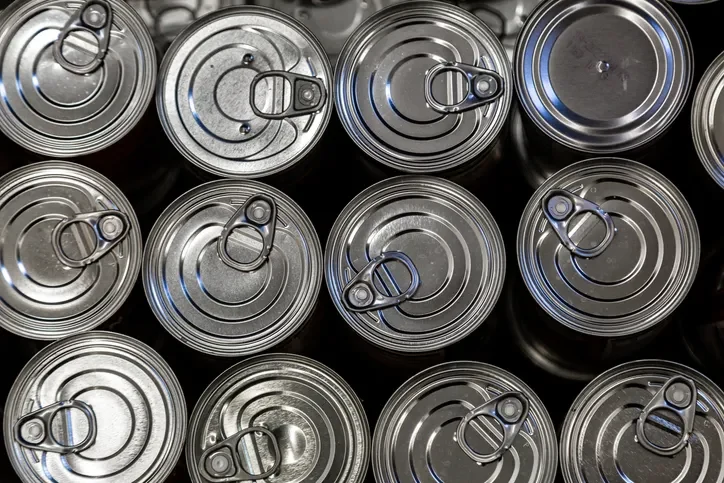
Photo: Getty