John Healey’s first budget is seen as fairest in five years, though economic outlook remains pessimistic
Key takeaways
- Britons tend to see the 2026 Budget as fair, by 45% to 20%, leaving it the most positively received budget since March 2021
- Most headline individual measures from the Budget are seen as the right thing to do at present, though increasing the tax on income from property or savings interest is an exception
- Belief the government are managing the economy well has risen from 15% to 31% since last November, though most (55%) still believe they are doing badly
- Britons tend to believe the Budget will make no real difference to their family (56%) or the country (49%)
- The wider economic outlook remains poor, with 74% of Britons thinking the economy is in a bad state
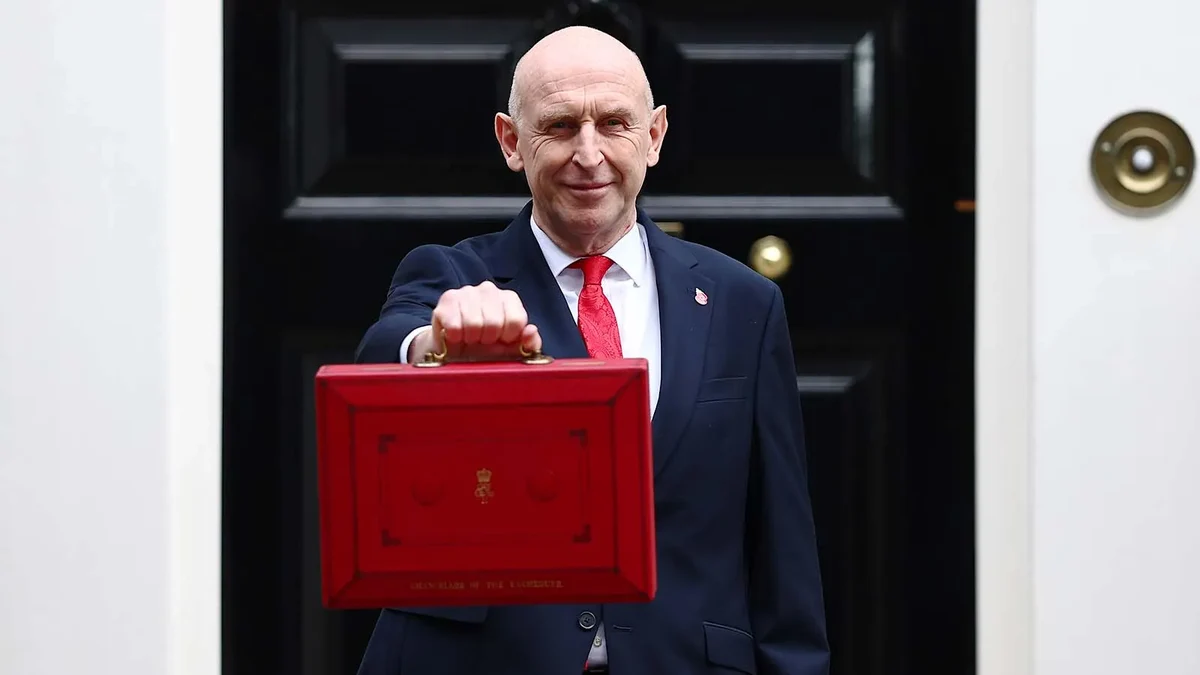
John Healey’s first Budget has been noted for prioritising small measures over anything showy, with the new chancellor saying he wanted to give hard-pressed families “breathing space” and “hope for the future” amid international economic turmoil. However, Kemi Badenoch characterised this approach as the government not being “bold enough” in her response to the announcements.
New YouGov polling for The Times reveals the public’s initial reaction to the 2026 Budget, as well as their views on Labour’s economic competence and the state of the wider economy.
What do Britons make of the Budget overall?
The public’s initial reaction to John Healey’s first budget is in some key respects broadly positive, with nearly half of Britons (45%) regarding the Budget as being fair, relative to just 20% seeing the measures announced as not fair.
This is a notable improvement on last year, when Rachel Reeves’ second Budget was declared ‘not fair’ by a near-inverse margin of 48% to 21%. In fact, on this measure, this is one of the most positively received Budgets in recent times. In data going back to 2010, only George Osbourne’s first Budget in 2010 and Rishi Sunak’s Covid Budgets of 2020 and March 2021 have been judged ‘fair’ by a greater proportion of Britons (50-55%).
Belief this year’s financial statement was fair is not just limited to Labour voters, two thirds of whom (66%) see it this way. Majorities of those who backed the Lib Dems (59%) or Greens (54%) also regard Healey as having made fair choices, while 2024 Conservatives are roughly as likely to regard it as having been a fair Budget (29%) as an unfair one (30%).
Reform voters are the clearest exception, with 41% regarding the 2026 Budget as not fair, relative to just 24% seeing it as fair.
Elsewhere, opinion is more divided, with similar proportions of Britons believing the changes announced on Wednesday are affordable for the country (31%) as unaffordable (32%), though this is again an improvement on last year, when Reeves’ Budget was seen as unaffordable by 47% to 22%.
Perhaps key to this relative positivity for the 2026 Budget is its small scale. Indeed, the public tend to believe the budget will make little difference, with roughly half of Britons expecting it will make no difference to the country as a whole and a clear majority (56%) feeling it will make no real difference to them and their family.
Just one in seven Britons (15%) believe their family’s finances will be improved as a result of this Budget, while 20% expect they’ll be left worse off as a result.
Once again, this is a sharp and favourable contrast with last November’s Budget, which 50% of Britons believed would leave them and their family worse off, compared to a mere 3% feeling they’d be better off.
What do Britons think of specific policies announced in the Budget?
When it comes to individual measures from within the Budget, most of the headline announcements receive a thumbs up from the public, particularly removing gas standing charges, delaying the planned 5p increase in fuel duty, and extending the VAT cut on electricity until 2027: more than eight in ten Britons (83-84%) describe these policies as the right thing to do at this time.
Also garnering significant support are temporarily removing tariffs from many groceries and increasing the threshold of business rate relief from £12,000 to £18,000, with 75-78% of the public seeing these as appropriate choices, while 68% of Britons approve of the decisions to increase the National Living Wage, give £100 energy payments to households in council tax bands A-D, introduce new tax relief for people setting up a business and to extend paternity leave to self-employed fathers.
Temporarily increasing the tax on banks by 3% for the next 15 months also finds support among most Britons, with 55% seeing this as the right thing to do at this time, relative to 16% seeing this as a poor priority.
By a margin of 38% to 19%, the public also tend to believe the decision to give control over money raised from business rates to local councils is the right thing to do, though 43% are unsure how they felt about this policy, the most of any of the Budget announcements we polled.
At the bottom of our table sits the 2% increase in the tax on income from property or savings interest, which Britons are more likely to regard as the wrong thing for the chancellor to do (42%) than the right thing (31%).
Economic assessments
While this year’s Budget might have been reasonably well received, at least in comparison to its predecessors the public’s wider economic outlook remains poor. Three quarters of Britons (74%) regard the economy as being in a bad state at the moment, with 59% expecting this situation to get worse over the next 12 months, as well as 51% believing this will extend to a worsening of their household’s financial situation.
Just one in eight (12-13%) anticipate improvements to their household finances or the country’s economic situation over the next year.
Despite this, Britons are roughly as likely to believe John Healey is doing a good job as chancellor (23%) as a bad job (22%), though with most Britons (55%) yet to make up their mind, while the proportion of Britons believing the government is managing the economy well has doubled from 15% to 31% since last November, even if 55% of Britons regard the government as handling the economy badly (down from 75%).
See the full results here
Methodology
- Sample size: An online survey of 2,036 adults aged 18+ living in Great Britain
- Fieldwork: 28 to 29 October 2026
- Commissioned by: The Times
Click here for more information about how we carry out research
Interested in taking YouGov surveys? What do you think about the 2026 Budget, government spending in general, and everything else? Have your say, join the YouGov panel, and get paid to share your thoughts. Sign up here.
Interested in commissioning YouGov research? We connect in real-time with real people around the world to gather their thoughts, behaviours, and opinions, to ensure that our research data is powered by reality. Explore our survey services here.
Photo: Getty