



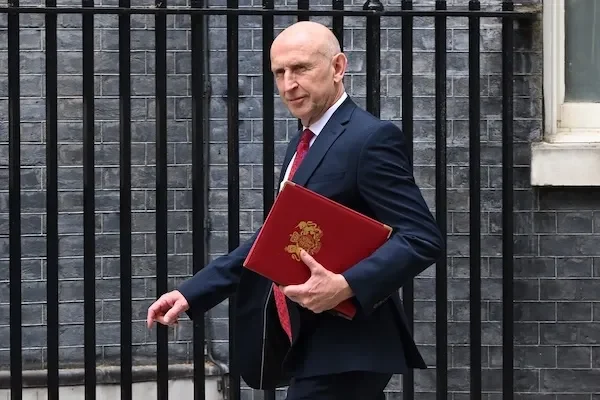
UK Chancellor of the Exchequer, John Healey, has said that his 2026 Autumn Budget will “recognise the cost of business” as well as the cost of living. But new YouGov data from 2,010 business decision makers shows they aren’t necessarily expecting the breathing space that the Chancellor has pledged ahead of his first tax and spending statement on 28 October.
When asked whether they think UK business will be in a better or worse position following the Autumn Budget, half believe the 2026 statement will have a negative impact (52%) on firms, while just 15% anticipate an improvement.
Sentiment among SMEs is slightly gloomier: by 56% to 14%, they expect Healey’s Budget will leave businesses worse off, while decision makers at larger businesses are slightly more optimistic (48% vs. 17%).
When it comes to the Budget’s impact on the wider economy, UK business decision makers are also more likely to expect an adverse impact than not (48% vs. 20%). Again, SMEs are most pessimistic about the country’s prospects (51% vs. 19%), while larger businesses are slightly more positive (43% vs. 22%).
Most senior business leaders say the government isn’t offering enough support to SMEs
When asked if they feel that the government is offering the right level of support to firms of different sizes, two-thirds of business decision makers believe that micro-sized firms with fewer than ten employees (66%) currently receive too little help, whilst 68% said the same about small-sized firms with 10-49 employees. Over half say the same of mid-sized firms (55%), while two in five claim larger businesses are receiving too little support from the government (39%).
But what do decision makers think about the level of support businesses of their size currently receive?
Micro-sized firms are more likely to believe they’re not getting enough assistance from the state (80%), while over three-quarters of those in small businesses say firms in their category could use more help from the government (73%). Some 45% of larger organisations also say that firms of their scale aren’t getting the backing they need (45%).
Opinion among medium-sized firms doesn’t veer far from the wider sample, with 56% saying that businesses with the 50-249 employees need more support.
Economic instability and growth among the top concerns for UK businesses ahead of the 2026 Budget
Speculation about the contents of the 2026 Budget has been rife, with reports suggesting that hikes on banks and cuts on business rates, could be in the offing. But which issues do enterprise leaders want John Healey’s inaugural statement to address?
Over half list economic instability among their top three concerns (52%) – the most-chosen concern among businesses of all sizes. Growth is the second most-chosen concern (37%), with larger firms (39%) slightly more concerned than SMEs (34%). Regulatory red tape comes in third (30%), followed by changes to business rates (25%).
Some concerns are more prominent among smaller businesses. Cashflow issues, for example, are a top three issue for 21% of UK businesses overall but this rises to 28% for SMEs and falls to 17% for larger firms (which may be better able to bridge any short-term financial gaps). And if 19% are worried about recruitment/retention, this falls to 13% of smaller outfits, and increases to 22% among leaders at businesses with 250+ employees.
Methodology
YouGov Surveys: Serviced provide quick survey results from nationally representative or targeted audiences in multiple markets. This study was conducted online between5th-19th October 2026 with a representative sample of 2,010 business decision makers (aged 18+ years) using a questionnaire designed by YouGov.
Learn more about YouGov Surveys: Serviced
Image: Getty
