Editor's note: This article was also published in The Surveyor, YouGov America's email newsletter. Subscribe to The Surveyor for regular updates on YouGov's polling.
In August, Donald Trump posted to his social network Truth Social a tier-ranking of 34 U.S. presidents, with Joe Biden and Barack Obama joining Ulysses S. Grant in the "failures" tier, 18 presidents classified as "below average" (such as Calvin Coolidge) or "average" (Bill Clinton), four presidents as "near great" (James K. Polk), and six "great" presidents, including Abraham Lincoln, George Washington, Franklin D. Roosevelt, and Andrew Jackson. Trump himself stood alone at the top of his graphic, as "The Greatest."
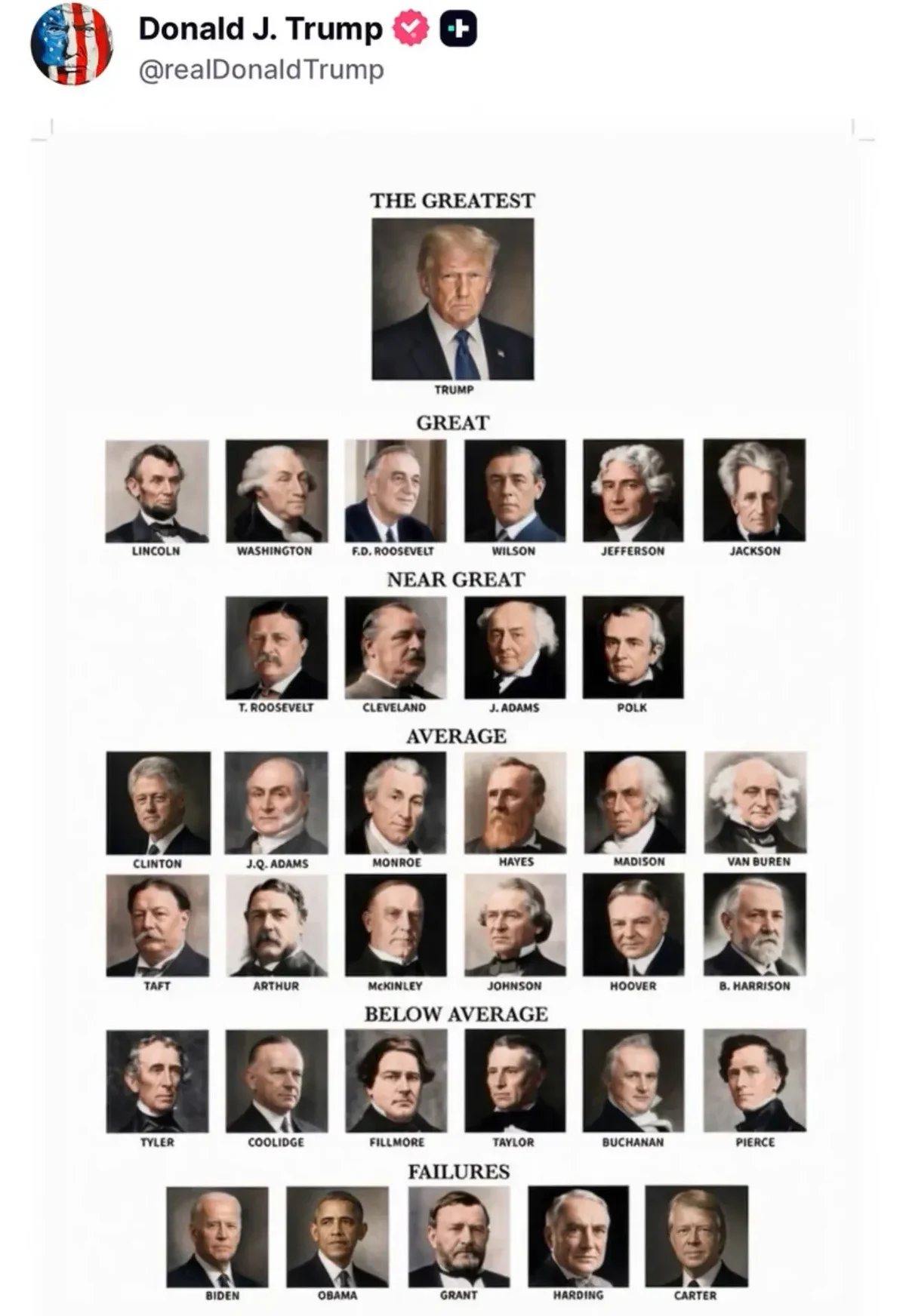
We drafted a poll asking Americans to rate the U.S. presidents along a scale inspired by Trump's: great, near-great, average, below average, and failure.
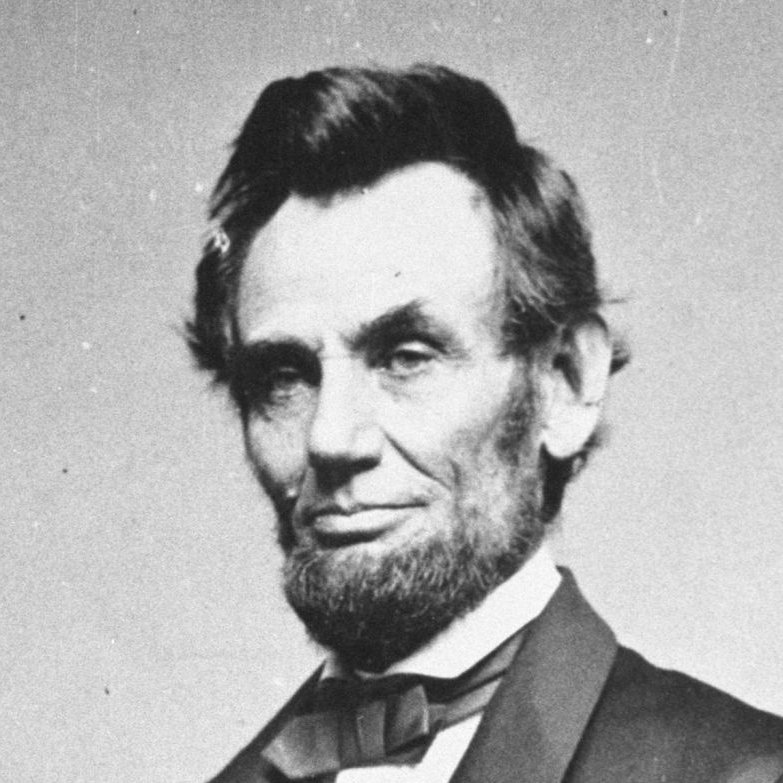
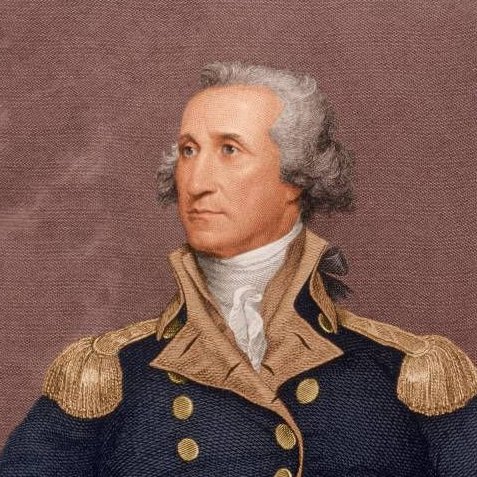
We find that the U.S. president Americans are most likely to rate as great is Lincoln: 57% call Lincoln great, and another 24% near-great. Next up are Washington (52% great) and John F. Kennedy (37%) great.
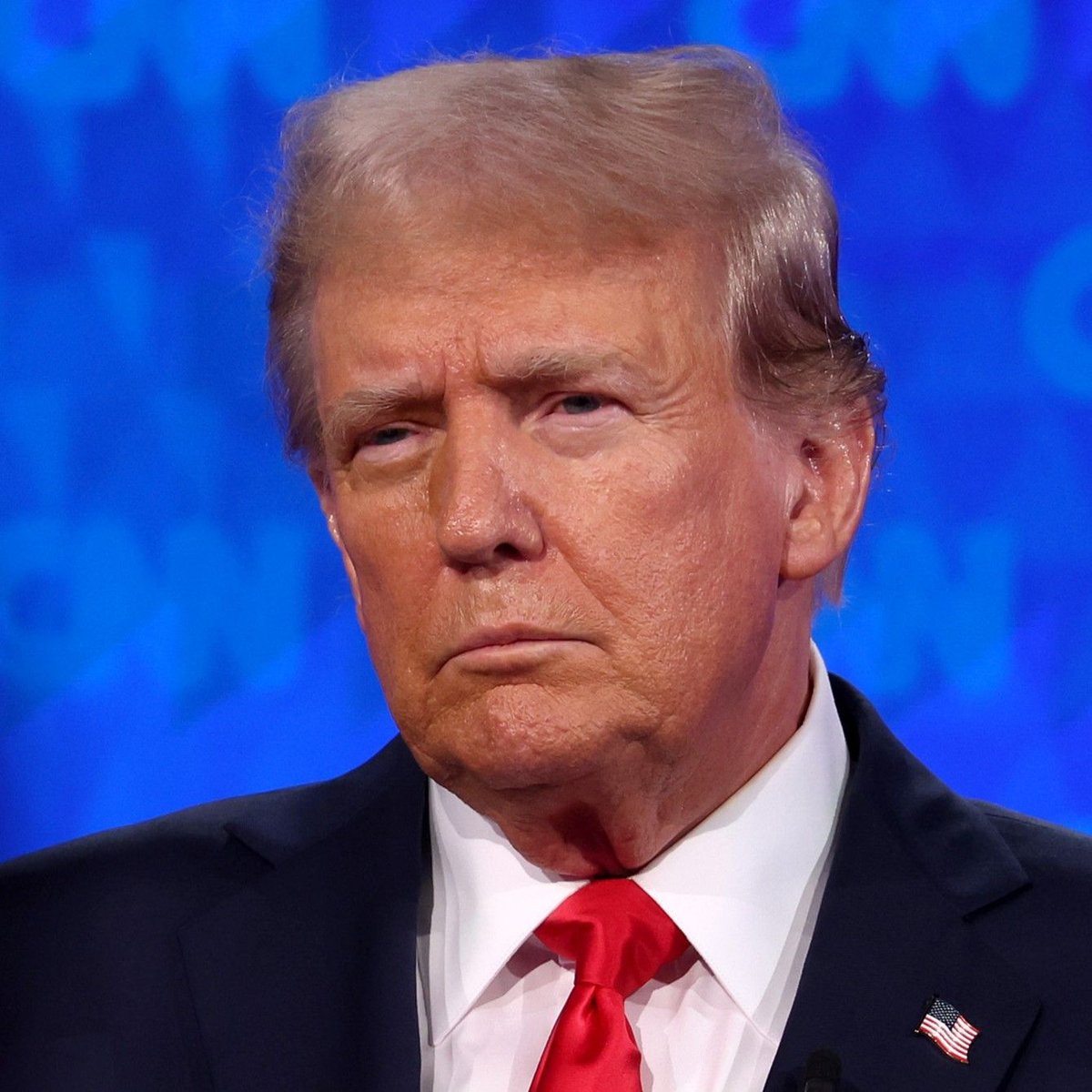
Trump is a divisive figure. 20% of Americans say Trump is a great president, the 9th most out of the 45 U.S. presidents. But 48% say Trump is a failure, by far the biggest share for any president.
Other presidents with high negative ratings are Biden (35% say he was a failure) and Richard Nixon (28%).
Many of the U.S.'s 45 presidents are significantly less well-known. 25% or more of Americans aren't sure how to rate such prominent presidents as John Adams, Ulysses S. Grant, Andrew Jackson, or Woodrow Willson. Another 17 presidents are largely forgotten: 40% or more of Americans aren't sure how to rate Grover Cleveland , Rutherford B. Hayes, Martin Van Buren, or 14 others, and most of those who do rate them opt for the middling "average."
Many recent presidents divide American opinion along party lines. We calculated a net rating for each president: the share who rate them great or near-great minus the share who rate them below average or a failure. By this metric, Obama, Biden, and Trump all stand out as particularly polarizing. 87% of Democrats say Obama was great or near-great, and only 3% rate him as below average or a failure, a net rating among Democrats of +84. In contrast, Obama has a net rating of -55 among Republicans. Biden is +32 among Democrats and -83 among Republicans. And Trump has the widest partisan gap of any president: -87 among Democrats and +65 among Republicans.
Other presidents with big partisan splits in their ratings include Ronald Reagan (-8 among Democrats and +70 among Republicans for a difference of 78 points), George H.W. Bush (a 38-point gap), George W. Bush (49 points), Jimmy Carter (65 points), Lyndon Johnson (38 points), and Bill Clinton (72 points). One 19th Century president also stands out: the populist Andrew Jackson, who is -11 among Democrats and +39 among Republicans, a 50-point gap.
There is little or no partisan split in the ratings of other presidents who fall largely outside of living memory, including Lincoln, Washington, Kennedy, and Teddy Roosevelt.
Trump's ratings of the presidents overlap imperfectly with those of Americans as a whole. 58% of Americans say Trump — who rated himself as the greatest U.S. president — is below average (10%) or a failure (48%). Lincoln, Washington, Franklin Roosevelt, and Thomas Jefferson are rated highly by both Trump and the American people, but far fewer Americans agree with Trump that Andrew Jackson (10%) or Woodrow Willson (5%) were great presidents.
While Trump put Teddy Roosevelt in the "near-great" category, 32% of Americans say he was great — the fourth-highest behind Lincoln, Washington, and Franklin Roosevelt.
Almost no Americans agree with Trump applying "failure" to Grant (2%) or Warren Harding (5%). Many Americans do agree with Trump that BIden was a failure as a president (35%, against just 10% who say Biden was great), but Trump's placement of Obama in the cellar is more controversial: 31% of Americans say Obama was a great president, and 19% say he was a failure.
It's unsurprising that few Americans have strong opinions about many 19th Century presidents. Most Americans (72%) say they know a "a little" about U.S. presidential history, while 7% say they know nothing at all about it and 21% know a lot. Democrats and Republicans are about equally likely to say they know a lot about presidential history (24% vs. 22%), while college graduates are twice as likely as non-college graduates to do so (32% vs. 16%) and men are more likely to do so than are women (28% vs. 16%). 34% of Americans who follow current events most of the time say they know a lot about presidents, compared to 13% of everyone else.
Americans who say they know a lot about presidential history — or "history buffs," for short — are much more likely to have strong opinions about U.S. presidents. For well-known presidents, that means history buffs are more likely than all U.S. adult citizens to give positive rankings. 73% of history buffs and 57% of Americans say Lincoln was a great president, for example.
History buffs are more likely than all Americans to rate some of America's more controversial presidents negatively. 9% of all Americans say Andrew Johnson was a failure as a president, compared to 21% of history buffs; 12% of Americans and 26% of history buffs say the same about Herbert Hoover. But the effect is smaller for some more recent polarizing presidents. 48% of both groups say Trump is a failure as president. And 31% in each group say Obama was great.
The chart below is interactive; click through the tabs to see how history buffs compare to all Americans for all 45 U.S. presidents. If you're have difficulties, you can view an interactive version here.
See the results for this YouGov poll
Methodology: The September 1 - 6, 2026 poll was conducted among 2,175 U.S. adult citizens. Respondents were selected from YouGov's opt-in panel to be representative of U.S. adult citizens. A random sample (stratified by gender, age, race, education, geographic region, and voter registration) was selected from the 2019 American Community Survey. The sample was weighted according to gender, age, race, education, U.S. region, 2024 presidential vote, 2020 election turnout and presidential vote, baseline party identification, and current voter registration status. 2024 presidential vote, at time of weighting, was estimated to be 48% Harris and 50% Trump. Demographic weighting targets come from the 2019 American Community Survey. Baseline party identification is the respondent's most recent answer given around November 8, 2024, and is weighted to the estimated distribution at that time (31% Democratic, 33% Republican). The margin of error for the overall sample is approximately 3.0%.
Image: Getty
What do you think about the election, American politics in general, and everything else? Have your say, join the YouGov panel, and get paid to share your thoughts. Sign up here.