Vivek Ramaswamy’s campaign for Ohio governor ran an ad in which the mother of his opponent, Amy Acton, accuses Acton of lying about her childhood. This week’s Economist / YouGov Poll finds that most registered voters disapprove of the ad, and that disapproval is higher after people are told Acton’s account.
Before the survey, 44% of registered voters say they had heard a lot or some about the ad, including 58% of Democrats and 32% of Republicans.
All respondents were told the ad features Acton’s mother criticizing her for being dishonest and unfit to be governor. A randomly selected half were told only that. The rest were also told that “Acton says she has had no contact with her mother since she was removed from her mother’s custody at age 12 because of sexual abuse by her stepfather.” Among registered voters told only the description of the ad, 22% strongly or somewhat approve of the ad and 55% disapprove. Among those told why Acton hasn't had contact with her mother, 13% approve and 64% disapprove.
Hearing Acton's account affected views more among Republicans than among Democrats. Republicans who were not told Acton's account were more likely to approve of the ad than disapprove of it (40% vs. 32%). The reverse is true for those who were told Acton's point of view: 25% approve and 42% disapprove. Democrats not told Acton's account were similarly likely to disapprove as those who were (82% vs. 84%). Among Independents, 55% disapprove without Acton's response and 69% disapprove with it.
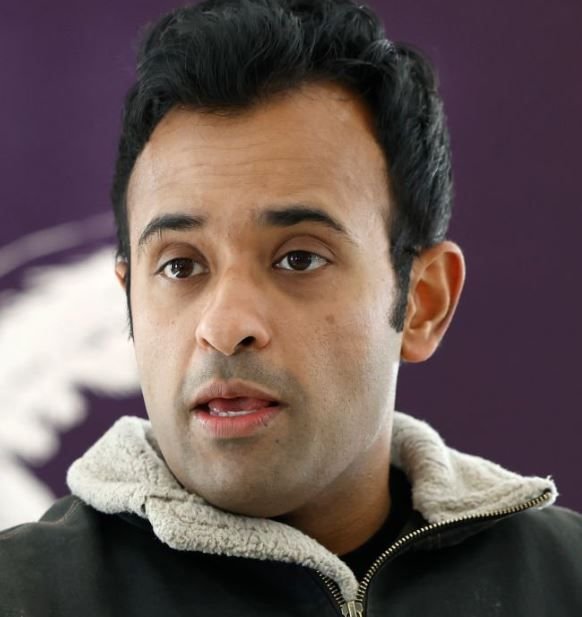
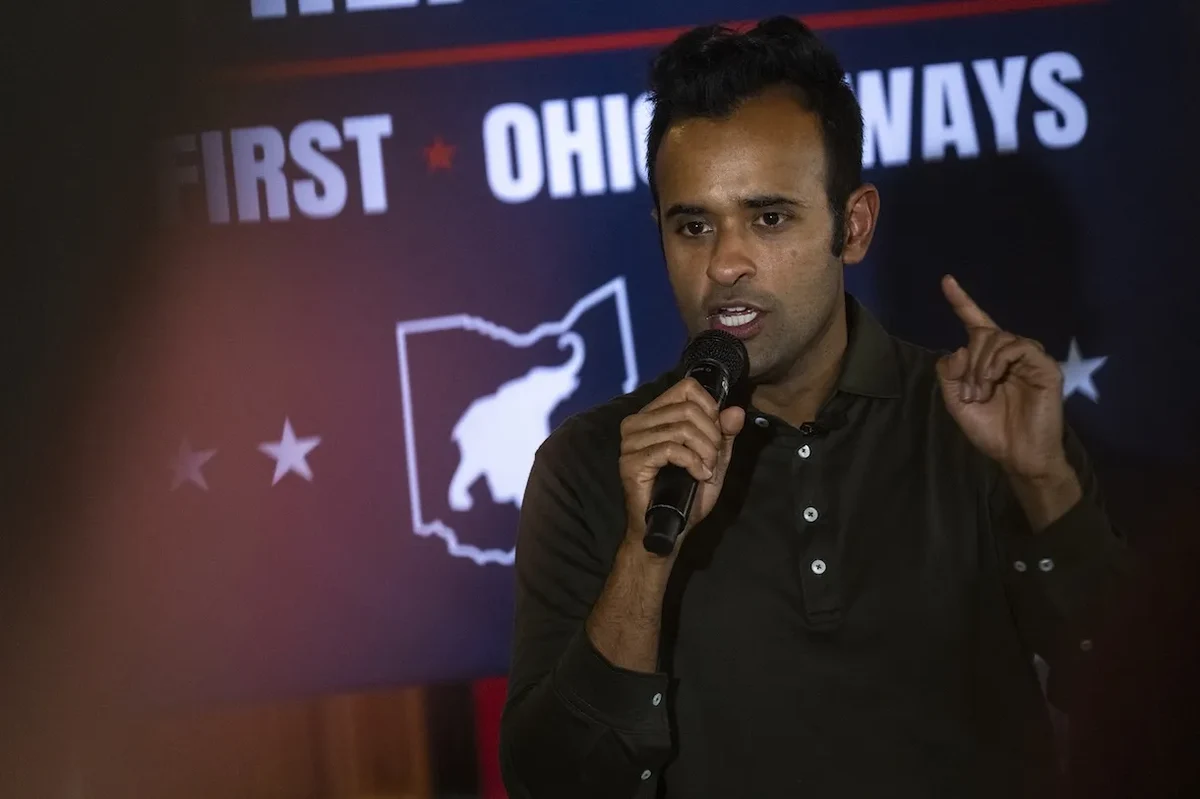
Views of Ramaswamy himself are more negative now than they were when we last asked about him in January 2025. His net favorability among registered voters — the share with a very or somewhat favorable opinion of him minus the share with an unfavorable one — is -13 (28% favorable, 40% unfavorable), down from -3. It is +34 among Republicans, down from +52, and -55 among Democrats, little changed from -58. Among Independents it is -26, the lowest since the poll began asking about him in May 2023.
Most registered voters oppose campaign ads paid for by rich donors. More registered voters say it is closer to their view that paying for political ads "allows rich donors to buy elections, and should be banned" than that it is "constitutionally protected free speech, and should not be restricted" (56% vs. 44%). About three-quarters (74%) of Democrats agree with the former statement, while most Republicans (65%) agree with the latter.
59% of registered voters— including 78% of Democrats, 66% of Independents, and 38% of Republicans — think a single person should not be allowed to donate hundreds of millions of dollars to support a political campaign. Republicans are evenly split: 38% would allow it.
Image: Getty (Michael Swensen / Stringer)
What do you really think about President Trump, American politics in general, and everything else? Share your reality, join the YouGov panel, and get paid to share your thoughts. Sign up here.