
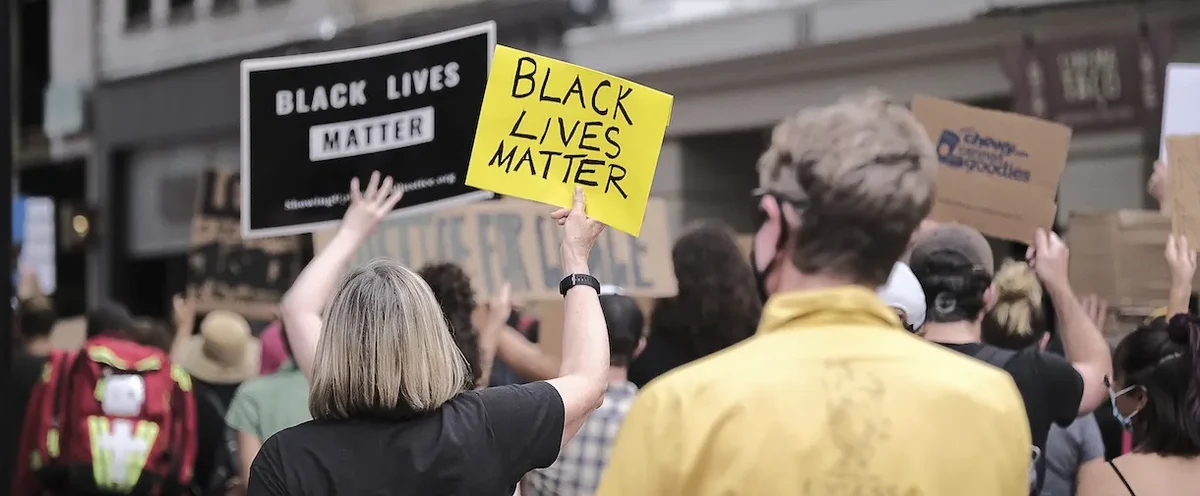
A new YouGov survey on race relations explores how big of a problem Americans consider racism to be today, how race relations have changed since 2016, and what it means for the country to become more ethnically diverse.
43% of Americans say racism is a big problem in our society today. 29% say it is somewhat of a problem, 21% say it is a small problem, and 8% say it is not a problem.
Democrats are more than three times as likely as Republicans to say racism is a big problem in our society today (67% vs. 19%). Among Republicans, larger shares say racism is somewhat of a problem (35%) or a small problem (35%).
Since July 2016, the share of Republicans who say racism is a big problem has fallen, to 19% from 39%. Democrats are about as likely now as they were in July 2016 to say racism is a big problem in society today (67% vs. 64%). In May 2020, 77% of Democrats said racism was a big problem in society. In the same poll, 22% of Republicans said the same.
Since July 2016, the share of Black Americans who say racism is a big problem in society today has fallen to 68% from 86%. Black Americans and Hispanic Americans have consistently been more likely than white Americans to say racism is a big problem in society today. In July 2026, 68% of Black Americans, 45% of Hispanic Americans, and 36% of white Americans consider racism a big problem in society today.
44% of Americans say that since 2016, race relations in the U.S. have gotten worse. Fewer say that things have gotten better (19%) or stayed about the same (37%).
Democrats are about twice as likely as Republicans to say race relations in the U.S. have gotten worse since 2016 (63% vs. 29%).
Half (50%) of Americans say that having an increasing number of people of many different races, ethnic groups, and nationalities makes the U.S. a better place to live. Far fewer (12%) say this makes the U.S. a worse place to live; 26% say it doesn’t make much difference.
Three-quarters (75%) of Democrats say the country’s increasing diversity makes the country a better place to live; 35% of Republicans agree. 4% of Democrats and 21% of Republicans think the increasing diversity of the U.S. makes it a worse place to live.
Since April 2026, the share of Republicans who say the increasing diversity of the U.S. makes it a better place to live has increased, to 35% from 25%.
Women are more likely than men to say having an increasing number of people of many different races, ethnic groups, and nationalities makes the U.S. a better place to live (56% vs. 44%).
According to the U.S. Census Bureau, by the year 2050, a majority of the population will be made up of people who are Black, Asian, Hispanic, and other racial minorities. One-third (33%) of Americans — including 58% of Democrats and 18% of Republicans — say this will be a good thing in terms of its impact on the country. 40% say it will be neither good nor bad, and 17% think it will be bad.
Hispanic Americans are more likely than Black Americans or white Americans to say this will be a good thing (51% vs. 42% vs. 28%).
Women are more likely than men to say a majority minority population in the U.S. in 2050 would be a good thing (41% vs. 25%). 49% of men and 32% of women say this would be neither a good nor a bad thing; 19% of men and 15% of women say this would be a bad thing.
Compared to now, in April 2026, fewer Hispanic Americans (36%) said a majority minority population in the U.S. in 2050 will be a good thing and a larger share of Black Americans (55%) said this will be a good thing.
35% of Americans — including 25% of Democrats and 48% of Republicans — believe a change to a majority minority population in the U.S. by 2050 would lead to more conflicts between racial and ethnic groups. 21% of Americans believe it would lead to fewer conflicts between racial and ethnic groups and 18% say it would not make much of an impact. White Americans (37%) and Black Americans (34%) are more likely than Hispanic Americans (24%) to say this change would lead to more conflicts between racial and ethnic groups.
About one-third (35%) of Americans believe that a change to a majority minority population in the U.S. by 2050 would strengthen American customs and values. 26% say this shift would weaken American customs and values. 57% of Democrats and 23% of Republicans say this would strengthen American customs and values. 31% of white Americans, 52% of Black Americans, and 42% of Hispanic Americans agree. Women are more likely than men to say this change in the U.S. population would strengthen American customs and values (41% vs. 30%).
Many Americans feel that someone who holds negative views about people of a specific race or immigrant status is prejudiced, but not necessarily a bad person. 53% say someone who holds negative views about Black people is prejudiced, but not necessarily a bad person. Similar shares of Americans say the same of someone who holds negative views of Hispanic people (53%), white people (52%), Asian people (52%), immigrants (51%), and Native American people (50%). Between 15% and 20% of Americans say that a person who holds negative views of each of these groups is a bad person.
Democrats are more likely than Republicans to say a person who holds negative views of Native American people (28% vs. 10%), Black people (27% vs. 11%), and Asian people (24% vs. 9%) is a bad person. Democrats are also more likely to say a person who holds negative views of the following groups is prejudice, but not necessarily a bad person: White people (59% vs. 51%), immigrants (61% vs. 48%), Asian people (59% vs. 54%), and Hispanic people (59% vs. 53%).
Related:
- Americans are divided about the state of race relations and how successful the civil rights movement has been
- Americans say they have more in common with people who share their political party than their gender, religion, or race
See the results for this YouGov survey
— Carl Bialik and Taylor Orth contributed to this article
Methodology: This article includes results from an online survey conducted on July 21 - 23, 2026 among 1,099 U.S. adult citizens. Respondents were selected from YouGov’s opt-in panel to be representative of adult U.S. citizens. The sample was weighted according to gender, age, race, education, 2024 presidential vote, 2020 election turnout and presidential vote, baseline party identification, and current voter registration status. 2024 presidential vote, at time of weighting, was estimated to be 48% Harris and 50% Trump. Demographic weighting targets come from the 2019 American Community Survey. Baseline party identification is the respondent’s most recent answer given around November 8, 2024, and is weighted to the estimated distribution at that time (31% Democratic, 33% Republican). The margin of error for the overall sample is 3.9 percentage points.
Image: Getty (Eze Amos)
What do you really think about President Trump, American politics in general, and everything else? Share your reality, join the YouGov panel, and get paid to share your thoughts. Sign up here.