



Polish FMCG in H1 2026: less volume, more deliberate choices
Promotions remain strong, health and convenience reshape baskets, and GLP-1 emerges as a trend to watch
Polish shoppers are buying less – but becoming more selective
Poland’s FMCG market remained broadly stable in value in the first half of 2026, with household spending reaching PLN 140.2 billion. But the apparent stability masks a significant shift in shopper behaviour. Volumes declined by 3.7%, while average prices increased by 3.5%.
The key change is not simply that Polish households are buying less. They are becoming more deliberate about where their money goes, concentrating spending on products and benefits that matter most to them. The era in which market growth was primarily driven by increasing consumption appears to be giving way to a more selective shopper mindset.
Promotions are still firmly embedded in shopping behaviour
Despite market discussions about reducing promotional activity in favour of more acceptable regular prices, this shift is not yet clearly reflected in the data. In H1 2026, the share of purchases made on promotion increased, with promotional purchases now accounting for 34.6% of FMCG spend.
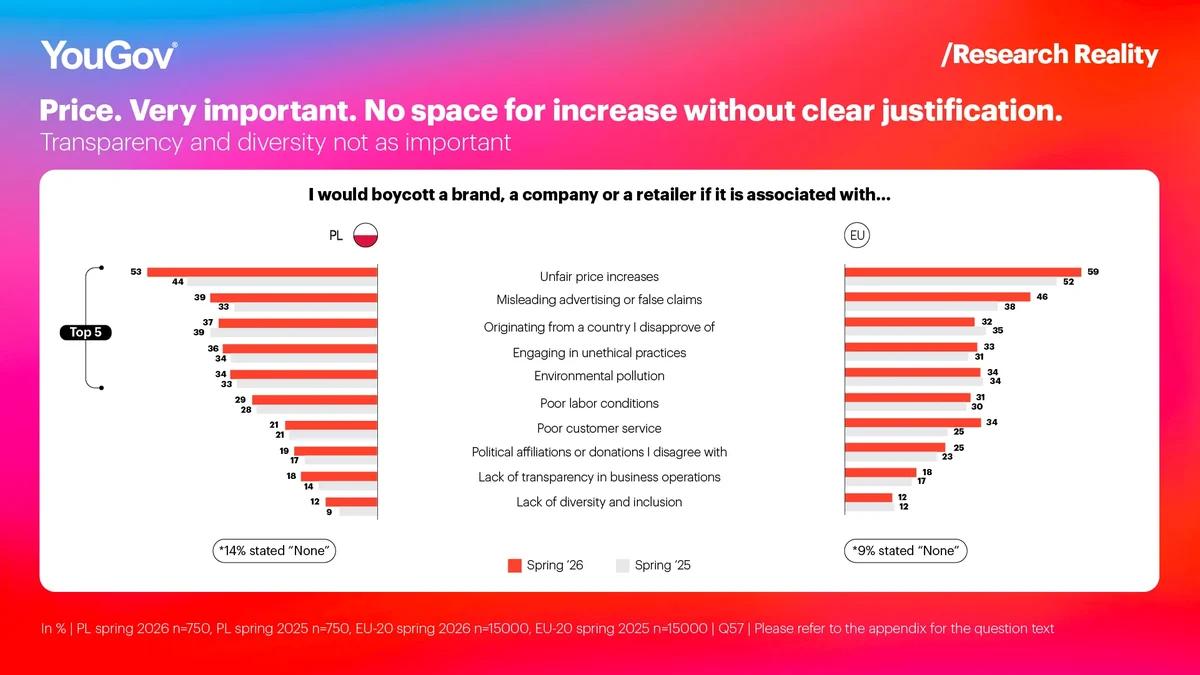
This suggests that promotions remain an important part of how Polish households manage their budgets. At the same time, shoppers are setting clear boundaries around pricing practices. 53% of Poles say they would boycott a brand or retailer over unjustified price increases, while 39% would stop buying in response to misleading advertising.
For manufacturers and retailers, the challenge is therefore not simply how to reduce promotional dependency. It is how to manage the relationship between regular prices, promotions and perceived value without undermining shopper trust.
Health and functionality are gaining space in the basket
Greater control over spending does not mean that shoppers are simply choosing the cheapest option. Growth is increasingly visible in products that address specific needs around health, physical wellbeing and convenience.
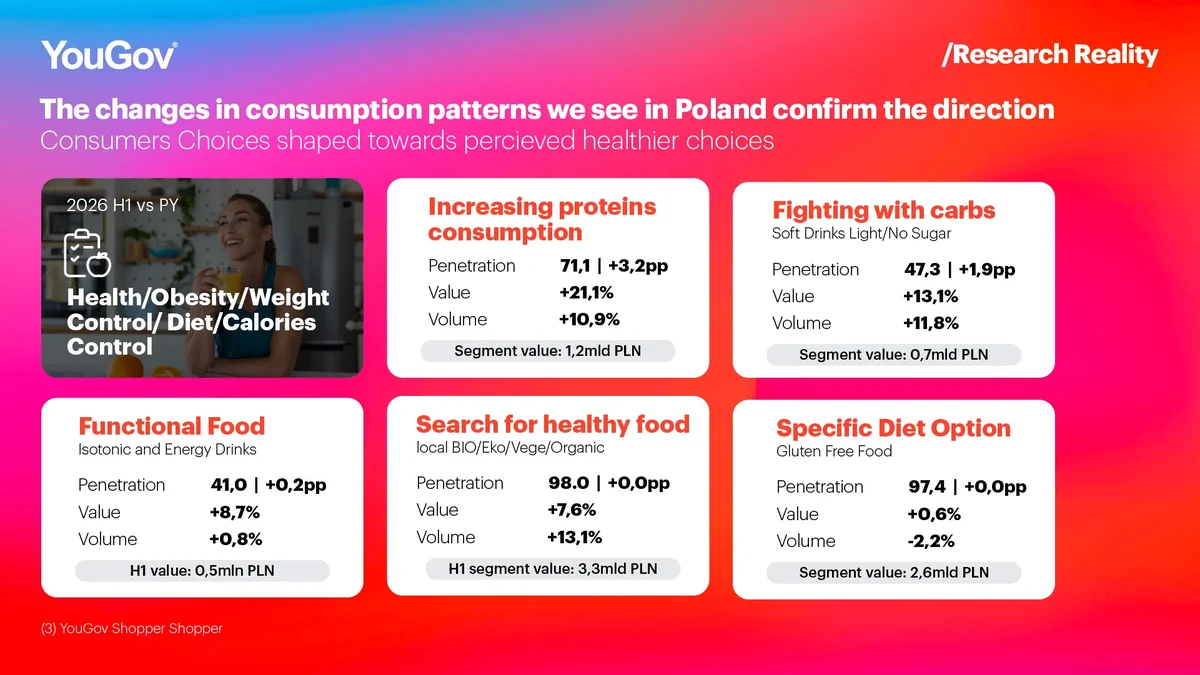
Products communicating protein or high-protein content increased their purchase value by 21.1% and reached 71.1% of Polish households in the first half of 2026 alone. A similar shift can be seen in beverages, where purchase value of light and no-sugar variants grew by 13.1%.
Convenience is another area where shoppers are willing to spend. Chilled ready meals grew by 12.2% in purchase value year on year, making them one of the faster-growing FMCG segments.
Together, these shifts point towards a different understanding of premiumisation. Added value does not necessarily come from a premium brand or prestigious positioning. Increasingly, it comes from a product’s ability to meet a specific need – whether that means higher protein content, less sugar, a simpler proposition or saving time.
GLP-1 could become the next factor reshaping FMCG demand
Another development worth watching is the growing number of consumers using GLP-1 therapies and analogues. Currently, 4.5% of consumers use them, with this figure potentially rising to 9% over the next year.
GLP-1 users report lower appetite alongside changes in eating habits towards less processed, lower-carbohydrate, sugar-free and high-protein foods. Over time, this could affect both the composition of the FMCG basket and the overall volume of food purchased.
For manufacturers and retailers, the implications may extend well beyond the health and wellness segment. Experience from the US market can provide an early indication of how similar changes could develop in Europe and Poland – and which categories may gain or lose relevance as eating patterns evolve.
The growth question is changing
H1 2026 illustrates a broader shift in the Polish FMCG market. Stable value no longer necessarily means stable demand, and lower volumes do not mean that shoppers are cutting spending indiscriminately.
Instead, households are making more deliberate trade-offs. Promotions continue to matter, but so do health, functionality and convenience. The opportunity for brands and retailers lies in understanding not only how much shoppers are willing to spend, but which needs they are increasingly willing to prioritise.
For FMCG businesses, this makes the composition of growth as important as growth itself. Understanding where volumes are declining, where shoppers are prepared to pay for added value and which emerging behaviours may reshape tomorrow’s basket will be critical to making the right pricing, assortment and innovation decisions.
Methodology:
YouGov Shopper Poland is built on continuously collected data from 8,000 households, representing the country’s total population.
YouGov Shopper offers access to a wealth of expertise and quality consumer panel data. We help the world’s most recognized FMCG & Retail brands to deliver superior customer experiences at every stage of the shopper journey. Learn more about YouGov Shopper.