



Value, Convenience and the New Croatian Shopper
The Croatian FMCG market is growing, yet shoppers are making fewer trips to stores than ever before. Rather than filling carts more often, consumers are becoming more deliberate, spending more per visit and placing increasing importance on value for money, fresh products and a seamless shopping experience.
Discussions around grocery shopping in Croatia are increasingly shifting from price promotions towards overall value for money. While inflationary pressures have eased compared to previous years, household budgets remain under strain, prompting shoppers to become more selective about where and how they spend. Retailers are therefore facing a new challenge: delivering competitive prices while also offering convenience, quality, and a seamless shopping experience.
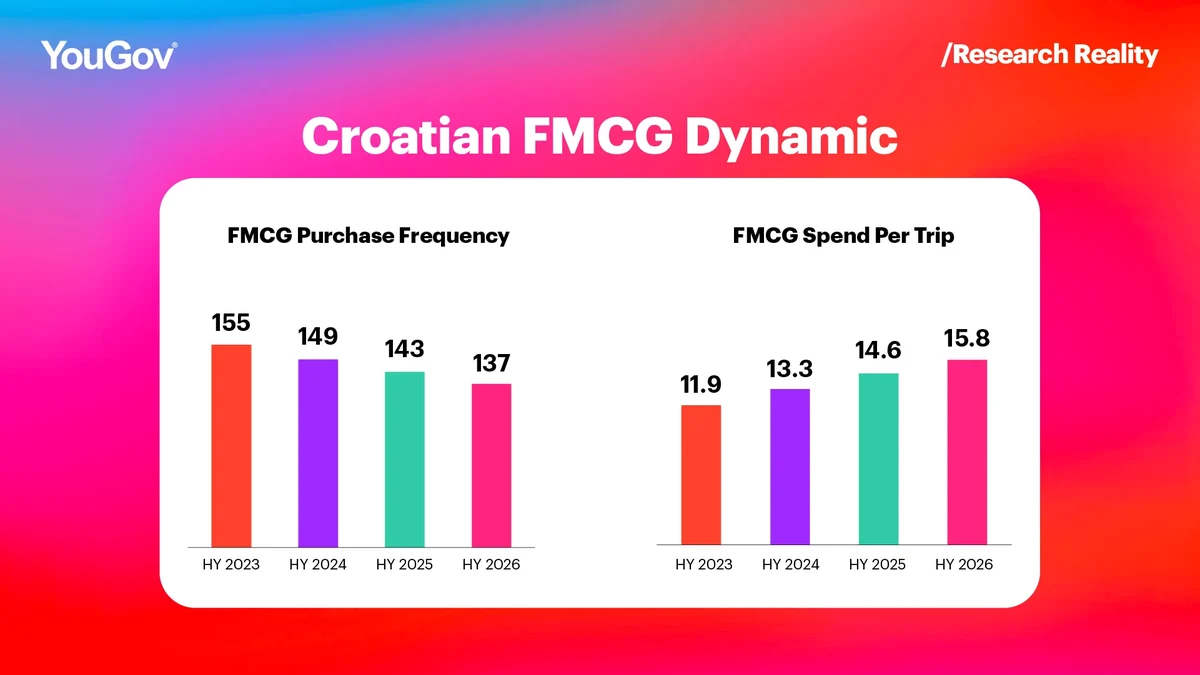
According to YouGov Shopper data, the Croatian FMCG market maintained its growth trajectory during the first half of 2026, reaching a total value of €3.1 billion and recording a 4% increase compared to the same period last year. Compared to the first six months of 2023, the market has expanded by almost 17%. At the same time, Croatian households continued to reduce their shopping frequency. The average household made 137 shopping trips during the first half of 2026, down from 155 trips during the same period in 2023. Despite fewer store visits, purchased volumes remained relatively stable, while the average basket value reached €15.80, up 8% versus 2025 and 32% versus 2023.
Looking ahead, drought periods driven by climate change could impact agricultural yields and the availability of certain products, particularly within fresh food categories. As a result, upward pressure on prices is expected to continue in the coming periods, further increasing the importance of value for money in shoppers' choice of retailers and products.
Retail competition remains intense. Konzum continues to lead the market with a penetration of 93%, maintaining its position as the retailer present in the highest number of Croatian households. Lidl remains a strong second player and continues to strengthen shopper engagement through increased shopping frequency. Meanwhile, Eurospin recorded the strongest growth in shopper penetration, increasing its shopper base by 21% year-on-year and reaching almost half of Croatian households. Spar also stands out, recording the largest absolute increase in shopper numbers compared with 2024.
When selecting a retailer, Croatian shoppers increasingly prioritize overall value rather than simply looking for discounts. Good quality fresh fruit and vegetables, value for money, and a convenient store location now rank jointly as the most important drivers of store choice, each cited by 55% of shoppers. Compared with 2024, value for money has seen the largest increase in importance, while promotions and discounts have become relatively less influential. At the same time, shoppers are placing greater emphasis on transparent pricing, easy navigation in store, product availability and loyalty programmes.
Consumer expectations are also evolving beyond the physical store. According to YouGov's latest Behavior Change study, 48% of Croatian consumers now use artificial intelligence during the shopping process, placing Croatia slightly above the European average. The most common use cases include comparing prices, searching for promotions and gathering product information, demonstrating that shoppers increasingly view AI as a practical tool for making more informed purchase decisions.
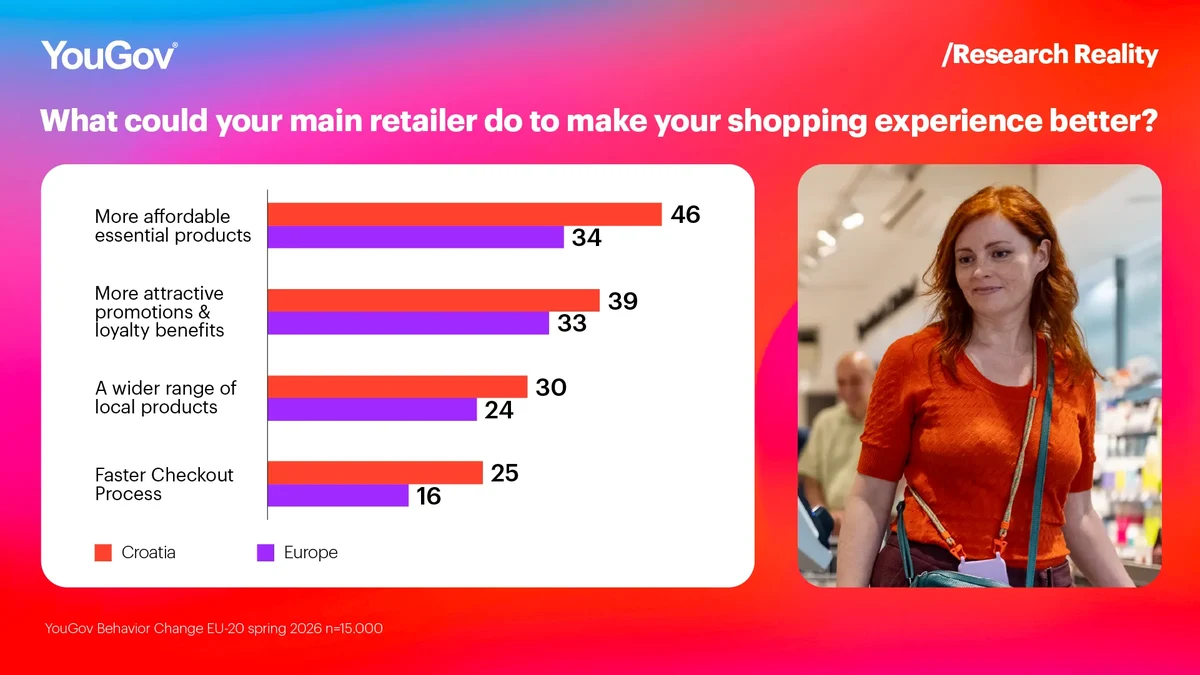
In an environment where consumers are carefully managing their budgets, value for money has become the dominant expectation from retailers. Almost half of Croatian shoppers would like to see more affordable everyday essentials, while many also expect stronger loyalty programmes, better promotions and a greater assortment of local products. Retailers that successfully combine affordability, convenience and quality are likely to be best positioned to strengthen shopper loyalty and drive future growth.
Methodology: YouGov Shopper Croatia is based on continuously collected purchase data from a nationally representative panel of 1,500 households across Croatia. Data is collected via the YouGov Shopper App and covers household FMCG purchases. Analyses refer to January-June 2026 and/or MAT June 2026. YouGov Behavior Change is based on a nationally representative sample of 750 Croatian consumers and forms part of a wider study conducted across 20 European countries among 15,000 respondents.