
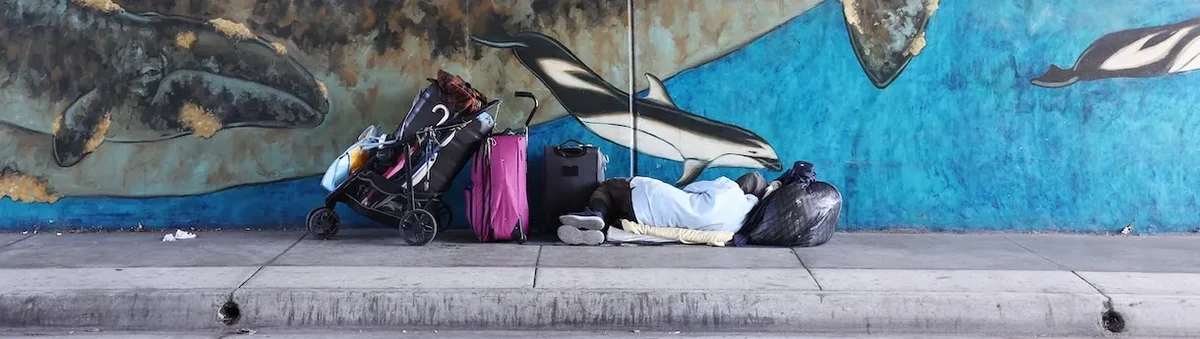
A new YouGov survey on homelessness finds that majorities of both Democrats and Republicans believe homelessness is a serious problem in the U.S. But members of each party differ in what they see as the major causes of homelessness and the best solutions.
61% of Americans say homelessness is a very serious problem in the U.S.; 29% say it is somewhat serious. Democrats are more likely than Republicans to say homelessness is a very serious problem in the U.S. (73% vs. 46%).
About half as many Americans (30%) think homelessness is a very serious problem in their community. 39% of Democrats and 17% of Republicans say homelessness is a very serious problem in their local community.
Republicans are less likely now than they were in August 2025 (59%) or in December 2023 (63%) to say homelessness is a very serious problem in the U.S. They are also less likely to say homelessness is a very serious problem in their local community: In August 2025, 27% saw it as a very serious problem and in December 2023, 30% said it was a very serious problem.
During the same time period, there have been only small changes in the shares of Democrats who have identified homelessness as a very serious problem in the U.S. (between 73% and 75% held this view in 2023, 2025, and 2026 polls) and in their local communities (between 35% and 39%).
72% of Americans think rates of homelessness have increased since five years ago, including 78% of Democrats (78%) and 66% of Republicans.
A majority (56%) of Americans — including 73% of Democrats and 38% of Republicans — think the federal government should do much more to address homelessness in the U.S. 21% think the federal government should do somewhat more, and fewer say the federal government is either doing the right amount (10%) or should do somewhat (3%) or much (4%) less.
47% of Americans say their state and local governments should do much more to address homelessness; 23% say their state and local governments should do somewhat more. Among Democrats, 57% say their state and local governments should do much more; 33% of Republicans agree.
Democrats are more likely now than they were in December 2023 to say the federal government should do much more to address homelessness (73% vs. 59%).
31% of Americans believe the federal government is most responsible for addressing homelessness. 26% say the state government is most responsible and 21% say the local government is most responsible. Among Democrats, 42% say the federal government is most responsible; fewer say state (26%) or local (15%) governments are most responsible. Among Republicans, 21% say the federal government is most responsible and slightly more say state (27%) or local (29%) governments are most responsible.
What do Americans believe are the major causes of homelessness? Majorities say drug and alcohol addiction (75%), poverty (71%), mental illness (69%), and a lack of affordable housing (63%) are major causes. Half say a lack of housing supply (50%) is a major cause and 46% say the same about disabilities.
Among the 16% of Americans who say they have ever been homeless, 75% believe poverty is a major cause of homelessness. 73% say a lack of affordable housing is a major cause and majorities identify as major causes drug and alcohol addiction (67%), mental illness (63%), a lack of housing supply (62%), disabilities (60%), and a lack of jobs (57%).
Republicans are more likely than Democrats to say a lack of personal responsibility (62% vs. 31%) and poor personal-finance skills (46% vs. 38%) are major causes of homelessness. Democrats are much more likely than Republicans to identify as major causes capitalism (54% vs. 11%), a lack of affordable housing (80% vs. 42%), a lack of jobs (64% vs. 27%), and racism (47% vs. 13%).
What actions do Americans say they would support the government taking to address homelessness? Of the 19 ideas for combating homelessness that were asked about in the poll, the one Americans are most likely to support is funding more services for veterans (88%). Vast majorities also say they would support the government funding more counseling programs for people with mental illness (84%), funding more rehabilitation programs for people with addiction (83%), funding more programs for people with disabilities (82%), and opening more domestic violence shelters (81%).
The ideas that Americans are least likely to support are arresting homeless people and putting them in jail (12%) and putting homeless people in psychiatric institutions against their will (25%).
Democrats are more likely than Republicans to say they would support the government incentivizing developers to build more low-income housing (90% vs. 53%), funding more emergency rental assistance programs (88% vs. 47%), and building housing for chronically homeless people to permanently live in (87% vs. 47%).
Republicans are more likely than Democrats to say they would support the government banning homeless encampments (55% vs. 20%), putting homeless people in psychiatric institutions again their will (41% vs. 16%), and building architecture that prevents homeless people from sleeping or camping in public spaces (67% vs. 44%).
Which do Americans think is more of a problem: the danger posed by other people to homeless people or the danger posed by homeless people to other people? They're almost evenly split: 35% say the danger posed by other people to homeless people is more of a problem, while 38% say the danger posed by homeless people to other people is more of a problem.
Among people who have ever been homeless, about twice as many say the danger posed to homeless people by other people is a bigger problem than the reverse (53% vs. 28%).
Among Republicans, 62% think the danger posed by homeless people is more of a problem. 22% of Democrats agree. 18% of Republicans and 49% of Democrats say the danger posed by other people to homeless people is more of a problem.
Related:
- Americans are more likely to say homelessness is a serious problem than they were in 2022
- Who do Americans blame for homelessness?
- Many Americans say not in my backyard to prisons and homeless shelters
See the results for this YouGov survey
— Carl Bialik and Taylor Orth contributed to this article
Methodology: This article includes results from an online survey conducted on July 28 - 30, 2026 among 1,083 U.S. adult citizens. Respondents were selected from YouGov’s opt-in panel to be representative of adult U.S. citizens. The sample was weighted according to gender, age, race, education, 2024 presidential vote, 2020 election turnout and presidential vote, baseline party identification, and current voter registration status. 2024 presidential vote, at time of weighting, was estimated to be 48% Harris and 50% Trump. Demographic weighting targets come from the 2019 American Community Survey. Baseline party identification is the respondent’s most recent answer given around November 8, 2024, and is weighted to the estimated distribution at that time (31% Democratic, 33% Republican). The margin of error for the overall sample is 4.1 percentage points.
Image: Getty (Mario Tama )
What do you really think about President Trump, American politics in general, and everything else? Share your reality, join the YouGov panel, and get paid to share your thoughts. Sign up here.