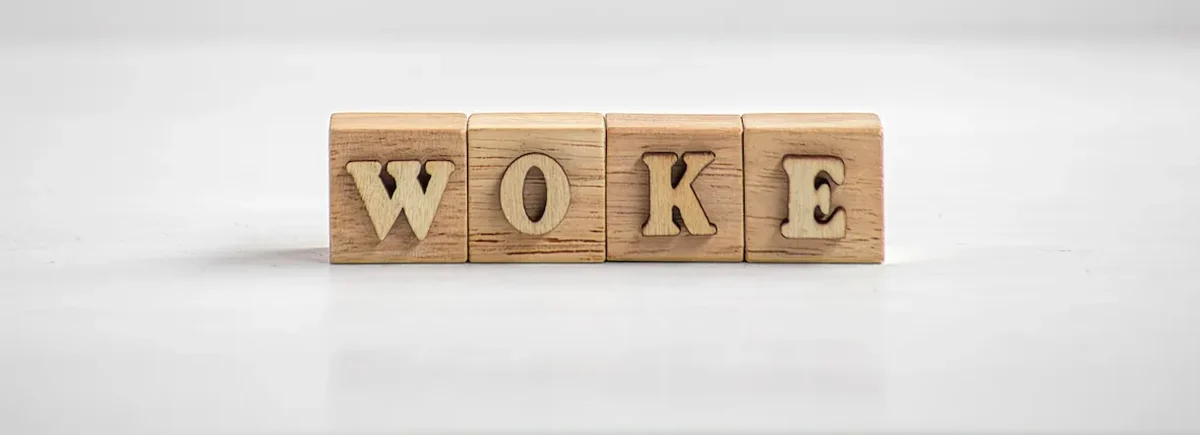
Americans are more likely to say people are too easily offended than to say people are too careless about language that offends others, the latest Economist / YouGov poll finds. But asked whether they are woke or anti-woke, the most common answer is neither.
27% of Americans describe themselves as "woke" and 24% as "anti-woke"; 36% say they are neither and 13% are not sure. Hardly any Republicans (10%) say they are woke and even fewer Democrats (1%) describe themselves as anti-woke. Roughly half (55%) of Republicans say they are anti-woke and roughly half (54%) of Democrats say they are woke.
Anti-woke identification increases with age: 10% of 18- to 29-year-olds, 19% of 30- to 44-year-olds, 29% of 45- to 64-year-olds, and 34% of those 65 and older say they are anti-woke. Nearly half (48%) of Black Americans say they are woke and 5% say they are anti-woke; by comparison, 23% of white Americans say they are woke and 31% say they are anti-woke.
Half (51%) of Americans say people being too easily offended by the language others use is a bigger problem than people not being careful enough about language that offends others; 35% say the reverse and 14% are not sure. Opinions are split by party: 27% of Democrats say people being too easily offended is a bigger problem, compared with 52% of Independents and 72% of Republicans. A majority of Democrats (56%) say people not being careful enough about language that offends others is a bigger problem, compared with 28% of Independents and 23% of Republicans. The 72% of Republicans who say people being too easily offended is the bigger problem is larger than the 56% of Democrats who say the opposite.
Adults under 30 are significantly less likely than other groups to say the bigger problem is people are too easily offended: 35% of them say this compared to 55% of people over 30. 56% of white Americans say it's a bigger problem that people are too easily offended, compared with 48% of Hispanic Americans and 32% of Black Americans.
60% of Americans say they often (16%) or sometimes (44%) avoid saying what they believe because others might find it offensive; 25% say they rarely do this and 11% say they never do. Rates of self-censorship are similar among Democrats and Republicans: 68% of Democrats and 62% of Republicans say they often or sometimes avoid saying things that could be seen as offensive.
How do Americans think figures from the past should be judged? 56% say people who lived in the past should be judged by the moral standards of their own time, while 21% think they should be judged by the moral standards of today. Republicans are more likely than Democrats to believe past figures should be judged by the standards of their time (69% of Republican and 46% of Democrats say this) and less likely to say they should be judged by today's standards (15% vs. 31%).
Image: Getty (Worawith Ounpeng)
What do you really think about President Trump, American politics in general, and everything else? Share your reality, join the YouGov panel, and get paid to share your thoughts. Sign up here.