



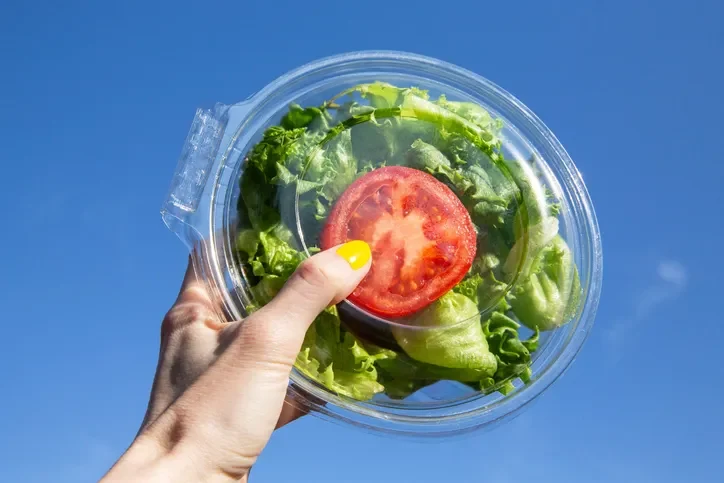
Consumers across Sweden and Denmark are increasingly concerned about the amount of plastic packaging in their grocery shopping. Yet, despite widespread frustration, relatively few consistently choose products with less plastic. New findings from YouGov's Who Cares? Who Does? 2026 study reveal a persistent gap between sustainability attitudes and purchasing behaviour.
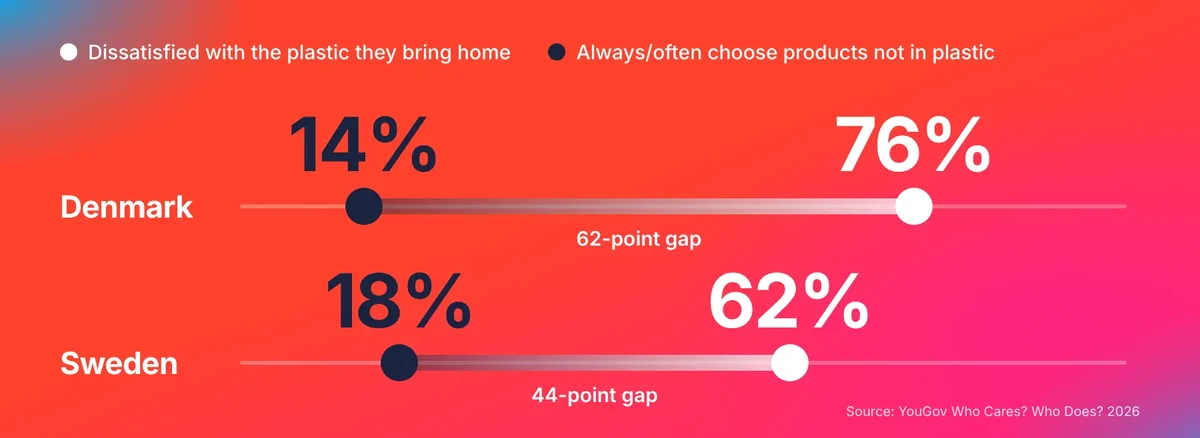
In Denmark, 76% of consumers say they are dissatisfied with the amount of plastic they bring home from supermarkets. In Sweden, the corresponding figure is 62%. Despite this shared frustration, active efforts to avoid plastic packaging remain limited.
"There is a willingness among Danish and Swedish consumers to make the right choices, but this does not automatically translate into action in-store. Plastic is a clear example: frustration is widespread, but without concrete alternatives and clear guidance, it is difficult for consumers to act consistently," says Anne Fjelsten, Commercial Director Nordics at YouGov.
Concern is widespread, but action remains limited
In Denmark, only 14% of consumers always or often choose products that are not packaged in plastic, while 23% regularly avoid beverages in plastic bottles. In Sweden, fewer than one in five consistently avoid plastic-packaged products, and just over a quarter avoid plastic bottles.
Swedish consumers are more likely than the European average to bring reusable shopping bags and use refillable water bottles. However, actively choosing products based on their packaging remains less common.
Denmark also shows a decline in the selection of recyclable packaging. The share of Danish households that often or occasionally choose products with 100% recyclable packaging fell from 71% in 2025 to 64% in 2026, while frustration with plastic has remained stable at around 75% since 2023.
"The findings suggest that concern alone is not enough to drive behavioural change. Convenience, availability of alternatives and competing purchasing priorities may all influence whether consumers act on their intentions," says Anne Fjelsten.
Sustainability attitudes and brand perceptions
The research also highlights differences in how Swedish consumers engage with sustainability. Around half say they want to shop more sustainably but do not consistently act on those intentions. The grocery spend associated with this group amounts to approximately SEK 90 billion annually.
More than half of Swedish consumers consider brands' environmental claims primarily a marketing tool rather than an indication of genuine change. Meanwhile, fewer consumers believe that individual purchasing decisions in grocery stores can make a difference to the environment.
"Consumer attitudes towards sustainability are not always reflected in purchasing behaviour. Understanding this gap requires looking beyond environmental concern to consider the different factors influencing consumers' choices in-store," says Anne Fjelsten.
New EU requirements for packaging
The EU's Packaging and Packaging Waste Regulation (PPWR) began applying across Member States on 12 August 2026. The regulation introduces requirements aimed at reducing packaging waste and improving circularity. From 2030, packaging will be subject to new recyclability criteria, while plastic packaging will need to meet minimum recycled-content requirements that vary by packaging type and use. The regulation also introduces measures and specific targets relating to reusable packaging and refill.