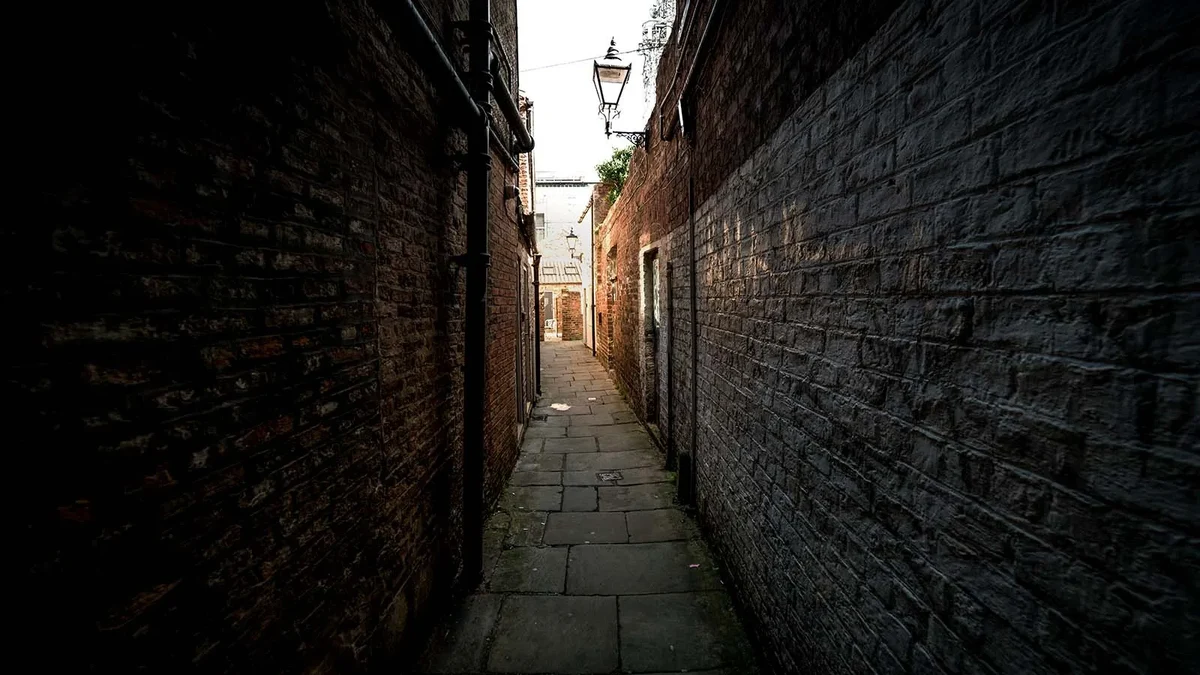
Although alley and passage are common terms across the country, majorities in parts of the North of England call them ginnels, with other names found elsewhere
Key takeaways
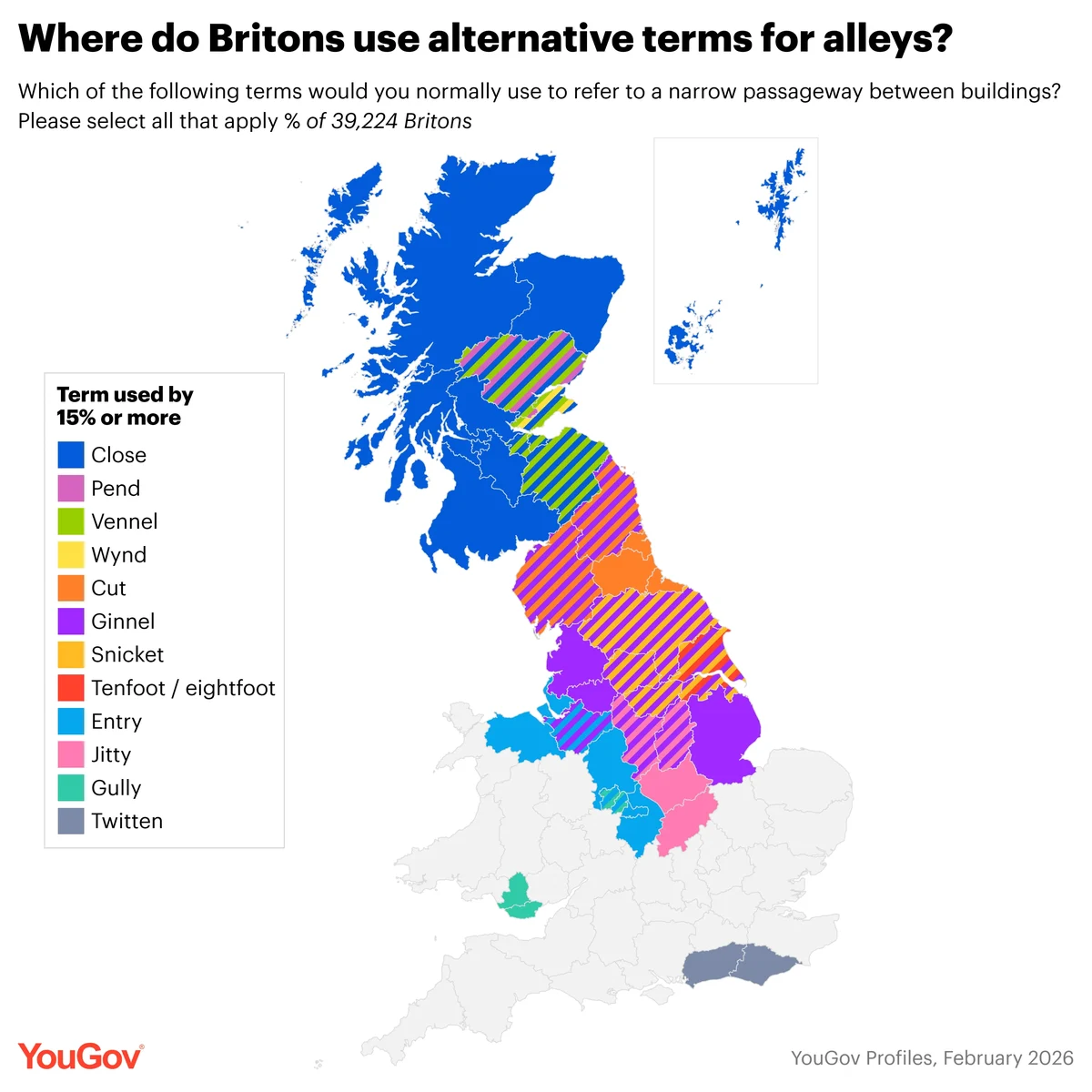
- Across Britain, there are many regional dialect terms for an alley or passage, with a dozen used by at least 15% of adults in at least one county in Great Britain
- ‘Ginnel’ is the most common dialect term for an alley, being used by 14% of all Britons, including majorities in West Yorkshire, Lancashire, South Yorkshire and Greater Manchester
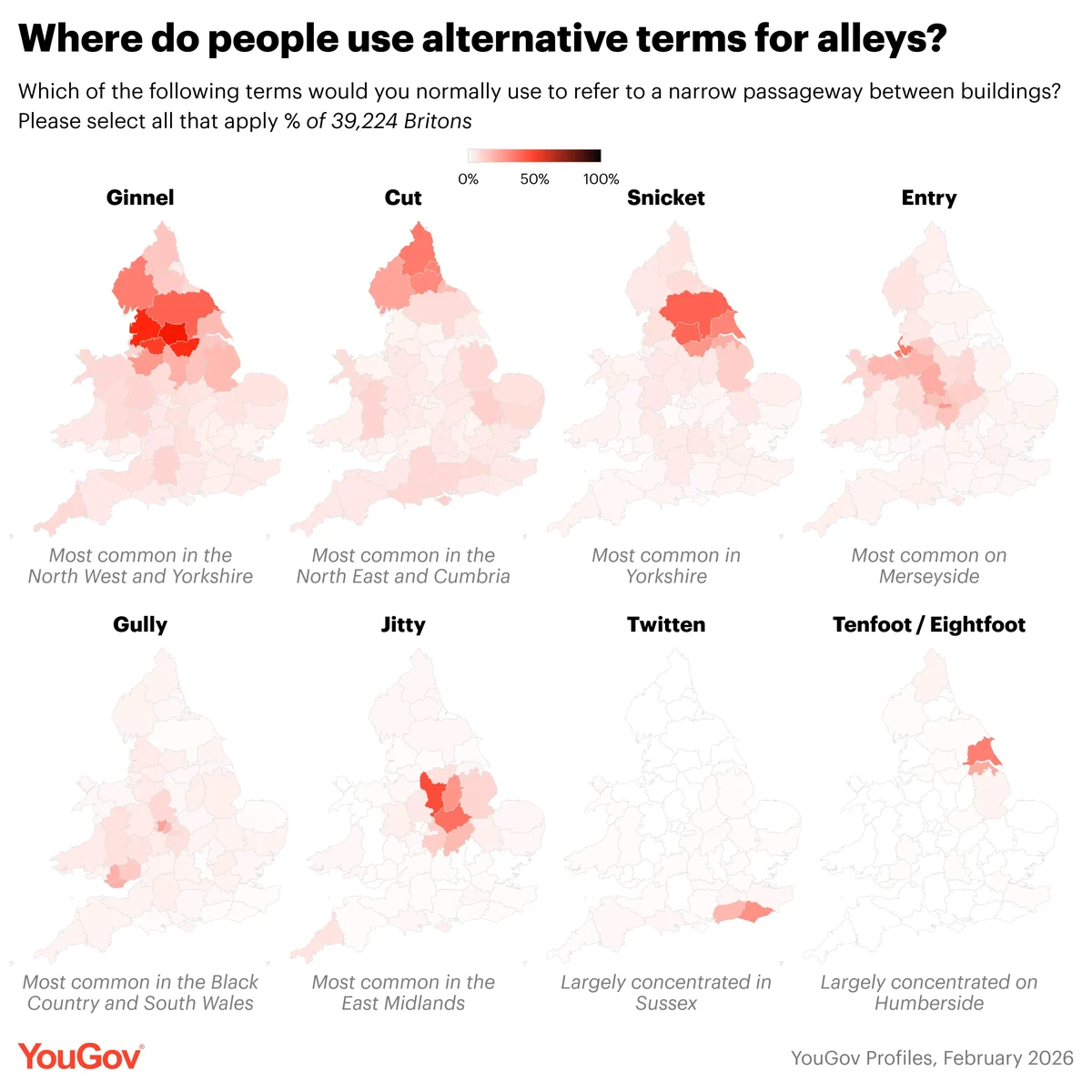
- ‘Snicket’ is also used across Yorkshire to refer to alleyways, while ‘cut’ is a common term in the North East, ‘jitty’ can be found in the East Midlands and ‘entry’ is the top dialect term on Merseyside and in parts of the West Midlands
- More localised terms include ‘tenfoot’ and ‘eightfoot’ around Hull, ‘gully’ around the Black Country and South Wales, and ‘twitten’ in Sussex
- Scotland has its own words for an alley, with ‘close’ the most common, being used by 41% of Scots, with ‘pend’, ‘vennel’ and ‘wynd’ also used in parts of eastern Scotland
- Most of these dialect terms for alley are less common among younger Britons, with just 27% of 18-24 year olds using at least one term other than alley or passage, compared to 45% of over 65s
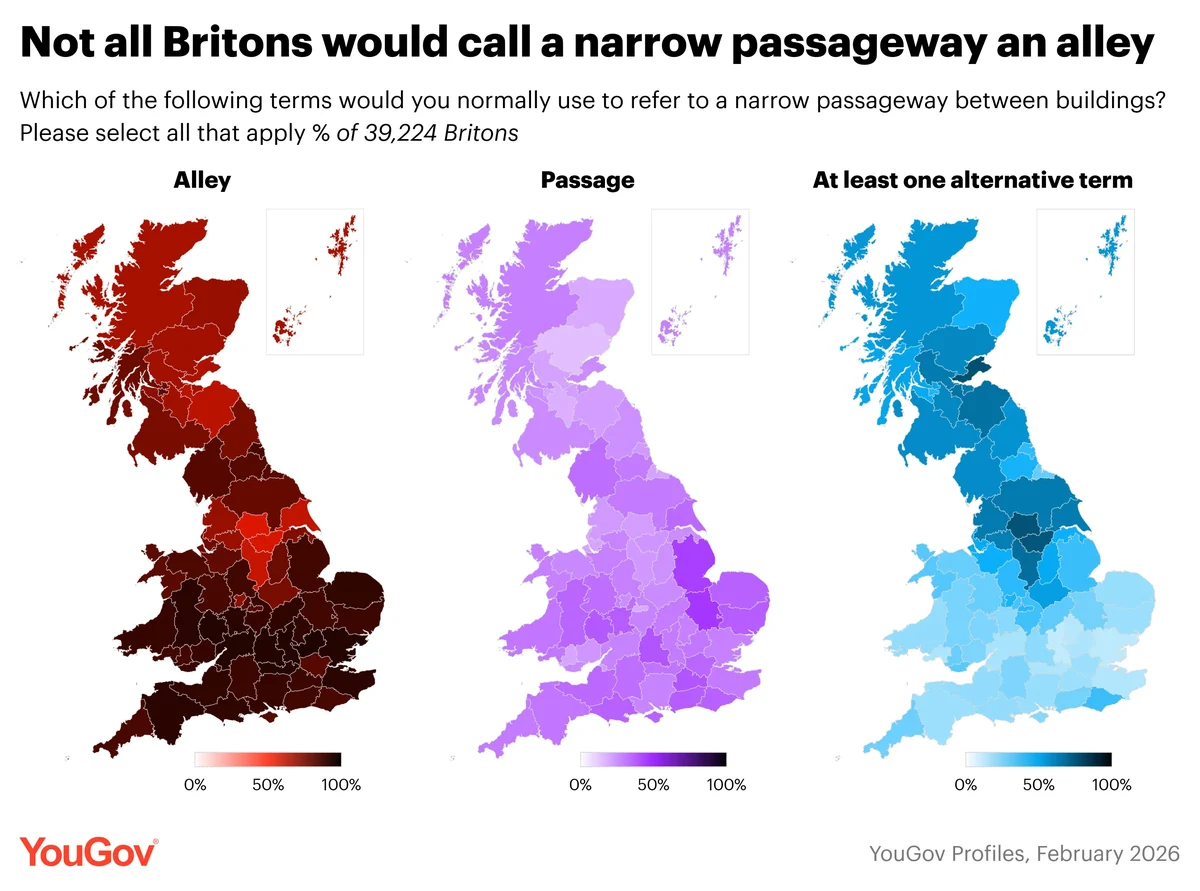
Every town and city has alleyways, but what you might not know is that not every town and city in Britain calls their alleyways the same thing. New YouGov polling of more than 39,000 Britons reveals the wide variety of terms that are still used across the country to refer to a narrow passageway between buildings.
Two terms are reasonably familiar across the UK. ‘Alley’ itself, which is used by 84% of Britons, including at least 63% in every county, and ‘passage’, which is among the terms used by 31% of the public. There is some regional variation with these two terms, with ‘alley’ near universal in southern England and Wales, while usage of ‘passage’ peaks at 45-47% in Cambridgeshire and Lincolnshire and falls as low as 15% in parts of Scotland, such as Tayside.
Where is an alleyway called a 'ginnel'?
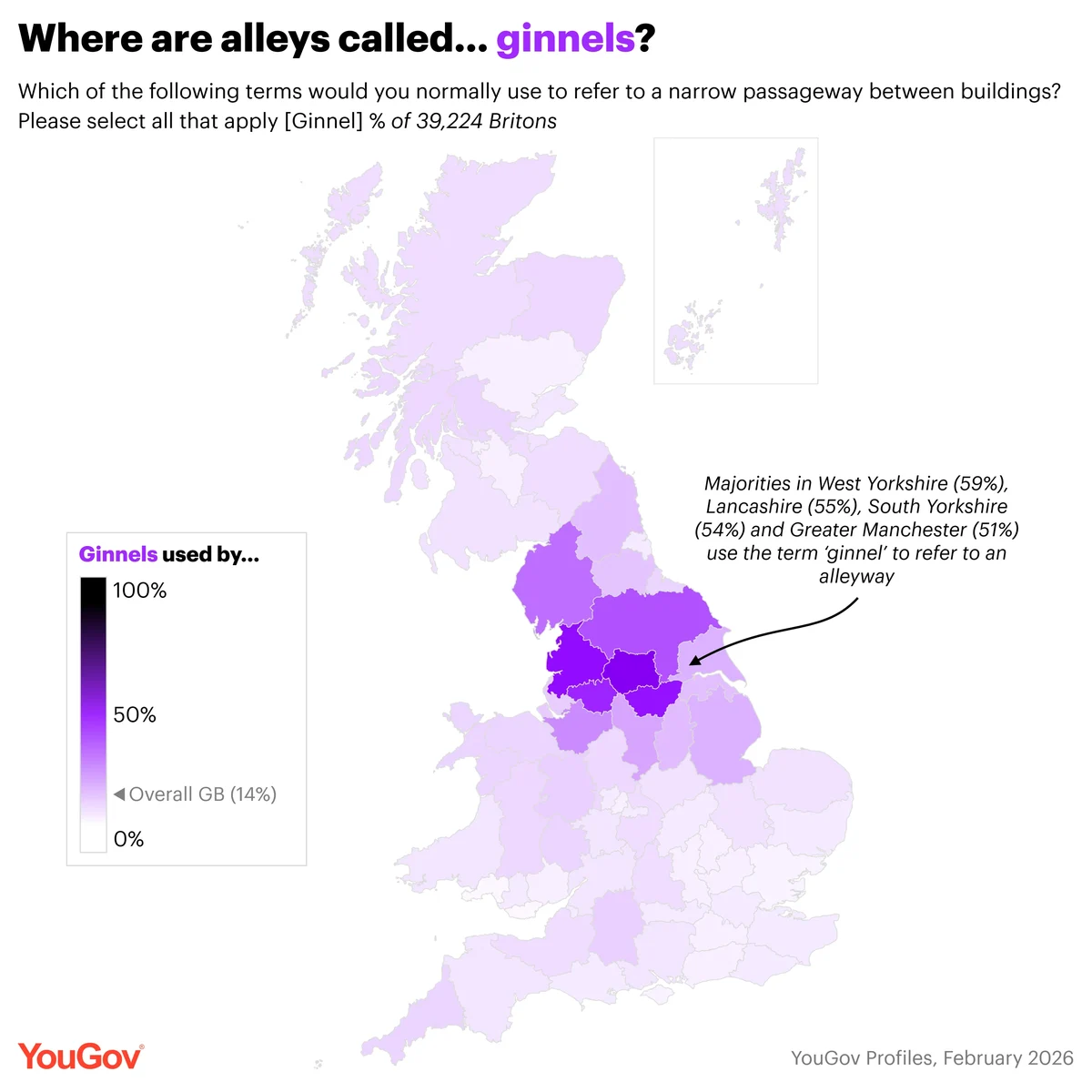
More than a third of Britons (36%), however, typically use at least one dialect term to refer to an alley, of which ‘ginnel’ is the most common, being used in normal parlance by one in seven Britons (14%) overall. This includes majorities in West Yorkshire (59%), Lancashire (55%), South Yorkshire (54%) and Greater Manchester (51%), with the first being the only county in Great Britain where people are roughly as likely to use an alternative to alley as to use ‘alley’ itself.
‘Ginnel’ isn’t merely confined to these counties, with the word being common across much of the North of England. Four in ten adults (41%) in North Yorkshire say they would use ‘ginnel’ to refer to a walkway between buildings, as do 34% of Cumbrians, 27% of people in Cheshire, and between 15-21% of those in Derbyshire, the East Riding of Yorkshire, Lincolnshire, Nottinghamshire and Northumberland.
Where is an alleyway called a 'cut'?
In North East England, it’s ‘cut’ that tends to be the top alternative, being used by 31-35% of adults in the counties of Northumberland, Tyne and Wear, and Durham, as well as being in the vocabulary of 24% of Cumbrians and 18% of those who live on Teesside.
Where is an alleyway called an 'entry'?
Merseyside is also an exception within the North, with ‘entry’ being the leading dialect term among scousers. More than a third of adults who live on Merseyside (36%) would refer to an alley this way, with the term also cropping up in Staffordshire (22%), Cheshire (20%), the West Midlands county (19%), Clwyd in North Wales (19%) and Warwickshire (16%).
Where is an alleyway called a 'snicket'?
‘Ginnel’ is not the only word the people of Yorkshire have for a passageway between buildings, with ‘snicket’ also particularly common in North and West Yorkshire, where 40-41% use the term, which is also used by 28-32% of adults in East or South Yorkshire. The two terms are not necessarily in competition, with 63% of Yorkshire’s ‘snicket’ users also regularly using ‘ginnel’.
Where are 'eightfoot' and 'tenfoot' used for alleyways?
As is often the case with YouGov’s language studies, we can reveal that Hull and its surrounding areas have their own terms: ‘tenfoot’ or ‘eightfoot’, based on the typical width of a passageway. A third of those in the East Riding of Yorkshire (34%) use one or both of these to refer to alleyways, rising to 56% in Hull itself, with the term also regularly used by 23% of those in the parts of Lincolnshire that were previously in Humberside.
Where is an alleyway called a 'jitty'?
Elsewhere, ‘jitty’ is the East Midlands’ term for an alleyway, being regularly used by nearly half of adults in Derbyshire (47%), as well as diminishing proportions in Leicestershire (38%), Nottinghamshire (28%) and Northamptonshire (18%).
Where is an alleyway called a 'gully'?
No dialect term is as prominent in the West Midlands, though alongside ‘entry’, ‘gully’ does crop up in parts, with 25% saying they would regularly use the word in the Black Country. ‘Gully’ also appears in parts of south Wales, with 21% of adults in Mid and South Glamorgan using the term.
Where is an alleyway called a 'twitten'?
Although southern English dialects largely appear to skip over alternative words for an alley, Sussex is an exception, with ‘twitten’ used by 29% of those in East Sussex and 19% in West Sussex to refer to a narrow passageway. So localised is the term that even in neighbouring Surrey and Kent very few (2%) use it.
Where is an alleyway called a 'close'?
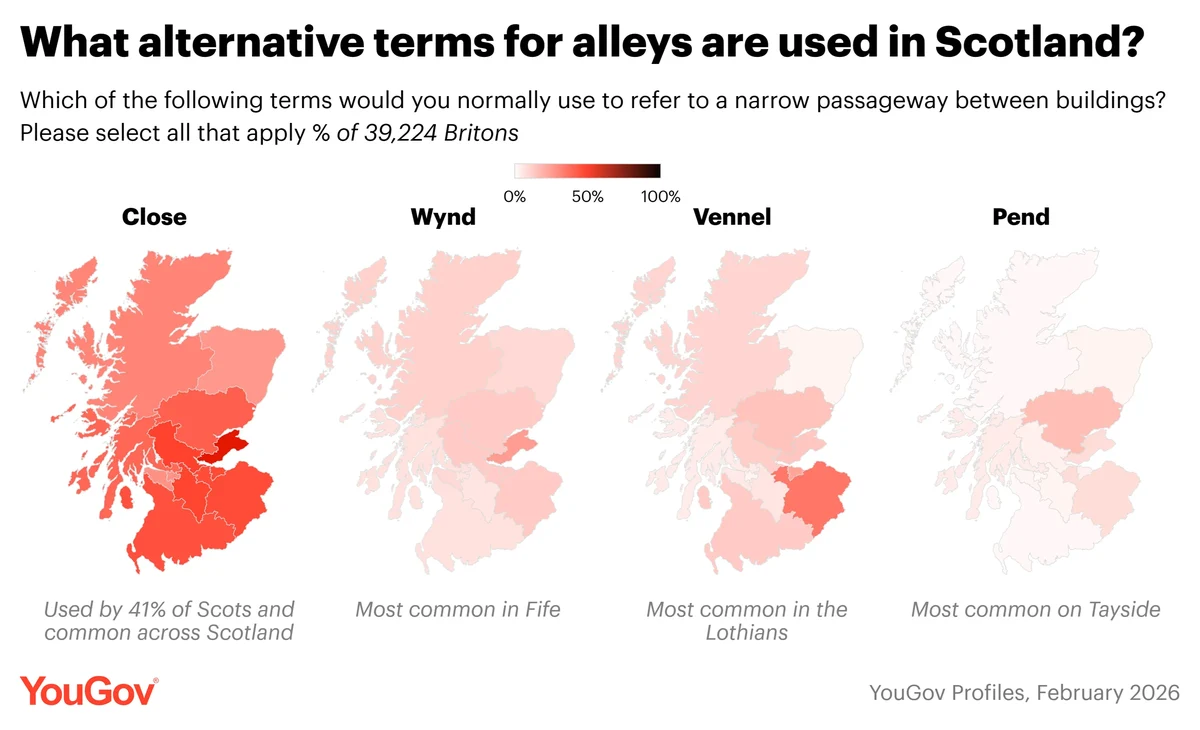
Scotland has its very own vocabulary for alleyways, including the word ‘close’, which 41% of Scots say they would commonly use to refer to a narrow passageway between buildings. Usage of ‘close’ occurs across all of Scotland, though this ranges from 27% of people in the Grampian region to as many as 62% of people in Fife.
Where is an alleyway called a 'vennel'?
Alongside this, there are a few more specific regional terms, all of which are more common on Scotland’s east coast. One in eight Scots (13%) would refer to an alley as a ‘vennel’, including 36% of adults in south east Scotland, 24% of those in Edinburgh and 13-16% of those in Tayside, Fife, south west Scotland and Central Scotland.
Where are ‘wynd’ and ‘pend’ used for alleyways?
Other Scottish terms include ‘wynd’, which is used by 11% of Scots, including 26% in Fife, and ‘pend’, which is in the vocabulary of 5% of Scots, including 17% in Tayside. A few English dialect terms can be found in Scotland, with 7% of adults north of the border saying they would use ‘ginnel’ to refer to an alley.
Are dialect terms for alleyways dying out?
With these localised dialect terms, there’s always the concern they could be lost as time goes on, and, indeed, our data does show that most of these alternative terms for alleyways are less common among younger Britons.
In North West England, for instance, half of over 65s (50%) and nearly half of 50-64 year olds (46%) would use the word ‘ginnel’ to refer to an alleyway, compared to just 34% of 25-49 year olds and 26% of 18-24 year olds. Usage of the term ‘entry’ is also higher among the oldest age group than the lowest (26% vs 10%).
Likewise, in Scotland, over 65s are roughly twice as likely to use the term ‘close’ as 18-24 year olds (50% vs 23%), with similar patterns apparent with ‘vennel’, ‘wynd’ and ‘pend’.
Overall, nearly half of over 65s in Britain (45%) use at least one dialect term for an alley, compared to just 27% of 18-24 year olds. Though it’s not just dialect terms that are dying out, with just 24-26% of those in the under 50 age groups using ‘passage’ to refer to an alley, compared to 32% of 50-64 year olds and 43% of over 65s.
What do people call an alleyway in your county?
Methodology
- Sample size: An online survey of 39,224 adults aged 18+ living in Great Britain
- Fieldwork: 13 to 19 February 2026
- Commissioned by: YouGov
Click here for more information about how we carry out research
Interested in taking YouGov surveys? What do you call an alleyway? What do think about the English language in general and everything else? Have your say, join the YouGov panel, and get paid to share your thoughts. Sign up here.
Interested in commissioning YouGov research? We connect in real-time with real people around the world to gather their thoughts, behaviours, and opinions, to ensure that our research data is powered by reality. Explore our survey services here.
Photo: Getty