Most Londoners would be comfortable riding self-driving trains and Tubes, especially if there was a staff member on board
Despite having first been proposed years ago, it seems that driverless cars are likely to take to the streets before the London Underground becomes automated. This is despite calls to do so in the wake of staff strikes in recent years.
As part of a wider study on attitudes to self-driving cars, YouGov has also examined attitudes to self-driving public transport among Londoners.
- For Londoners’ attitudes towards self-driving cars, see this study’s sister article here
- For the attitudes of the wider British population towards self-driving transport – as well as in other countries – see here
The survey finds that most Londoners (57%) would feel comfortable riding in a self-driving London Underground train, a figure which dips only slightly to 52% for self-driving regular trains.
However, just 26% of Londoners would be comfortable with riding on a self-driving bus – a figure similar to the 29% who are comfortable with the prospect of riding in a self-driving car, as detailed in this sister article.
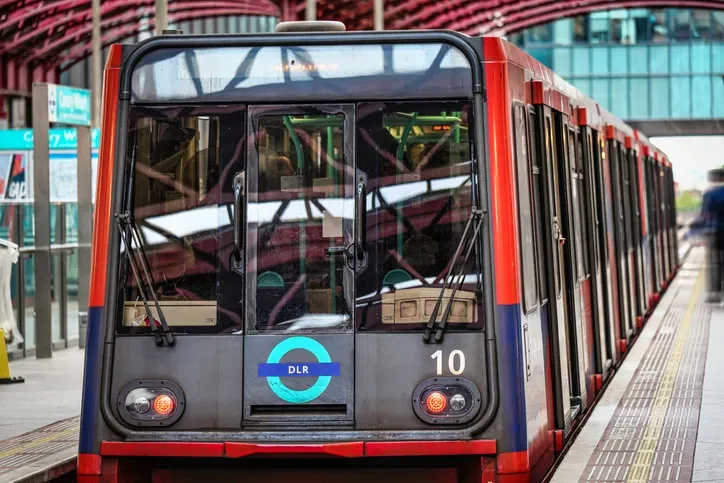
It is not currently known whether self-driving public transport policy would require a staff member to be present on vehicles – currently the semi-autonomous DLR has a ‘Passenger Service Agent’ on board to open and close doors and deal with incidents, who can also drive the train if necessary. So we asked how Londoners would feel in both scenarios – with and without a staff member who could assist passengers and drive the vehicle in the event of issues.
Having a staff member present increases comfort most dramatically for self-driving buses, rising 16pts to 42% - although this is still lower than the 50% who would be uncomfortable.
When it comes to self-driving rail transport, having a staff member on board increases comfort with the prospect of riding a self-driving train by 8pts to 60%, and a self-driving London Underground train by 6pts to 63%.
The results also show that the more frequently someone uses the Tube or train, the more comfortable they feel about the prospect of taking a self-driving version.
For instance, while 63% of Londoners who take the Tube at least once a week say they feel comfortable riding a self-driving London Underground train, this figure falls to 37% among those who do so once a year or less.
The trend is less marked for bus users, although those who take the bus once a year or less are still less likely to be comfortable (18%) than those who take it on a more regular basis (26-28%).
As with the findings from the sister studies, there is a marked gender divide, with women expressing more negative views of driverless technology across all questions. Similarly, age also plays a role, albeit to a lesser degree, with older Londoners generally more likely to be sceptical about the technology.
Do Londoners think driverless public transport will ever be as safe as it is with human drivers?
While some are still clearly sceptical about the safety of self-driving buses and trains, there are expectations that the technology will eventually be good enough to be as safe as when operated by humans.
More than six in ten Londoners (64%) say that technology will one day be good enough to make self-driving London Underground trains as safe as human-driven versions, with only 23% disputing that this will ever be the case.
When it comes to self-driving regular trains, the figures are almost identical: 62% think they will one day be as safe as human-driven examples, while 24% disagree.
As our driverless cars study showed, a lower 51% think self-driving cars will ever be able to reach the same standards, although this still significantly outweighs the 31% who think the opposite.
However, expectations are gloomiest when it comes to self-driving buses. Here Londoners are split: only 39% think they will ever be as safe as human-driven buses, compared to 41% who say this won’t happen.
We again see the same trends when looking at the results by frequency of transport use as we did for the comfort question, with less frequent public transport users being less likely to think self-driving versions will one day match human drivers for safety (and in contrast to attitudes towards self-driving cars, where no such trend exists).
Methodology
- Sample size: An online survey of 1,005 adults aged 18+ living in London
- Fieldwork: 17-24 July 2026
- Commissioned by: YouGov
Click here for more information about how we carry out research
Interested in taking YouGov surveys? What do you think about self-driving cars, the future of transport in general, and everything else? Have your say, join the YouGov panel, and get paid to share your thoughts. Sign up here.
Interested in commissioning YouGov research? We connect in real-time with real people around the world to gather their thoughts, behaviours, and opinions, to ensure that our research data is powered by reality. Explore our survey services here.
Photo: Getty