The level of dislike for God Save the King found among Britons is not seen for national anthems in other western countries
Key takeaways
- Just 34% of Britons say they like God Save the King, relative to 28% disliking it as a piece of music
- In other similar countries, at least three times as many people have a positive view of their anthem than a negative one
- In France and the US, for instance, 58-59% like their anthems, while just 10% dislike them
- Most English people (56%) have a preference for an official separate English national anthem, though there’s no clear favourite, with Jerusalem and Land of Hope and Glory each the first choice of just 15%
- 51% of Scots would back Flower of Scotland to be the country’s official national anthem, while 70% of Welsh adults would be happy with Land of My Fathers being given official status
National anthems can be a curious thing. While few are held up as examples of musical brilliance, for many in most countries, they nonetheless have the ability to rouse patriotic feelings within, overriding any shortcomings with the song themselves.
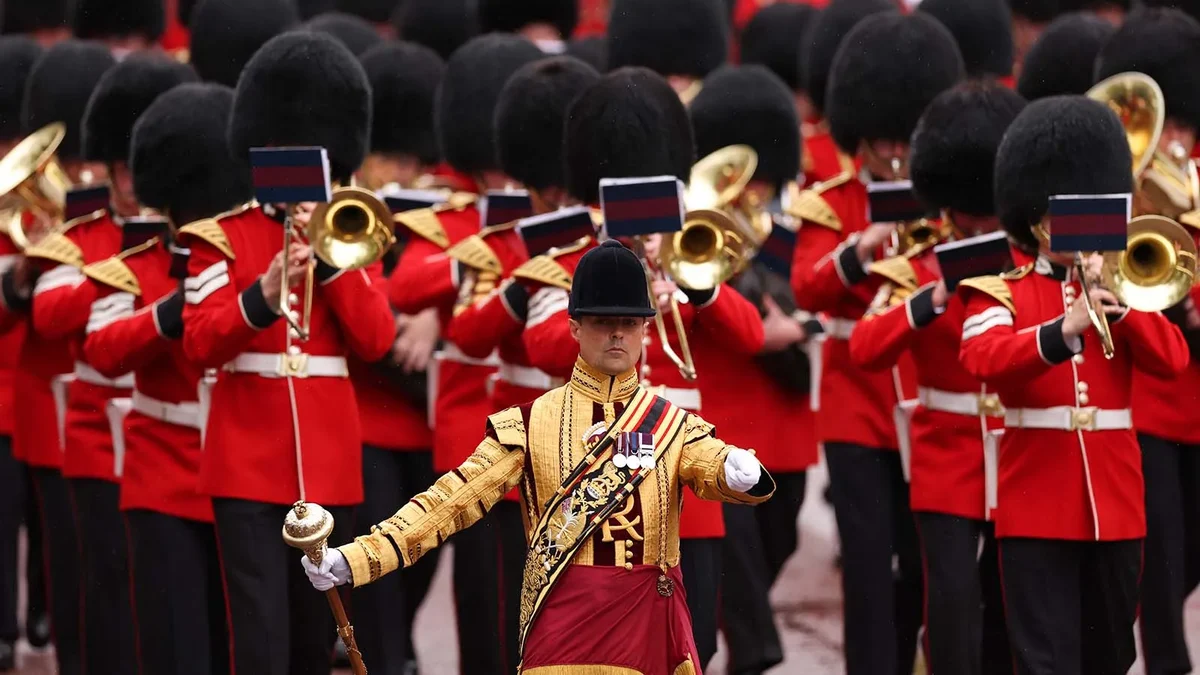
Noticeably here in Britain, though, there are also quite a few willing to say our anthem – God Save the King – doesn’t quite manage to do this, with various commentators happy to call the nearly 300 year old anthem “dull”, “plodding” or even a “dirge”. But how widely shared is this view among the British public, and how does this compare to attitudes in other countries?
What do Britons think of God Save the King?
Indeed, just a third of Britons (34%) say they actually like God Save the King as a piece of music, a proportion near-matched by the 28% who say they outright dislike the song. An additional 34% of Britons say they have no strong feelings on the anthem either way.
Distaste for God Save the King is noticeably higher among adults in Scotland (47%) and Wales (41%) than among those who live in England (26%), with just 23% of Scots and 27% of Welsh people liking the song, relative to a higher 36% of English people.
Younger Britons are also less fond of the song, with 18-24 year olds tending to dislike God Save the King as a piece of music by 38% to 25%, in contrast to over 65s being nearly twice as likely to view the song positively than negatively (41% vs 22%).
At the most enthusiastic end of attitudes to God Save the King are those who voted Conservative in 2024, a majority of whom (55%) like the song, with Reform UK voters also tending to be fond of the anthem by 48% to 20%. By contrast, Labour and Green voters are more likely to dislike it (38-43%) than like it (23-28%).
Do people generally like their national anthem?
This lack of love for the national anthem, though, is somewhat peculiarly British. We asked the same question in seven other major western countries and found all are significantly more positive about their respective anthems.
Even in Spain, the least enthusiastic of the other countries polled, nearly half of adults (46%) have a positive opinion of Marcha Real, more than triple the 14% of Spaniards who dislike their unusually lyric-less anthem. A similar picture is true in Australia and Germany, where around half (50-53%) like either Advance Australia Fair or the Deutschlandlied, relative to 14-15% disliking them.
Of our eight countries, it’s Denmark who are the biggest fans of their anthem, with a full 83% of Danes saying they like Der er et yndigt land (There Is a Lovely Land), including 59% saying they like it a lot. Italy’s anthem is also widely loved by its compatriots, with 71% of Italians saying they enjoy the tune of Canto degli italiani, familiar to many Brits as a common chime from ice cream vans, relative to only 11% disliking it.
The anthems of France and the United States are among those most commonly cited as being ‘the best’ in the world. Both are undoubtedly popular in their respective countries too, with around six in ten French adults (59%) say they like La Marseillaise as a piece of music, while a similar 58% of Americans are fond of the Star-Spangled Banner. Only 10% in either country dislike their anthem.
What should be the English national anthem?
God Save the King is not just the British national anthem, with it also double-jobbing as one of several patriotic songs that are used to represent England, most notably by the England football teams. Jerusalem is instead used by the English cricket and Commonwealth Games teams, amongst others, with Land of Hope and Glory sometimes used elsewhere. This somewhat messy situation has led to periodic calls for a single official anthem for England.
Overall, a majority of adults in England (56%) do hold a preference for an official English anthem, relative to 27% believing England does not need a separate official national anthem to the UK as a whole, though the former group does include 9% who believe God Save the King should be England’s official anthem.
There is, however, no clear preference for any alternative, with the two frontrunners – Jerusalem and Land of Hope and Glory – each being the first choice for an official English anthem for just 15% of adults in England, while 6% would favour I Vow to Thee, My Country.
However, while there might not a clear favourite, the leading alternative English anthems are all much more liked as pieces of music than God Save the King.
Edward Elgar’s Land of Hope and Glory is held in positive esteem by a majority of English adults (53%), with nearly half (48%) having a favourable opinion of Jerusalem too. In both cases, this is relative to 22-23% having no strong feelings on either patriotic tune, both of which are staples of the BBC’s Last Night of the Proms, and just 10-11% disliking them.
While fewer people are familiar with either piece, a similar pattern is true for the hymns Abide with Me, an anthemic fixture at every FA Cup final, and I Vow to Thee, My Country, a tune often played at Remembrance services. These songs are liked by 40% and 31% of English people respectively, relative to 22-23% feeling neutrally towards them and 10% having a negative opinion of them.
Should Flower of Scotland be the Scottish national anthem?
England is not alone in lacking an official national anthem (even God Save the King’s status derives solely from custom), but the question of which patriotic song holds the crown is more settled in the other home nations.
Flower of Scotland is nowadays typically used at sporting events as the country’s national anthem, even if it only dates from the 1960s. If Scots were to adopt any anthem officially, 51% would give their vote to this fan favourite, with only single digit proportions favouring any of the alternatives.
This includes just 8% of Scots backing Scotland the Brave, which was used as the country’s anthem by their Commonwealth team until 2010, while Auld Lang Syne and Highland Cathedral are each the first choices of just 7% of Scots. It’s only a further 7% of Scots who would be opposed to the country having an official anthem.
Nonetheless, while Scots might overwhelmingly favour Flower of Scotland for their national anthem, few are down on any of the alternatives. Overall, nearly three quarters of Scots (73%) like either Flower of Scotland or Auld Lang Syne as pieces of music, with 63% also enjoying Scotland the Brave. None of these three Scottish classics are disliked by more than 12% of Scots.
Nearly half of Scots (46%) say they are fond of the bagpipe tune Highland Cathedral, relative to a mere 3% disliking it, though more than a third (36%) have no opinion on it. Historic unofficial anthem Scots Wha Hae has a similar level of unfamiliarity (33% don’t know), though overall attracts less enthusiasm, with just 32% of Scots saying they like it, while 25% have no strong feelings either way and 10% outright dislike.
British patriotic songs fare less well north of Hadrian’s Wall. Alongside the Scottish dislike of God Save the King, Scots are more likely to have a negative opinion of Rule Britannia (43%) than a positive one (28%), while being evenly split 28% to 28% on Elgar’s Land of Hope and Glory.
Should Land of My Fathers be the Welsh national anthem?
The situation in Wales is fairly similar. The current unofficial national anthem – Land of My Fathers (Hen Wlad Fy Nhadau) – faces little competition, with 70% of Welsh adults saying they’d opt for the song to become Wales’s official anthem. Only 7% would back an alternative song, while a mere 5% would object to any song being granted official status.
Though not quite to the same extent as in Scotland, there is still a divide between Welsh attitudes to Welsh patriotic songs and British ones.
More than seven in ten Welsh adults (72%) say they like Land of My Fathers as a piece of music, with 60% liking Welsh rugby anthem Calon Lân, 49% similarly positive about Men of Harlech and 43% about hymn Cwm Rhondda. In all four cases, between 14-19% of Welsh adults feel neutrally about the song and only 4-5% say they dislike them.
But whereas the Welsh might tend to dislike God Save the King, they are roughly as likely to like Rule Britannia (35%) as dislike it (33%), while twice as many Welsh people have a positive opinion of Land of Hope and Glory (39%) than a negative one (18%).
See the full results: Great Britain, Europe, United States, Australia
GB Methodology
- Sample size: Online surveys of 3,987 adults aged 18+ living in Great Britain
- Fieldwork: 10 September to 11 November 2026
- Commissioned by: YouGov
Click here for more information about how we carry out research
Interested in taking YouGov surveys? What do you think about God Save the King, national anthems in general, and everything else? Have your say, join the YouGov panel, and get paid to share your thoughts. Sign up here.
Interested in commissioning YouGov research? We connect in real-time with real people around the world to gather their thoughts, behaviours, and opinions, to ensure that our research data is powered by reality. Explore our survey services here.
Photo: Getty