Latest Scottish favourability ratings, government approval, most important issues and more
Key takeaways
- Ahead of the SNP conference, 53% of Scots see John Swinney unfavourably, while 34% have a favourable opinion of him
- Andy Burnham has a positive net favourability rating of +9 in Scotland, while Nigel Farage is the least popular major politician in the country, with a Scottish net score of -56
- Most Scots view the SNP as out of touch, untrustworthy and serving their own interests
- Scots are divided on whether the Conservatives can be considered a ‘main party’ in Scotland, while just 26-30% believe the Greens or Reform UK fall into this category
- 48% of Scots believe the economy is one of the most important issues facing Scotland, followed by health (39%) and immigration (33%)
On Saturday, the 2026 party conference season will be rounded out by the SNP in Aberdeen, as the party holds its 20th annual gathering since taking power at Holyrood, although it is only John Swinney’s third as first minister. As this conference gets underway, new YouGov polling reveals where political opinion stands in Scotland, including how Scots feel about the SNP.
Scottish political favourability ratings, October 2026
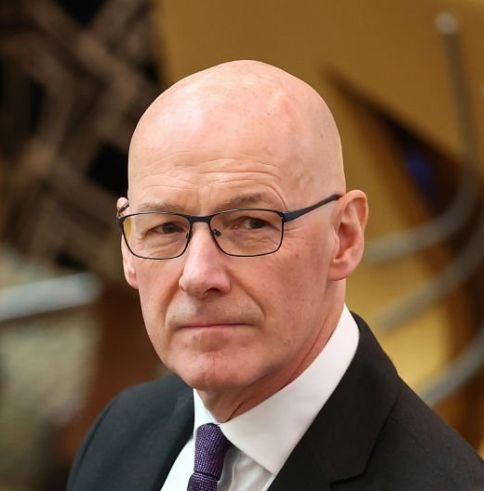
Opinion towards John Swinney himself has been largely stable over his tenure as first minister, with the SNP leader consistently recording net favourability ratings between -12 and -21 over the last two years. Nonetheless, the 53% with a negative opinion of Swinney in our latest data is the joint highest recorded to date.
A third of Scots (34%) have a favourable opinion of the first minister, including 82% of those who backed the SNP in May and 62% of those who voted for the Greens, leaving Swinney with a net favourability rating in October of -19.
Although Swinney’s personal ratings may not be the most positive, at present, he faces little meaningful competition from the other Scottish party leaders, who all return an answer of “don’t know” from at least 55% of Scots, and none of whom are seen favourably by more than 15%.
This includes new Scottish Labour leader Michael Marra, who 70% of Scots are unsure about, including 58% of those who voted for the party in May. As is the case with other Holyrood leaders, more Scots see Marra unfavourably (19%) than favourably (11%). Even those who cast their constituency vote for Labour in at the devolved election in May are far from won over, with similar numbers seeing him positively (21%) and negatively (22%).
Where Swinney does compare unfavourably is against new UK prime minister Andy Burnham. Nearly half of Scots (47%) have a favourable opinion of the Labour leader, relative to a lower 38% seeing him in a negative light. This leaves Burnham with a rare positive net favourability rating in Scotland of +9, including a rating of +15 among those who backed the SNP in May, as well as a +68 rating among those who opted for Labour.
As across Britain as a whole, other Westminster party leaders tend to be seen in a negative light in Scotland, and none more so than Nigel Farage. A full 74% of Scots view the Reform leader unfavourably, including 61% describing their feelings towards Farage as "very" unfavourable, while just 18% see him favourably.
Scottish opinion towards Kemi Badenoch is still mostly negative, with 51% viewing her unfavourably, roughly double the 26% who hold a favourable opinion of the Conservative leader. Nonetheless, opinion has become much more positive over the last year, with her latest net rating of -25 up 24 points from her rating of -49 last September.
Lib Dem leader Ed Davey is seen unfavourably in Scotland by a margin of 35% to 25%, while nearly half of Scots (45%) have a negative opinion of Zack Polanski, even if he is only leader of the Green Party in England and Wales, while just 21% see him favourably.
How do Scots see the SNP?
As the SNP’s party conference gets underway in Aberdeen, there will be many taking it as an opportunity to further celebrate their fifth successive victory at Holyrood. However, there is no getting away from the fact that the victory was less enthusiastic than previous wins, with the party falling to a mere 27% of the proportional vote in May.
Indeed, Scots’ attitudes towards the SNP to tend to be negative, with at least half (50-53%) now describing the party as out of touch, serving their own interests, untrustworthy and incompetent, relative to no more than a third feeling the SNP is trying to do the right thing (32%), is competent (31%), trustworthy (25%) or in touch (22%).
The Scottish public also tend to view the SNP as weak by a margin of 46% to 25%, while feeling they care more about a select few than about ordinary people by 45% to 33%.
Nonetheless, Scots are more likely to describe the SNP as moderate (43%) than extreme (26%), as well as being split 41% to 40% over whether or not the party has a clear sense of purpose, and being divided 37% to 34% over whether the party is tolerant or prejudiced.
And although the SNP’s image is more negative than positive on six of our nine party image questions, this compares to eight out of nine in our Britain-wide conference previews for Reform UK, the Conservatives and the Greens, as well as seven out of nine for Labour.
Government approval in Scotland, October 2026
The tepid nature of opinion towards the SNP can also be seen in Scots’ evaluations of their record in office, with just 27% saying they approve of the Scottish government’s record to date, while approaching six in ten (57%) disapprove of their record.
SNP voters are more positive, though not entirely. Whether looking at those who cast their ballot for the party in 2024 or this year, 62-64% approve of the current government’s time in office, while 23% disapprove.
This is, though, significantly more positive than Scots are about the UK government’s record, which just 14% of Scottish adults approve of, including only 25% of those who voted Labour into power in 2024. Around two thirds of Scots (68%), including 59% of 2024 Labour voters, are dissatisfied with the Westminster government, even if this is down from 79% being unhappy with Labour’s record in March.
Who do Scots believe are the main parties in Scotland?
Beyond the SNP, Scotland’s party system was transformed in May, with Reform UK entering Holyrood for the first time and the Greens reaching new heights, amid worst-ever results for the Conservatives and Labour. But has this impacted perceptions of the parties’ statuses for Scots?
Although six parties hold significant numbers of seats in the Scottish Parliament, there are only two that majorities of Scots currently see as being ‘main parties’ in Scotland. The most universally accepted of these is the SNP, which 89% of Scottish people place in the top-tier of political parties, relative to a mere 6% who do not.
Labour, the party that most Scottish MPs belong to, also sit in this category for 72% of Scots, though with 21% feeling this is not the right way to classify the party, which did, after all, win only a sixth of the vote in May.
The most divisive case is that of the Conservatives, who may have been reduced to just 12% of the vote in May, but had previously been the largest opposition party at Holyrood. Nearly half of Scots (47%) believe they still count as one of the ‘main parties’ in Scotland, against nearly half (45%) feeling they do not.
Ultimately, May’s breakthroughs for other parties do not appear to have changed the picture for most Scots, just 26-30% of whom would class either the Greens or Reform UK as ‘main parties’ in Scotland, relative to more than six in ten (62-64%) who feel these parties are not at this level, despite both holding more MSPs than the Tories.
A similar picture is apparent for the Lib Dems, who are seen as not being a ‘main party’ in Scotland by a margin of 67% to 24%.
What do Scots feel are the most important issues facing Scotland?
At present, the economy tops the agenda for Scots, with nearly half (48%) believing it is one of the most important issues facing Scotland, including similar proportions (47-53%) of those who backed each of the four most popular parties in May’s election.
Health is also a major issue, with 39% of Scots seeing it as one of the most pressing concerns in the country, rising to 48% of those who voted for Labour in May, while immigration is one of the biggest problems in Scotland for 33%, including 70% of those who backed Reform, for whom it’s the top issue by a clear majority.
A quarter of Scots (25%) view housing as among the most pressing concerns in the country, while education, crime, welfare benefits and Britain’s relationship with Europe are each among the top issues facing Scotland for 15-19% of Scottish adults.
On a similar level is the issue of whether or not Scotland becomes independent, which one in six Scots (17%) currently believe is one of the top questions facing the country, including 41% of those who voted for the SNP in May and 35% of those who voted for the equally pro-independence Greens.
YouGov Scottish independence referendum tracker
The issue of independence could, however, be thrown back into the spotlight, with the SNP planning to launch a new pro-independence ‘Choose Scotland' campaign at their conference.
Were another referendum held, the latest figures from our Scottish independence tracker suggest the result would likely be close. Of the Scots who know how they would vote, 53% say they would vote “No”, within the margin of error of the 47% who say they would vote “Yes”.
See the full results here and here
Methodology
- Sample size: An online survey of 1,060 adults aged 16+ living in Scotland
- Fieldwork: 29 September to 5 October 2026
- Commissioned by: YouGov
Click here for more information about how we carry out research
Interested in taking YouGov surveys? What do you think about the SNP, Scottish politics in general, and everything else? Have your say, join the YouGov panel, and get paid to share your thoughts. Sign up here.
Interested in commissioning YouGov research? We connect in real-time with real people around the world to gather their thoughts, behaviours, and opinions, to ensure that our research data is powered by reality. Explore our survey services here.
Photo: Getty