



Long-term health is increasingly influencing everyday choices across the Nordics, but consumers are far from following the same path. Our continuous consumer panels show that while shoppers across the region share an interest in healthy aging, each market defines longevity differently – creating distinct opportunities for FMCG brands.
"Consumers across the Nordics are thinking more consciously about their long-term health, but they're not looking for the same solutions. While the overall direction is shared, each market has its own priorities and motivations. For brands, that means local relevance matters more than ever when bringing health and wellness propositions to market," says Anne Fjelsten, Director Business Development.
Shared ambition, local priorities
Norway is the most longevity-minded market, with 42% saying they often or always consider their long-term health in everyday decisions, compared with 34% in Sweden, as data from the Behavior Change Spring/Summer 2026 report shows.
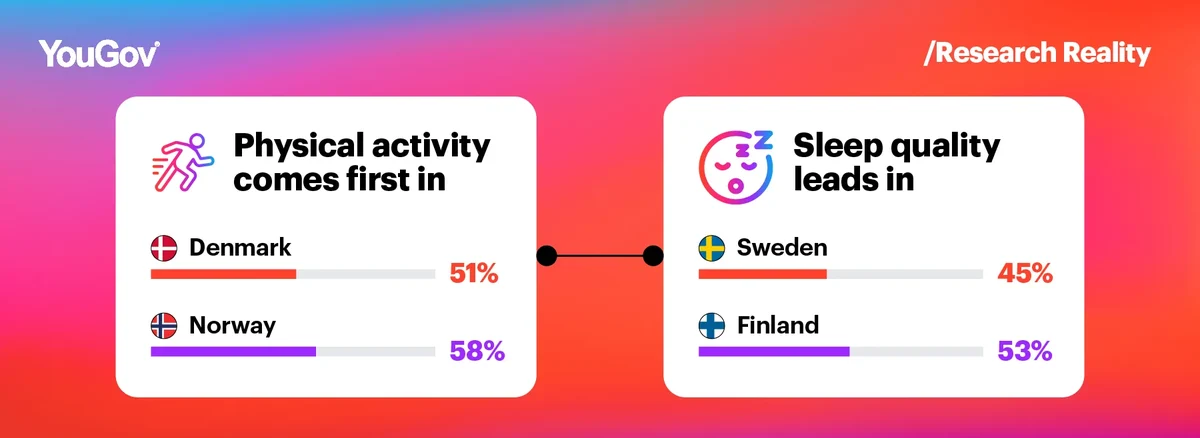
The foundations of long-term health are consistent across the region. Physical activity and sleep quality rank as the two most important contributors in every Nordic country, although their order differs. Physical activity comes first in Denmark (51%) and Norway (58%), while sleep quality leads in Sweden (45%) and Finland (53%).
Beyond these shared priorities, local differences emerge. Finnish consumers place greater emphasis on nutrition quality, metabolic health and inflammation control than the rest of the region. Sweden stands out for ranking social activity among its top health priorities, while Norway includes nature exposure among its five most important contributors to long-term health.
One region, different innovation opportunities
These different priorities are reflected in consumers' willingness to embrace emerging health trends.
Finland stands out as the Nordic market most open to functional wellness products. Around half have tried or would consider products such as pre- and probiotics, collagen, electrolytes and kombucha, indicating a broader acceptance of supplements and functional nutrition.
Elsewhere in the Nordics, creatine generates stronger interest than collagen, while a keto-diet also shows relatively broad appeal. At the same time, Denmark reveals an interesting gap: although consumers identify gut health as an important contributor to long-term wellbeing, relatively few have tried or would consider pre- or probiotics, suggesting untapped potential for the category.
Healthy aging takes different forms
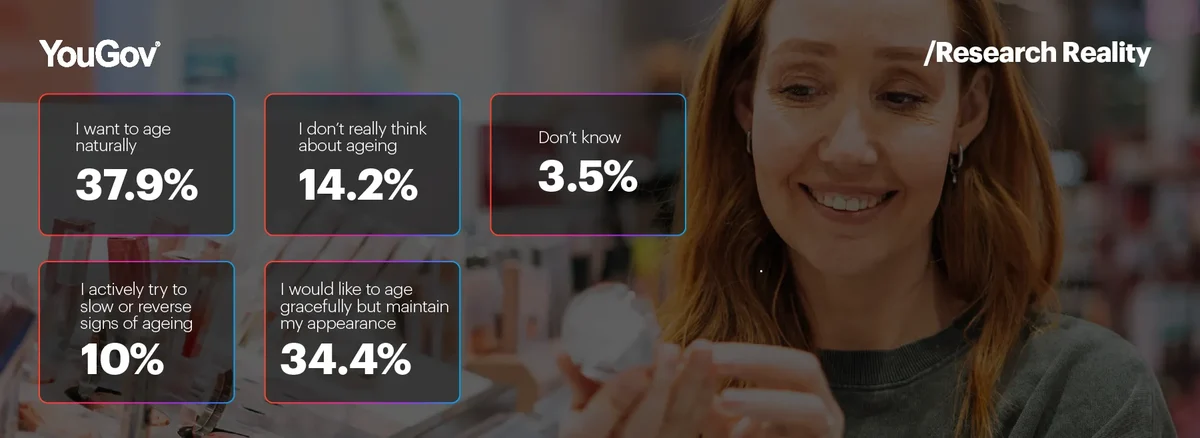
Attitudes towards aging also vary. Swedish consumers are more likely than Danes to actively try to slow or reverse visible signs of aging and have experimented with a broader range of anti-aging treatments. Danish consumers, meanwhile, favour a more natural approach, placing greater trust in everyday supplements and established health advice than cosmetic interventions.
These differences extend beyond products to information sources, with Swedish consumers more likely to discover new treatments through digital channels, while Danes rely more on healthcare professionals and personal recommendations.
The findings also align with one of the emerging trends identified in the Trend Reality Summer 2026 report: Forever 35 Face. Rather than pursuing dramatic transformation, the trend centres on maintaining vitality, healthy skin and natural proportions over time. As consumers increasingly focus on optimisation instead of reversal, products that support long-term skin quality and healthy aging may resonate across the Nordics, while the path to achieving this is likely to differ between markets.
Local relevance will define success
For FMCG brands, the opportunity is not a single Nordic longevity proposition but market-specific activation.
Norwegian consumers show the strongest long-term health mindset, Finnish shoppers demonstrate the highest openness to functional health innovation, Swedish consumers are more engaged with appearance-related healthy aging, and Danish shoppers continue to favour practical, trusted approaches to everyday wellbeing.
Rather than converging around one definition of longevity, Nordic consumers are shaping four distinct routes to healthier living.